Kim Seung Hwan, Yu So Yeon, Choo Jeong Hyeop, Kim Jin Kyeong, Kim Jihyun, Ahn Kangmo, Hwang Seung Yong
Department of Bio-Nanotechnology, Hanyang University, Sangnok-gu, Ansan 15588, Gyeonggi-do, Republic of Korea.
Institute of Science and Convergence Technology, Hanyang University, Sangnok-gu, Ansan 15588, Gyeonggi-do, Republic of Korea.
Int J Mol Sci. 2024 Nov 28;25(23):12827. doi: 10.3390/ijms252312827.
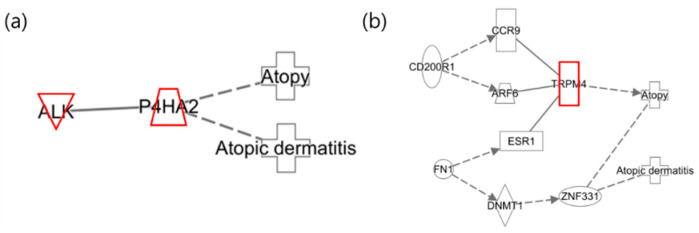
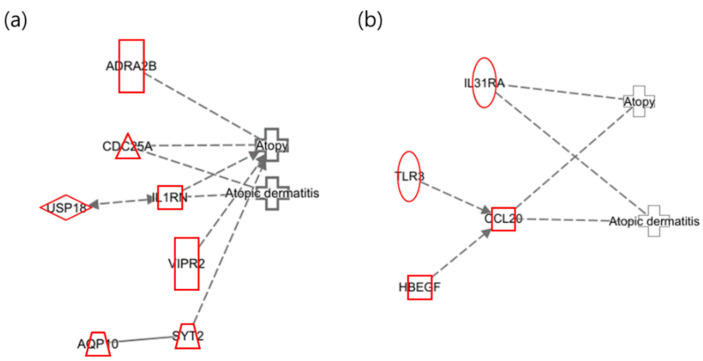
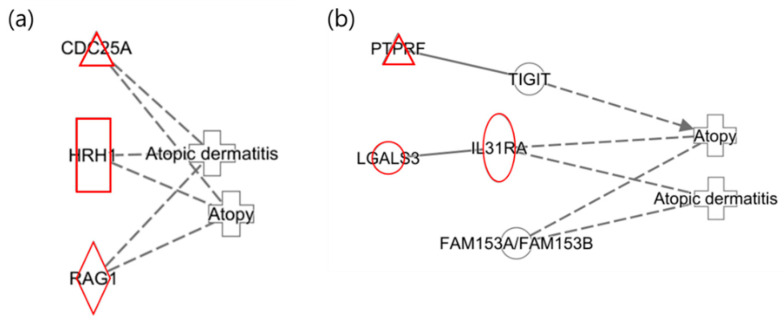
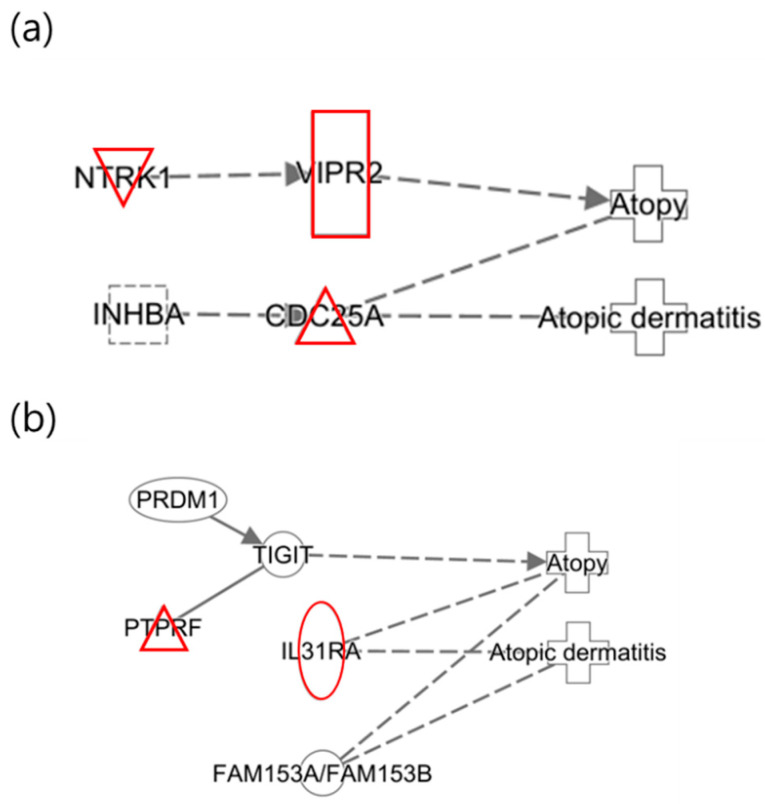
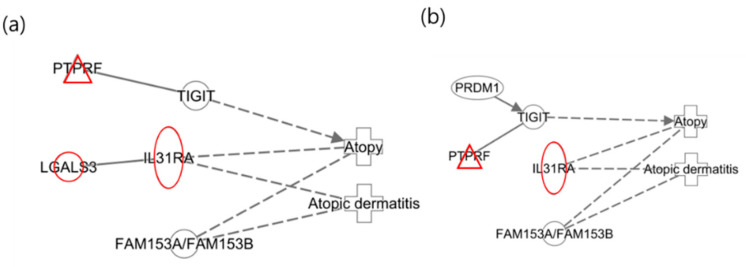
Environmental pollutants, particularly volatile organic compounds (VOCs), are associated with various diseases, including atopic dermatitis (AD). However, despite numerous studies on AD, there is a lack of research on the impact of various environmental exposures on mothers and infants. This study, therefore, investigated the effects of maternal exposure to specific VOCs (toluene, xylene, and benzene) on the expression of AD-related genes in mothers and their infants. RNA expression levels and DNA methylation patterns were analyzed to examine the correlation between environmental exposures and AD. A multi-omics approach integrating gene expression and methylation data was additionally employed to gain a broader understanding of the genetic impact of VOC exposure. Network analysis revealed significant changes in gene expression associated with AD. For example, maternal exposure to toluene resulted in the upregulation of AQP10, which is linked to keratinocyte dysfunction, and in infants, the genes IL31RA and CCL20 were notably affected, both of which play critical roles in immune response and skin barrier function. In mothers exposed to xylene, the histamine receptor gene HRH1 was identified as a key player in influencing AD through its role in skin barrier recovery, while infants exhibited consistent network responses with upregulation of IL31RA and downregulation of TIGIT, reflecting a shared response across different xylene isomers. Interestingly, infants exposed to xylene isomers displayed nearly identical gene network patterns, suggesting developmental resistance to diverse environmental factors. No significant gene changes were identified in the benzene-exposed group. These findings suggest that exposure to specific VOCs may have different effects on gene expression related to AD, highlighting the complexity of how environmental factors contribute to disease development.
环境污染物,尤其是挥发性有机化合物(VOCs),与多种疾病相关,包括特应性皮炎(AD)。然而,尽管对AD进行了大量研究,但对于各种环境暴露对母婴的影响却缺乏研究。因此,本研究调查了母亲暴露于特定VOCs(甲苯、二甲苯和苯)对母亲及其婴儿AD相关基因表达的影响。分析了RNA表达水平和DNA甲基化模式,以研究环境暴露与AD之间的相关性。此外,采用了一种整合基因表达和甲基化数据的多组学方法,以更全面地了解VOC暴露的遗传影响。网络分析揭示了与AD相关的基因表达的显著变化。例如,母亲暴露于甲苯会导致与角质形成细胞功能障碍相关的AQP10上调,而在婴儿中,IL31RA和CCL20基因受到显著影响,这两个基因在免疫反应和皮肤屏障功能中都起着关键作用。在暴露于二甲苯的母亲中,组胺受体基因HRH1被确定为通过其在皮肤屏障恢复中的作用影响AD的关键因素,而婴儿表现出一致的网络反应,IL31RA上调,TIGIT下调,反映了不同二甲苯异构体的共同反应。有趣的是,暴露于二甲苯异构体的婴儿表现出几乎相同的基因网络模式,表明对多种环境因素具有发育抗性。在苯暴露组中未发现显著的基因变化。这些发现表明,暴露于特定的VOCs可能对与AD相关的基因表达有不同的影响,突出了环境因素在疾病发展中的作用的复杂性。