Izák Josef, Strunz Pavel, Levytska Olena, Németh Gergely, Šaroun Jan, Kocich Radim, Pagáč Marek, Tuharin Kostyantyn
Faculty of Mechanical Engineering, Brno University of Technology, Technická 2896, 616 00 Brno, Czech Republic.
Nuclear Physics Institute of the Czech Academy of Sciences, Husinec-Řež 130, 250 68 Řež, Czech Republic.
Materials (Basel). 2024 Nov 22;17(23):5706. doi: 10.3390/ma17235706.
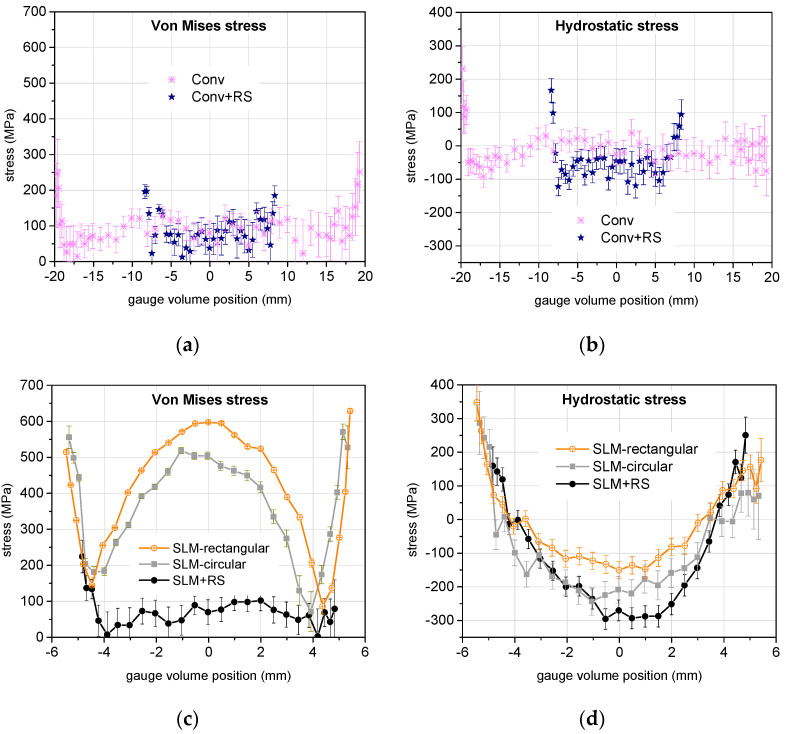
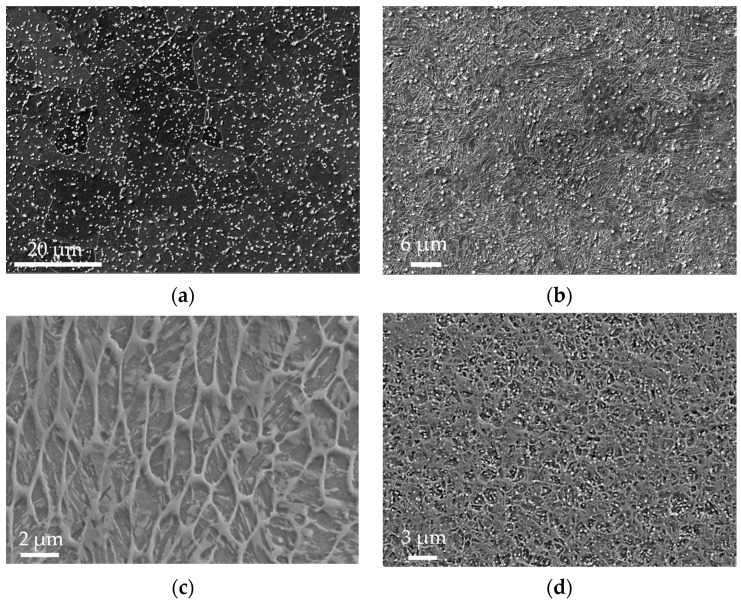
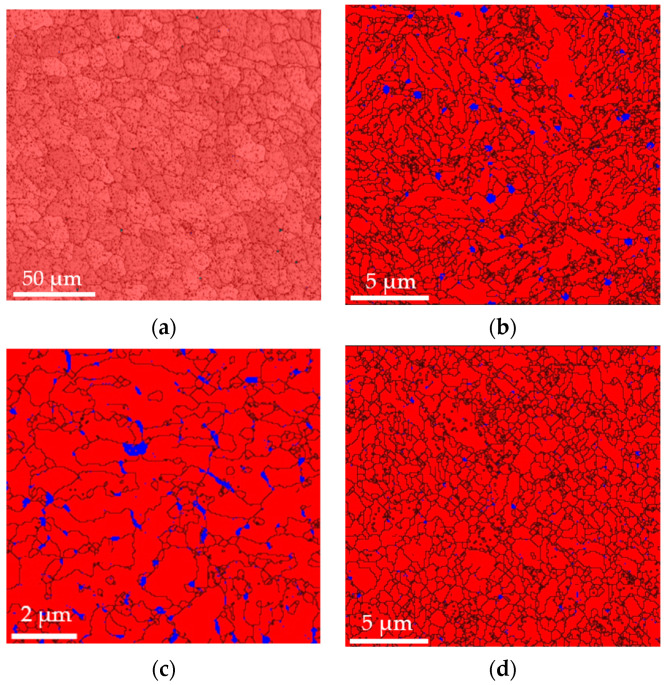
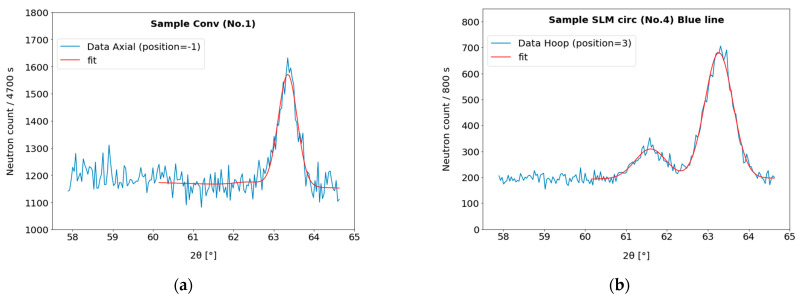
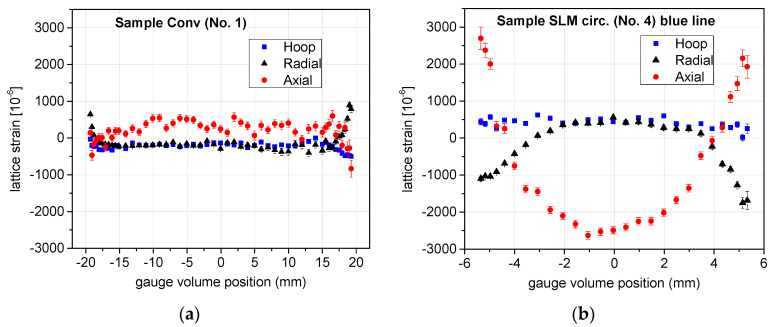
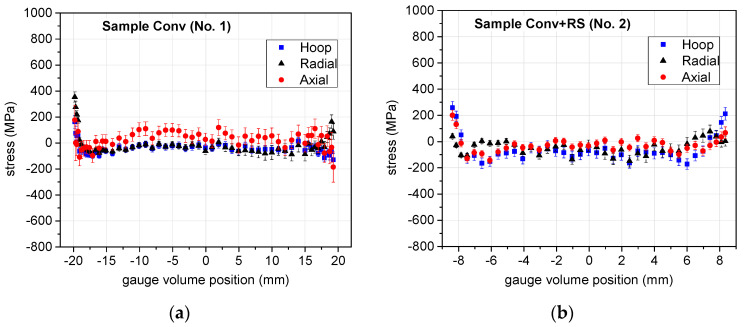
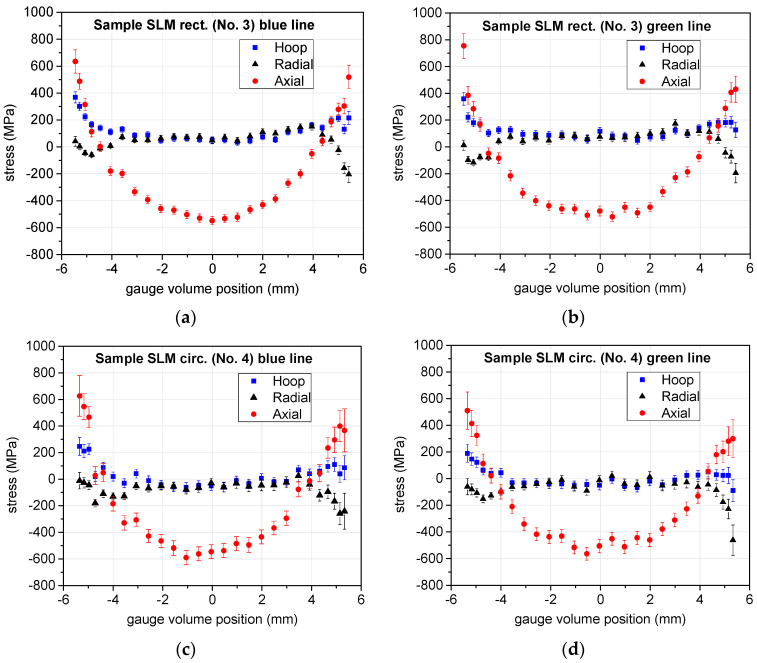
The impact of manufacturing strategies on the development of residual stresses in Dievar steel is presented. Two fabrication methods were investigated: conventional ingot casting and selective laser melting as an additive manufacturing process. Subsequently, plastic deformation in the form of hot rotary swaging at 900 °C was applied. Residual stresses were measured using neutron diffraction. Microstructural and phase analysis, precipitate characterization, and hardness measurement-carried out to complement the investigation-showed the microstructure improvement by rotary swaging. The study reveals that the manufacturing method has a significant effect on the distribution of residual stresses in the bars. The results showed that conventional ingot casting resulted in low levels of residual stresses (up to ±200 MPa), with an increase in hardness after rotary swaging from 172 HV1 to 613 HV1. SLM-manufactured bars developed tensile hoop and axial residual stresses in the vicinity of the surface and large compressive axial stresses (-600 MPa) in the core due to rapid cooling. The subsequent thermomechanical treatment via rotary swaging effectively reduced both the surface tensile (to approximately +200 MPa) and the core compressive residual stresses (to -300 MPa). Moreover, it resulted in a predominantly hydrostatic stress character and a reduction in von Mises stresses, offering relatively favorable residual stress characteristics and, therefore, a reduction in the risk of material failure. In addition to the significantly improved stress profile, rotary swaging contributed to a fine grain (3-5 µm instead of 10-15 µm for the conventional sample) and increased the hardness of the SLM samples from 560 HV1 to 606 HV1. These insights confirm the utility of rotary swaging as a post-processing technique that not only reduces residual stresses but also improves the microstructural and mechanical properties of additively manufactured components.
本文介绍了制造策略对迪瓦钢残余应力发展的影响。研究了两种制造方法:传统铸锭铸造和作为增材制造工艺的选择性激光熔化。随后,在900℃下进行了热旋转锻造形式的塑性变形。使用中子衍射测量残余应力。为补充研究而进行的微观结构和相分析、析出物表征以及硬度测量表明,旋转锻造改善了微观结构。研究表明,制造方法对棒材中残余应力的分布有显著影响。结果表明,传统铸锭铸造产生的残余应力水平较低(高达±200MPa),旋转锻造后硬度从172HV1提高到613HV1。由于快速冷却,选择性激光熔化制造的棒材在表面附近产生拉伸环向和轴向残余应力,在芯部产生较大的压缩轴向应力(-600MPa)。随后通过旋转锻造进行的热机械处理有效地降低了表面拉伸残余应力(降至约+200MPa)和芯部压缩残余应力(降至-300MPa)。此外,它导致了主要为静水应力特征并降低了冯·米塞斯应力,提供了相对有利的残余应力特征,从而降低了材料失效的风险。除了显著改善的应力分布外,旋转锻造还使晶粒细化(从传统样品的10-15μm细化到3-5μm),并将选择性激光熔化样品的硬度从560HV1提高到606HV1。这些见解证实了旋转锻造作为一种后处理技术的实用性,它不仅可以降低残余应力,还可以改善增材制造部件的微观结构和力学性能。