Bellavite Paolo, Donzelli Alberto, Isidoro Ciro
Independent Researcher, 37134 Verona, Italy.
Foundation Allineare Sanità e Salute, via Ricordi 4, 20131 Milano, Italy.
J Clin Med. 2024 Nov 30;13(23):7291. doi: 10.3390/jcm13237291.
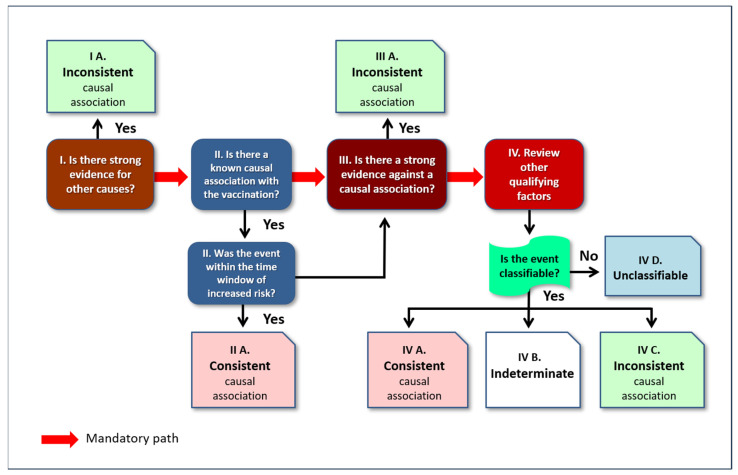
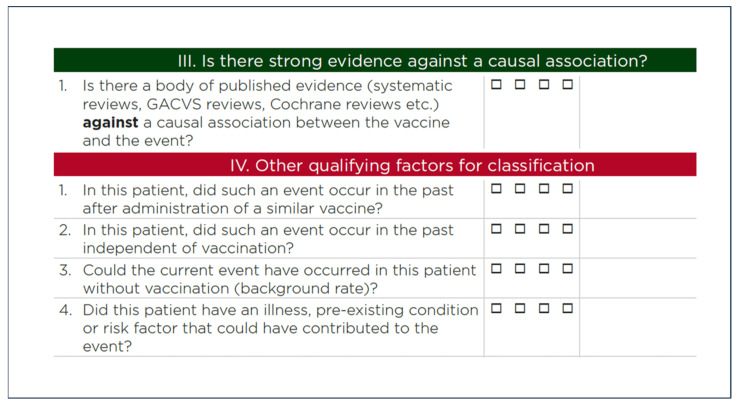
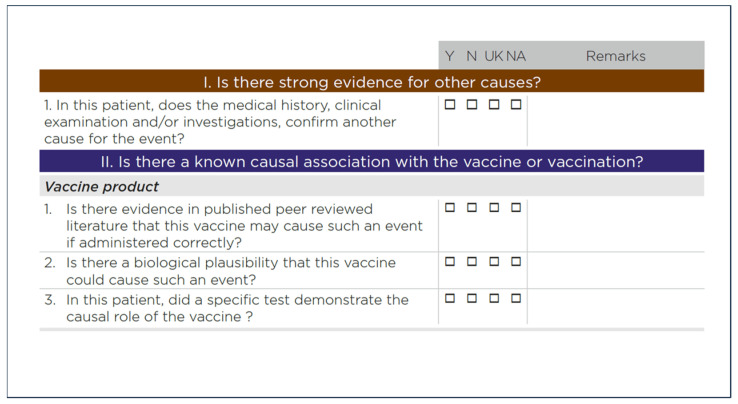
Clarifying and differentiating the causes of diseases is an essential step in any clinical activity, but it takes on particular relevance and complexity in the case that arise following vaccinations. The WHO has proposed a protocol that uses a list of specific questions about vaccine-related adverse events and an algorithm for making a judgement. Here, we analyze and discuss the important limitations of this protocol when applied to the new genetic-based anti-COVID-19 vaccines, particularly once dealing with rare and unexpected pathological events. The main controversial aspects concern: (a) the prevailing consideration of other possible causes; (b) the biological plausibility and the choice of an appropriate time window to consider adverse effects possibly caused by vaccines; (c) the reference to scientific literature, which may be very limited and often controversial in early stages of introducing new vaccines because of the short period of observation; (d) the final classification of the algorithm into only three classes, which leaves ample space for the "indeterminate" category. Failure to address these issues may lead to distorted pharmacovigilance reports with significant consequences on the benefit/harm assessment. In anticipation of possible future pandemics managed with new vaccines, the WHO algorithm needs to be revised with appropriate protocols for monitoring and evaluation of adverse effects that take into account the novel mechanism of action and real-world epidemiological data.
明确和区分疾病原因是任何临床活动的关键步骤,但在疫苗接种后出现的病例中,这一过程具有特殊的相关性和复杂性。世界卫生组织(WHO)提出了一项方案,该方案使用一系列关于疫苗相关不良事件的特定问题清单以及一种判断算法。在此,我们分析并讨论该方案在应用于新型基因新冠疫苗时的重要局限性,尤其是在处理罕见和意外的病理事件时。主要存在争议的方面包括:(a)对其他可能原因的普遍考量;(b)生物学合理性以及考虑疫苗可能导致的不良反应的合适时间窗的选择;(c)对科学文献的参考,由于观察期较短,在引入新疫苗的早期阶段,科学文献可能非常有限且往往存在争议;(d)算法最终仅分为三类,这为“不确定”类别留出了很大空间。未能解决这些问题可能导致药物警戒报告失真,对利弊评估产生重大影响。鉴于未来可能会使用新疫苗应对大流行,WHO算法需要通过适当的不良反应监测和评估方案进行修订,这些方案应考虑到新的作用机制和实际流行病学数据。