Jo Sung Jun, Rhu Jinsoo, Kim Jongman, Choi Gyu-Seong, Joh Jae-Won
Department of Surgery, Samsung Medical Center, Seoul, Sungkyunkwan University School of Medicine, Seoul, South Korea.
Ann Transplant. 2024 Dec 17;29:e944839. doi: 10.12659/AOT.944839.
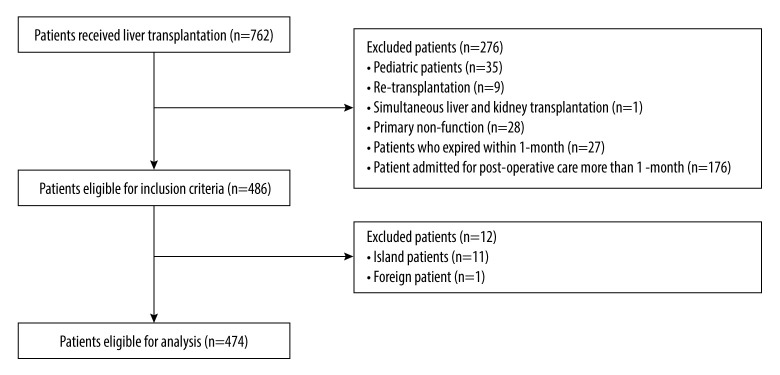
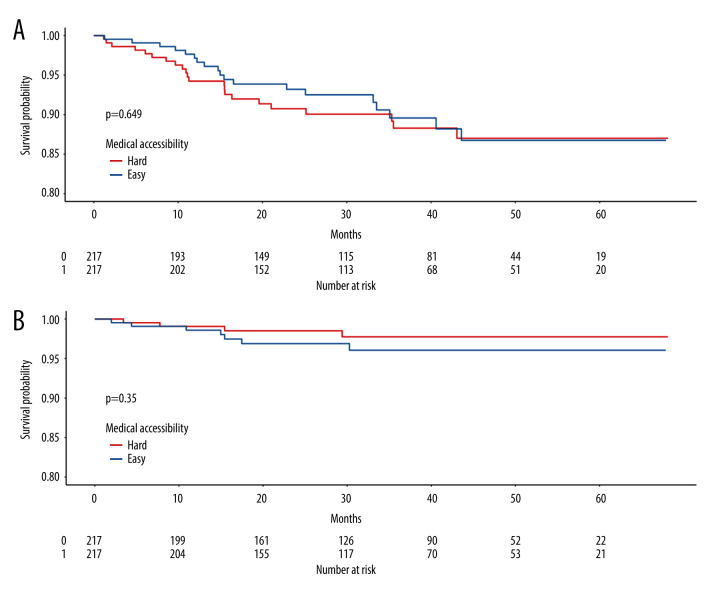
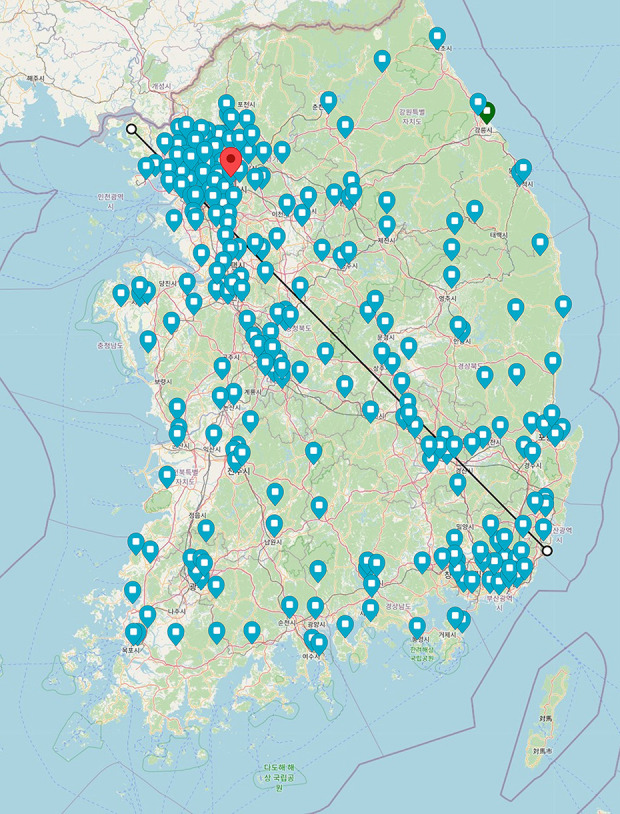
BACKGROUND Medical accessibility is important in liver transplantation (LT) because of the risk of infections associated with the use of immunosuppressants and complications that require continuous treatment, such as biliary stenosis. However, the effect of medical accessibility on LT success rates has yet to be scrutinized. The aim of this retrospective observational study is to determine whether medical accessibility affects LT outcomes. MATERIAL AND METHODS We enrolled patients who had undergone LT at Samsung Medical Center between January 2017 and December 2021. The level of medical access was divided into 2 categories (difficult and easy) based on a cutoff of a 120-min commute on public transportation to access LT. Baseline characteristics were calibrated with propensity score matching. The outcomes (overall survival and graft survival) and severity of emergency center visits according to medical accessibility were also investigated. RESULTS A total of 486 patients was included in this study. The median time to reach the hospital by public transportation was 135 min. Sex, Child-Pugh classification, Model for End-stage Liver Disease score, presence of hepatocellular carcinoma, and donor type were calibrated with propensity score matching, and each group consisted of 186 patients. The overall survival (88.3% vs 86.2%, P=0.67, 5-year) and graft survival (98.6% vs 95.4%, P=0.086, 5-year) showed no significant differences between the difficult-to-access and easy-to-access groups. While severity of emergency center visits differed between the difficult group (27.6%) and the easy group (15.5%), the difference was not statistically significant. CONCLUSIONS Medical access to LT did tend to increase emergency center presentation severity but did not affect long-term outcomes.
由于使用免疫抑制剂存在感染风险以及诸如胆管狭窄等需要持续治疗的并发症,医疗可及性在肝移植(LT)中很重要。然而,医疗可及性对肝移植成功率的影响尚未得到仔细研究。这项回顾性观察研究的目的是确定医疗可及性是否会影响肝移植结果。
我们纳入了2017年1月至2021年12月期间在三星医疗中心接受肝移植的患者。根据乘坐公共交通工具前往肝移植地点通勤时间120分钟的临界值,将医疗可及水平分为两类(困难和容易)。通过倾向得分匹配对基线特征进行校准。还研究了根据医疗可及性的结果(总生存率和移植物生存率)以及急诊就诊的严重程度。
本研究共纳入486例患者。乘坐公共交通工具到达医院的中位时间为135分钟。通过倾向得分匹配对性别、Child-Pugh分级、终末期肝病模型评分、肝细胞癌的存在情况和供体类型进行校准,每组由186例患者组成。难以到达组和容易到达组之间的总生存率(88.3%对86.2%,P = 0.67,5年)和移植物生存率(98.6%对95.4%,P = 0.086,5年)没有显著差异。虽然困难组(27.6%)和容易组(15.5%)的急诊就诊严重程度有所不同,但差异无统计学意义。
肝移植的医疗可及性确实倾向于增加急诊就诊的严重程度,但不影响长期结果。