Waseem Muhammad, Akhtar Saeed, Ismail Tariq, Alsulami Tawfiq, Qamar Muhammad, Sattar Dur-E-Shahwar, Suleman Raheel, Saeed Wisha, Osei Tutu Crossby
Department of Food Science & Technology, Faculty of Agriculture & Environment, Islamia University Bahawalpur, Bahawalpur 63100, Pakistan.
Department of Food Science & Technology, Faculty of Food Science & Nutrition, Bahauddin Zakariya University, Multan 60800, Pakistan.
Food Chem X. 2024 Oct 16;24:101896. doi: 10.1016/j.fochx.2024.101896. eCollection 2024 Dec 30.
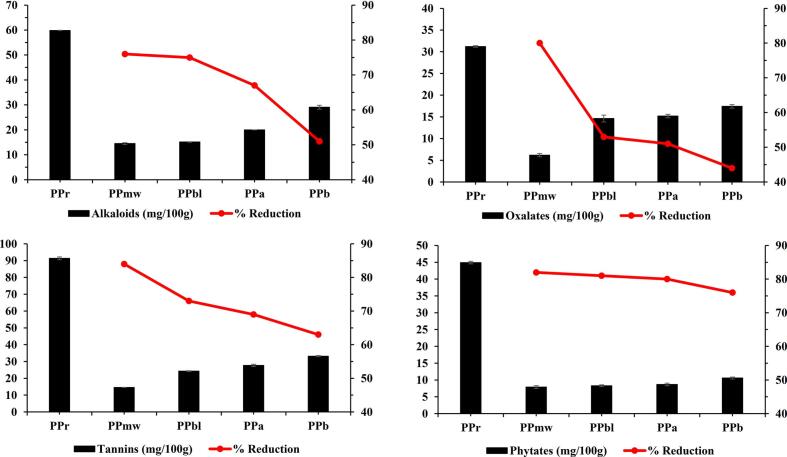
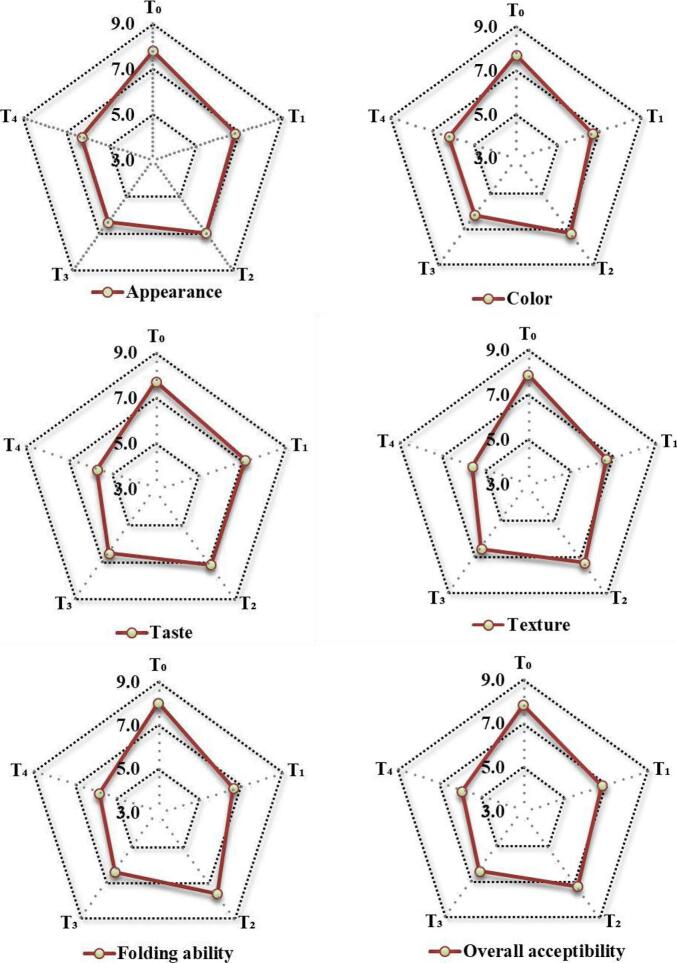
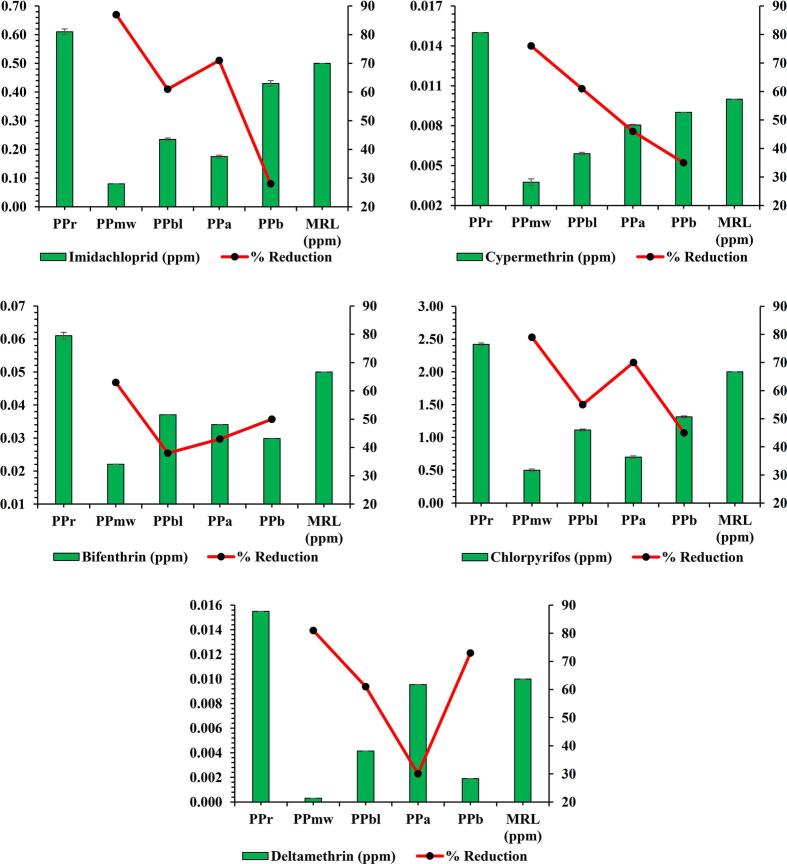
Potato is a highly nutritious staple food however, it also contains some antinutrients like alkaloids, phytates, tannins, oxalates as well as pesticide residues. Therefore, this study was conducted to reduce the loads of antinutrients and pesticides in potato powder (PP) using thermal and non-thermal processing techniques. Nutritional analysis revealed that the raw PP contained significantly ( < 0.05) higher magnitudes of dietary proteins (10.2 %), fibers (6.3 %), Na (50 mg/100 g), Ca (62 mg/100 g) and K (988 mg/100 g) when compared with the processed PP. The results demonstrated that all thermal and non-thermal processing techniques significantly reduced the antinutrients and pesticide residues. However, microwave heat treatment anticipated the highest reduction in alkaloids, oxalates, tannins and phytates contents from 60 to 14 mg/100 g (76 % reduction), 31-6 mg/100 g (80 % reduction), 91-15 mg/100 g (84 % reduction) and 45-8 mg/100 g (82 % reduction), respectively. Additionally, microwave heat processing also exhibited the highest decline in imidacloprid, cypermethrin, bifenthrin, chlorpyrifos and deltamethrin contents by 87 %, 76 %, 63 %, 79 % and 81 %, respectively. Later, microwave-treated PP (the most effective treatment) was used to develop unleavened flatbreads (i.e., chapatis) @ 2-10 %. Organoleptic evaluation of supplemented flatbreads suggested that 5 % supplementation with microwave treated PP has the highest overall acceptability. Therefore, it is concluded that thermal and non-thermal processing techniques are effective tools to reduce loads of antinutrients and pesticide burden in potatoes. Moreover, the study also suggests, PP can be efficiently used as natural food supplement for development of value-added foods.
土豆是一种营养丰富的主食,然而,它也含有一些抗营养物质,如生物碱、植酸盐、单宁、草酸盐以及农药残留。因此,本研究采用热加工和非热加工技术来减少土豆粉(PP)中的抗营养物质和农药含量。营养分析表明,与加工后的土豆粉相比,未加工的土豆粉中膳食蛋白质(10.2%)、纤维(6.3%)、钠(50毫克/100克)、钙(62毫克/100克)和钾(988毫克/100克)的含量显著更高(<0.05)。结果表明,所有热加工和非热加工技术都能显著降低抗营养物质和农药残留。然而,微波热处理使生物碱、草酸盐、单宁和植酸盐含量的降低幅度最大,分别从60毫克/100克降至14毫克/100克(降低76%)、从31毫克/100克降至6毫克/100克(降低80%)、从91毫克/100克降至15毫克/100克(降低84%)和从45毫克/100克降至8毫克/100克(降低82%)。此外,微波热处理还使吡虫啉、氯氰菊酯、联苯菊酯、毒死蜱和溴氰菊酯的含量分别下降了87%、76%、63%、79%和81%,降幅最大。随后,用微波处理过的土豆粉(最有效的处理方法)以2%-10%的比例制作无酵薄饼(即恰巴提)。对添加了土豆粉的薄饼进行感官评价表明,添加5%微波处理过的土豆粉的薄饼总体可接受性最高。因此,可以得出结论,热加工和非热加工技术是减少土豆中抗营养物质含量和农药负担的有效手段。此外,该研究还表明,土豆粉可以有效地用作天然食品补充剂,用于开发增值食品。