
神经网络中超越局部的神经信息处理
Beyond-local neural information processing in neuronal networks.
作者信息
Balkenhol Johannes, Händel Barbara, Biswas Sounak, Grohmann Johannes, Kistowski Jóakim V, Prada Juan, Bosman Conrado A, Ehrenreich Hannelore, Wojcik Sonja M, Kounev Samuel, Blum Robert, Dandekar Thomas
机构信息
Department of Bioinformatics, Biocenter, University of Würzburg, 97074 Würzburg, Germany.
Department of Psychology (III), University of Würzburg, 97070 Würzburg, Germany.
出版信息
Comput Struct Biotechnol J. 2024 Nov 13;23:4288-4305. doi: 10.1016/j.csbj.2024.10.040. eCollection 2024 Dec.
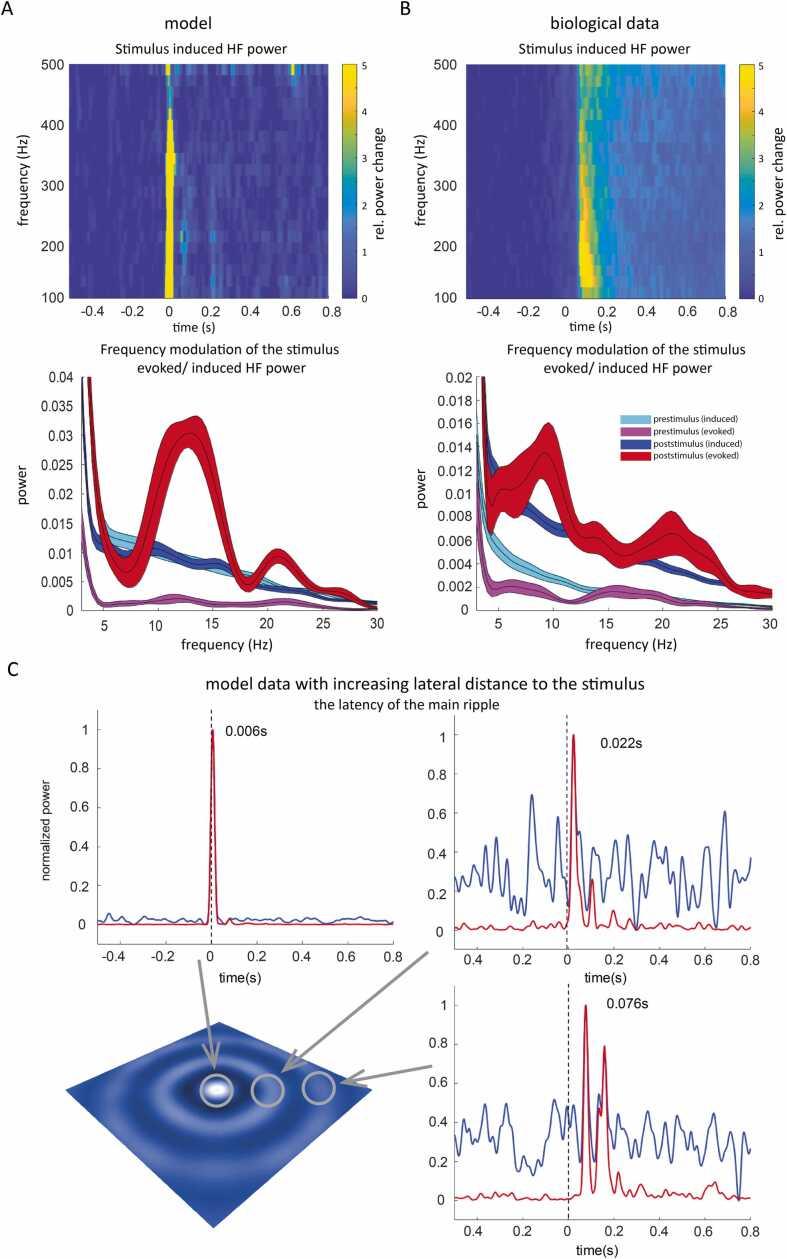
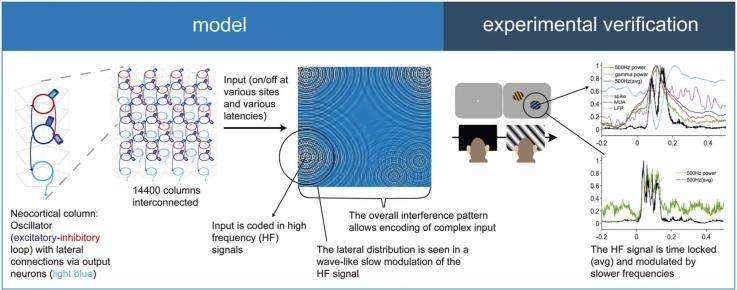
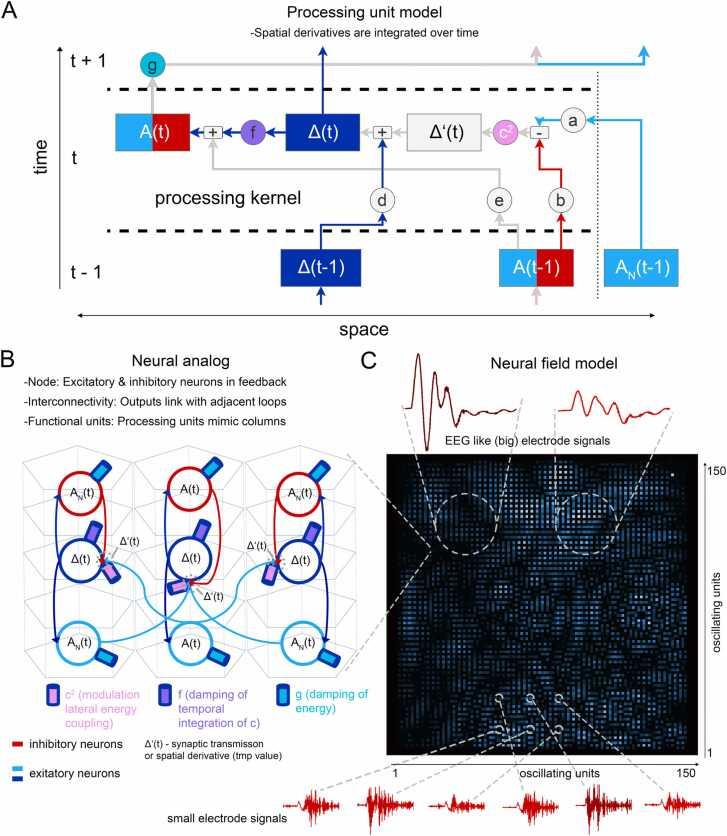
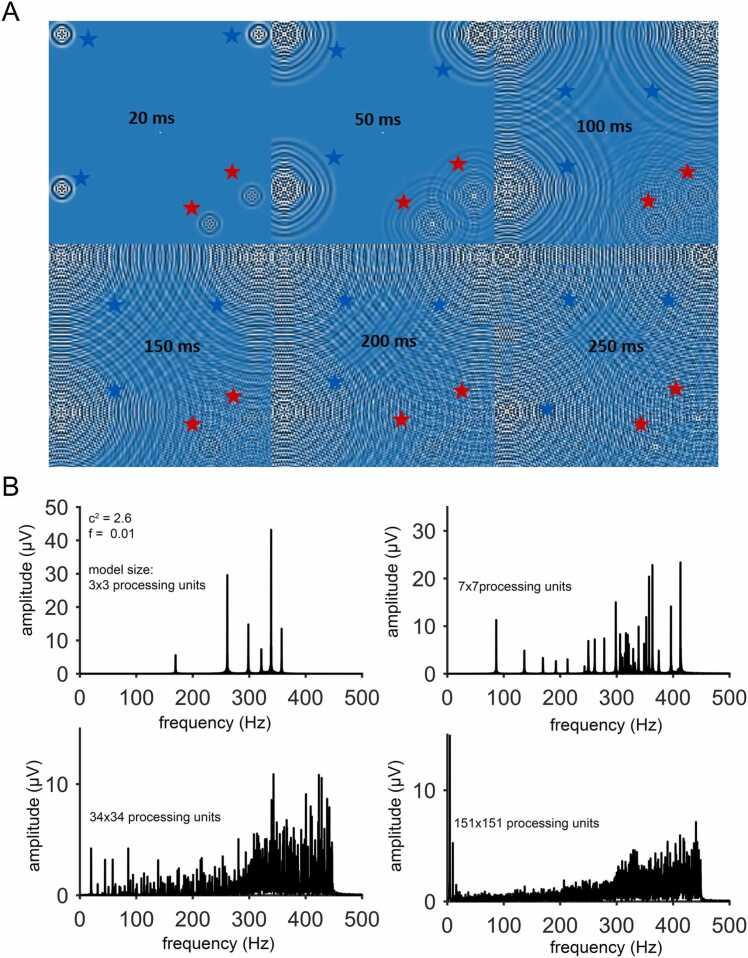
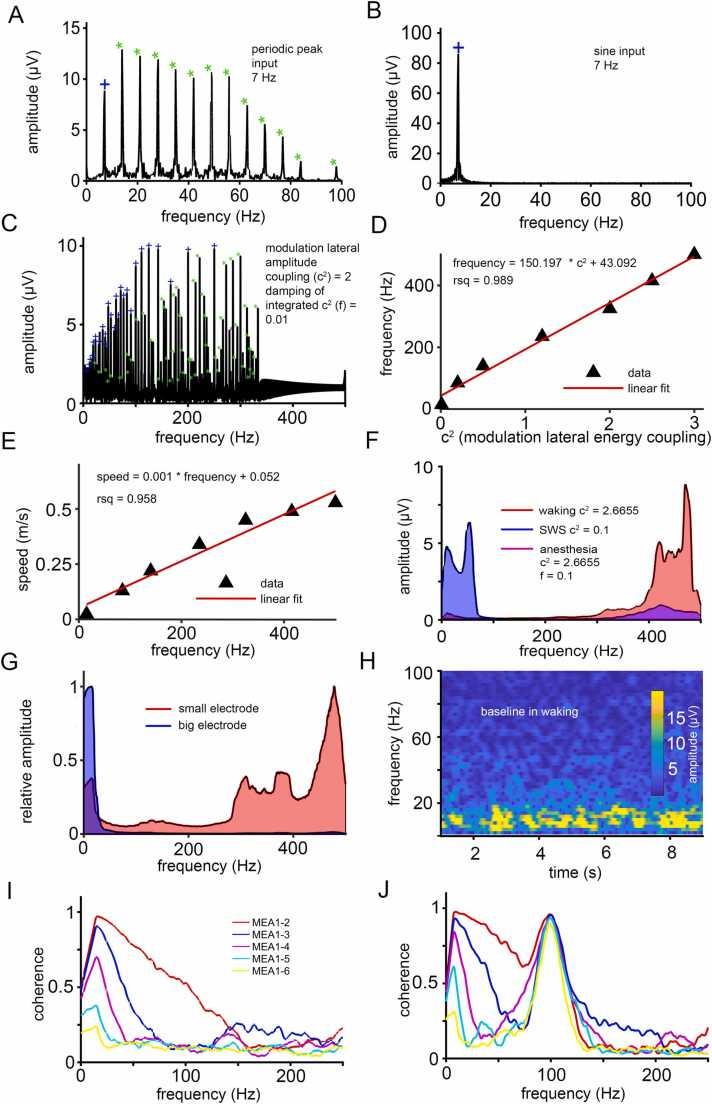
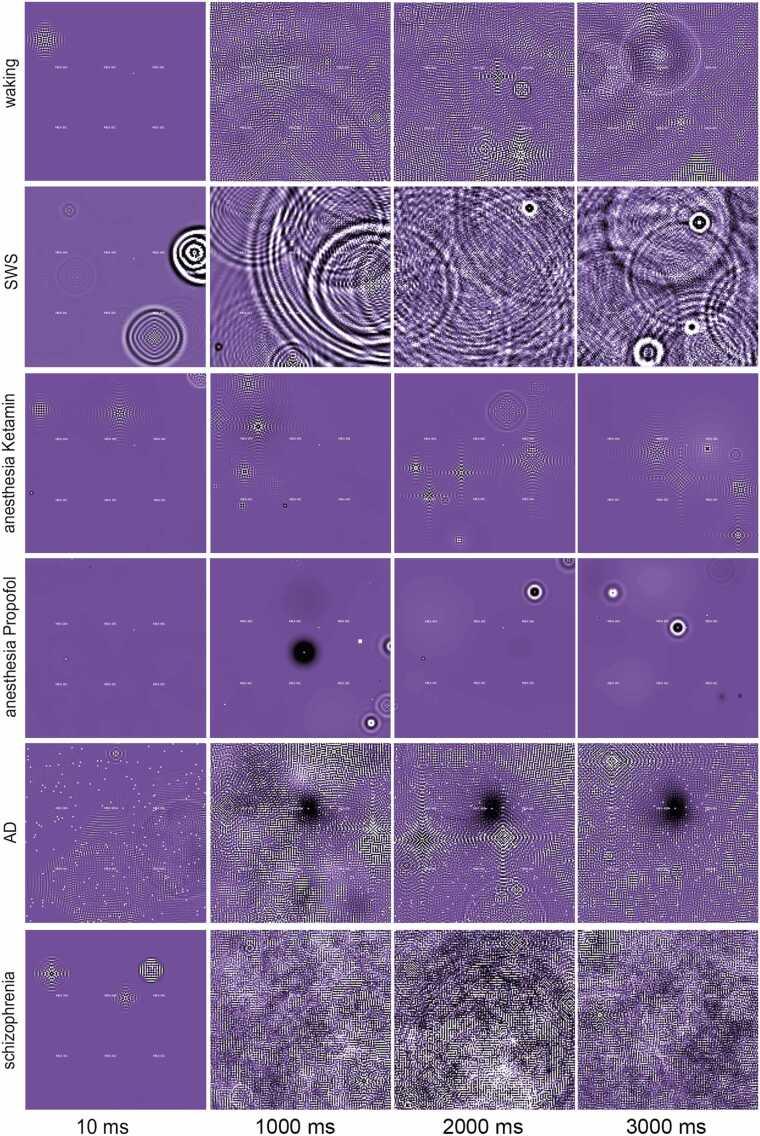
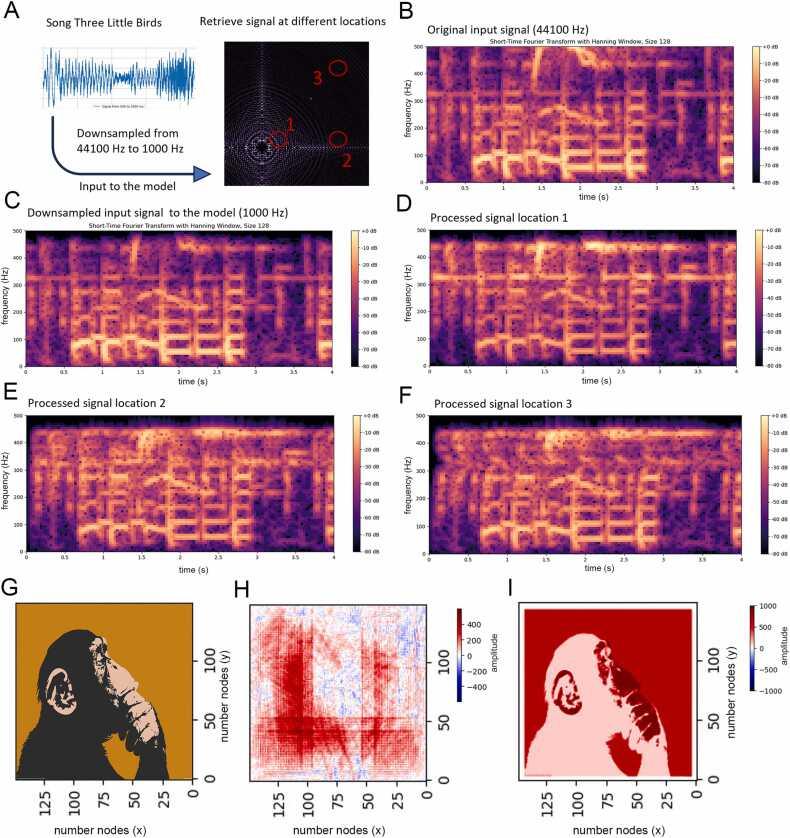
While there is much knowledge about local neuronal circuitry, considerably less is known about how neuronal input is integrated and combined across neuronal networks to encode higher order brain functions. One challenge lies in the large number of complex neural interactions. Neural networks use oscillating activity for information exchange between distributed nodes. To better understand building principles underlying the observation of synchronized oscillatory activity in a large-scale network, we developed a reductionistic neuronal network model. Fundamental building principles are laterally and temporally interconnected virtual nodes (microcircuits), wherein each node was modeled as a local oscillator. By this building principle, the neuronal network model can integrate information in time and space. The simulation gives rise to a wave interference pattern that spreads over all simulated columns in form of a travelling wave. The model design stabilizes states of efficient information processing across all participating neuronal equivalents. Model-specific oscillatory patterns, generated by complex input stimuli, were similar to electrophysiological high-frequency signals that we could confirm in the primate visual cortex during a visual perception task. Important oscillatory model pre-runners, limitations and strength of our reductionistic model are discussed. Our simple scalable model shows unique integration properties and successfully reproduces a variety of biological phenomena such as harmonics, coherence patterns, frequency-speed relationships, and oscillatory activities. We suggest that our scalable model simulates aspects of a basic building principle underlying oscillatory, large-scale integration of information in small and large brains.
虽然我们对局部神经元回路有很多了解,但对于神经元输入如何在神经网络中进行整合和组合以编码更高阶的脑功能,所知却要少得多。其中一个挑战在于大量复杂的神经相互作用。神经网络利用振荡活动在分布式节点之间进行信息交换。为了更好地理解大规模网络中同步振荡活动观测背后的构建原理,我们开发了一个简化的神经元网络模型。基本构建原理是横向和时间上相互连接的虚拟节点(微电路),其中每个节点被建模为一个局部振荡器。基于此构建原理,神经元网络模型能够在时间和空间上整合信息。模拟产生了一种波干涉模式,它以行波的形式在所有模拟列上传播。该模型设计稳定了所有参与的神经元等效物之间高效信息处理的状态。由复杂输入刺激产生的特定于模型的振荡模式,类似于我们在灵长类动物视觉皮层的视觉感知任务中能够确认的电生理高频信号。我们讨论了重要的振荡模型先驱、我们简化模型的局限性和优势。我们简单的可扩展模型显示出独特的整合特性,并成功再现了各种生物现象,如谐波、相干模式、频率 - 速度关系和振荡活动。我们认为,我们的可扩展模型模拟了在大小脑振荡性大规模信息整合背后的基本构建原理的各个方面。
 Zotero 插件