Maeda Taku, Tsushima Nayuta, Ishikawa Kosuke, Yamamoto Yuhei
Department of Plastic and Reconstructive Surgery, Faculty of Medicine and Graduate School of Medicine, Hokkaido University, Kita-15 Nishi-7, Kita-ku, Sapporo City, Hokkaido 060-8638, Japan.
Department of Otolaryngology-Head and Neck Surgery, Faculty of Medicine and Graduate School of Medicine, Hokkaido University, Kita 15, Nishi 7, Kita-ku, Sapporo City, Hokkaido 060-8638, Japan.
JPRAS Open. 2024 Nov 1;43:74-78. doi: 10.1016/j.jpra.2024.10.016. eCollection 2025 Mar.
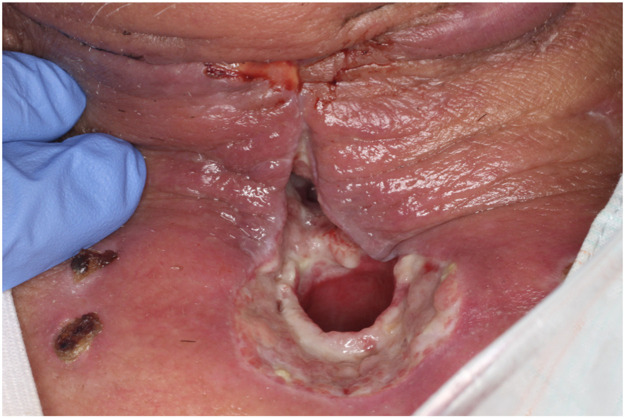
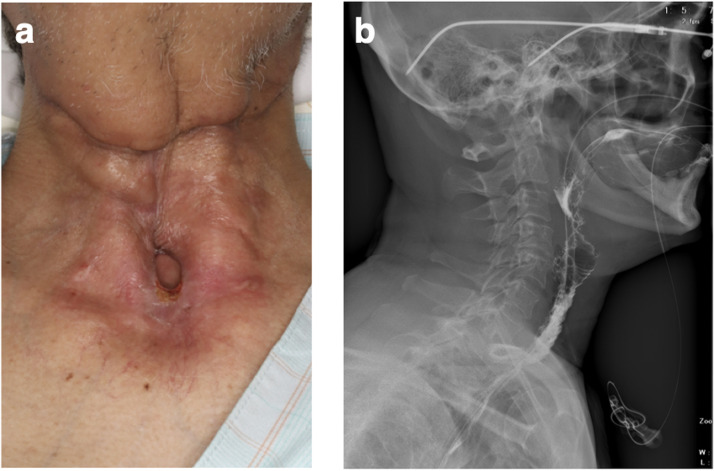
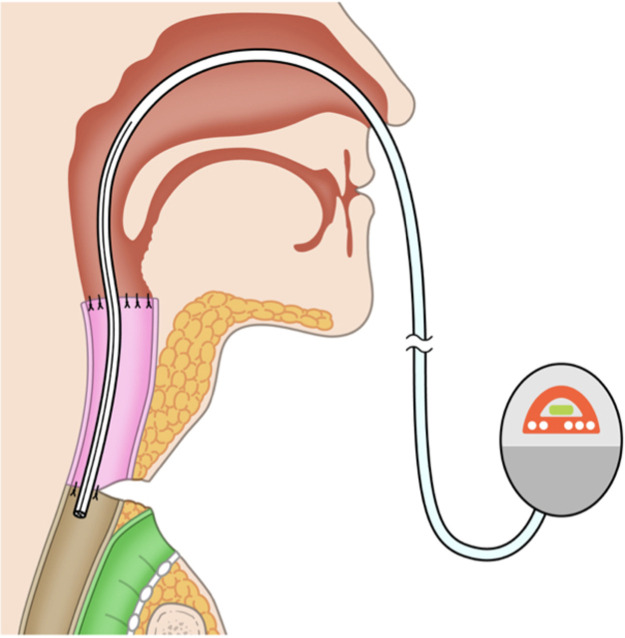
Esophagojejunal anastomotic fistula is difficult to treat because of continuous salivary flow. This report describes the innovative use of a negative pressure wound therapy device with a slit drain to treat an esophagojejunal anastomotic fistula after free jejunal transfer. Insertion of a slit drain was very effective for management of saliva. This device worked as a portable suction machine, allowing earlier healing without the need for surgery. A negative pressure wound therapy device using a slit drain can be useful for recalcitrant esophagojejunal anastomotic fistula with salivary flow after free jejunal transfer.
由于唾液持续分泌,食管空肠吻合口瘘难以治疗。本报告描述了一种创新的使用带狭缝引流管的负压伤口治疗装置来治疗游离空肠移植术后的食管空肠吻合口瘘。插入狭缝引流管对唾液管理非常有效。该装置起到了便携式吸引器的作用,无需手术即可实现更早愈合。使用狭缝引流管的负压伤口治疗装置对于游离空肠移植术后伴有唾液分泌的顽固性食管空肠吻合口瘘可能有用。