Zimmermann Ines, Eilts Friederike, Galler Anna-Sophia, Bayer Jonas, Hober Sophia, Berensmeier Sonja
Chair of Bioseparation Engineering, TUM School of Engineering and Design, Technical University of Munich, Boltzmannstraße 15, 85748 Garching, Germany.
Munich Institute of Integrated Materials, Energy and Process Engineering, Technical University of Munich, Lichtenbergstraße 4a, 85748 Garching, Germany.
Biotechnol Rep (Amst). 2024 Nov 26;45:e00864. doi: 10.1016/j.btre.2024.e00864. eCollection 2025 Mar.
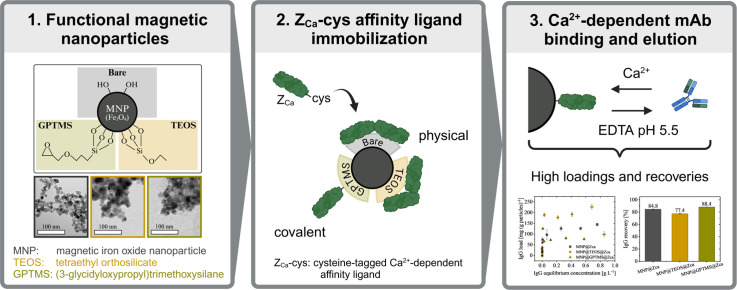
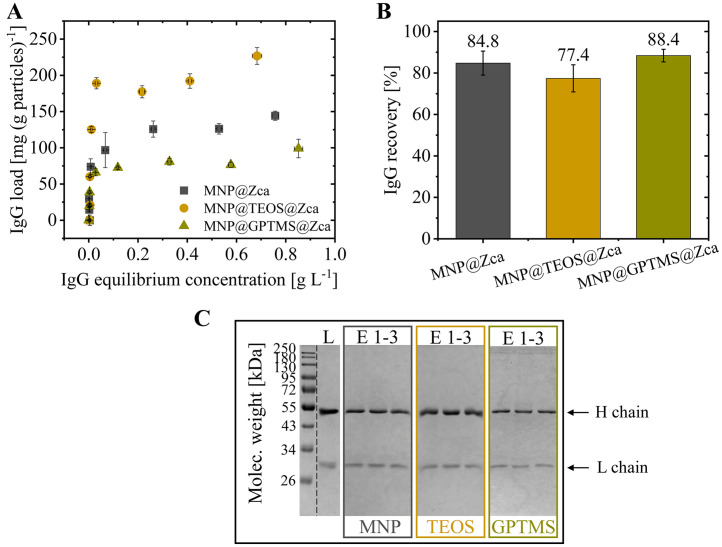
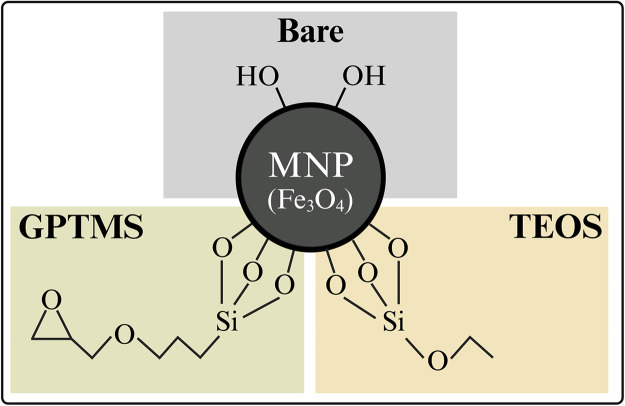
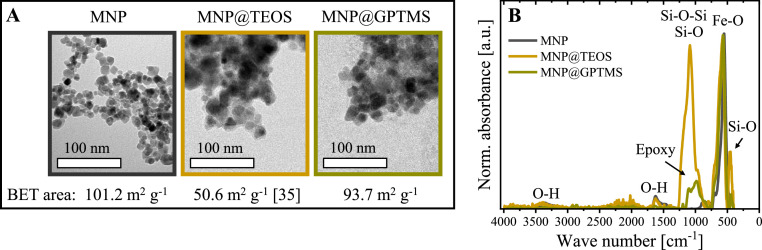
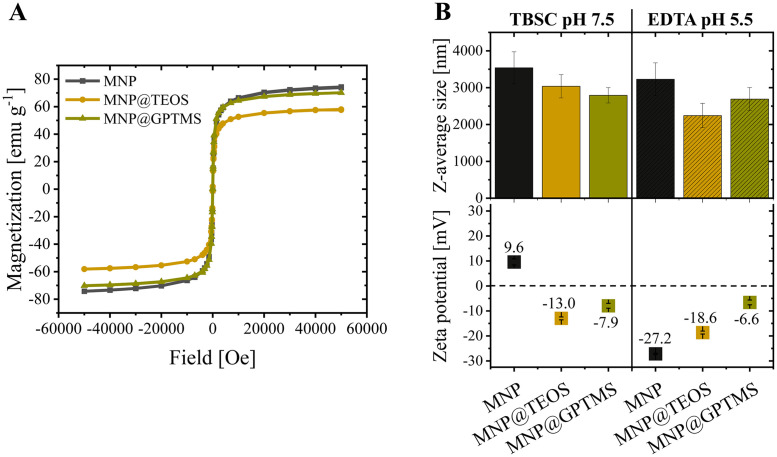
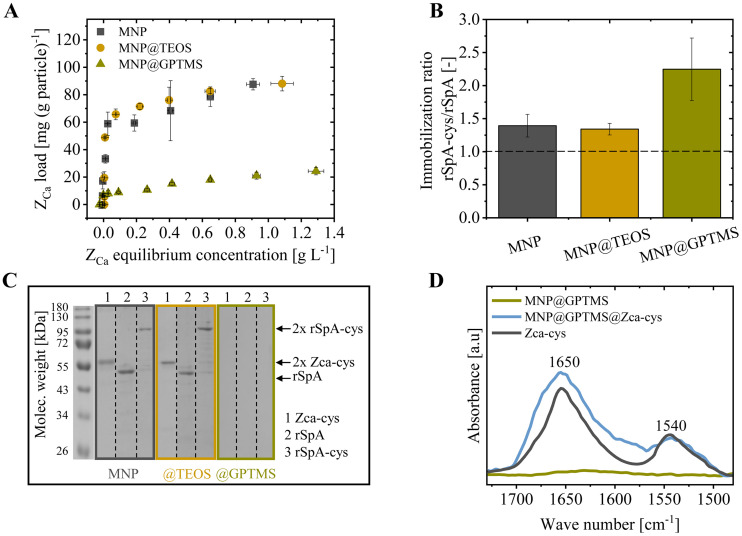
Current downstream processing of monoclonal antibodies (mAbs) is limited in throughput and requires harsh pH conditions for mAb elution from Protein A affinity ligands. The use of an engineered calcium-dependent ligand (Z) in magnetic separation applications promises improvements due to mild elution conditions, fast processability, and process integration prospects. In this work, we synthesized and evaluated three magnetic nanoparticle types immobilized with the cysteine-tagged ligand Z-cys. Ligand homodimers were physically immobilized onto bare iron oxide nanoparticles (MNP) and MNP coated with tetraethyl orthosilicate (MNP@TEOS). In contrast, Z-cys was covalently and more site-directedly immobilized onto MNP coated with (3-glycidyloxypropyl)trimethoxysilane (MNP@GPTMS) via a preferential cysteine-mediated epoxy ring opening reaction. Both coated MNP showed suitable characteristics, with MNP@TEOS@Z-cys demonstrating larger immunoglobulin G (IgG) capacity (196 mg ) and the GPTMS-coated particles showing faster magnetic attraction and higher IgG recovery (88 %). The particles pave the way for the development of calcium-dependent magnetic separation processes.
目前单克隆抗体(mAb)的下游加工在通量方面存在限制,并且需要苛刻的pH条件才能从蛋白A亲和配体上洗脱mAb。在磁分离应用中使用工程化的钙依赖性配体(Z)有望带来改进,因为其洗脱条件温和、加工速度快且具有工艺整合前景。在这项工作中,我们合成并评估了三种固定有半胱氨酸标记配体Z-cys的磁性纳米颗粒类型。配体同二聚体物理固定在裸氧化铁纳米颗粒(MNP)和涂有正硅酸四乙酯的MNP(MNP@TEOS)上。相比之下,Z-cys通过优先的半胱氨酸介导的环氧开环反应共价且更具位点定向性地固定在涂有(3-缩水甘油氧基丙基)三甲氧基硅烷的MNP(MNP@GPTMS)上。两种包覆的MNP都表现出合适的特性,MNP@TEOS@Z-cys显示出更大的免疫球蛋白G(IgG)容量(196 mg ),而GPTMS包覆的颗粒显示出更快的磁吸引力和更高的IgG回收率(88%)。这些颗粒为钙依赖性磁分离工艺的发展铺平了道路。