Maimaiti Zulipikaer, Liu Liang
Department of Orthopedics, Beijing Luhe Hospital, Capital Medical University, Beijing, 101149, People's Republic of China.
Infect Drug Resist. 2024 Dec 13;17:5557-5566. doi: 10.2147/IDR.S482931. eCollection 2024.
Bone and joint infections (BJIs) are challenging to diagnose. This study evaluated the utility of 16S rRNA gene sequencing in diagnosing BJIs, comparing it with conventional bacterial culture to explore microbial diversity in orthopedic infections.
Thirty patients with BJIs were enrolled from January 2019 to September 2020 at a single orthopedic center. Diagnoses were based on the Musculoskeletal Infection Society standards. DNA extraction, 16S rRNA sequencing, and microbial composition analysis were performed. Conventional bacterial culture results were compared with metagenomics detection, and associations with blood routine and biochemical test factors were analyzed.
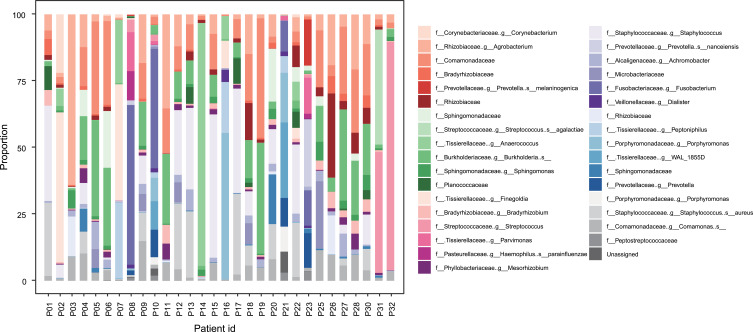
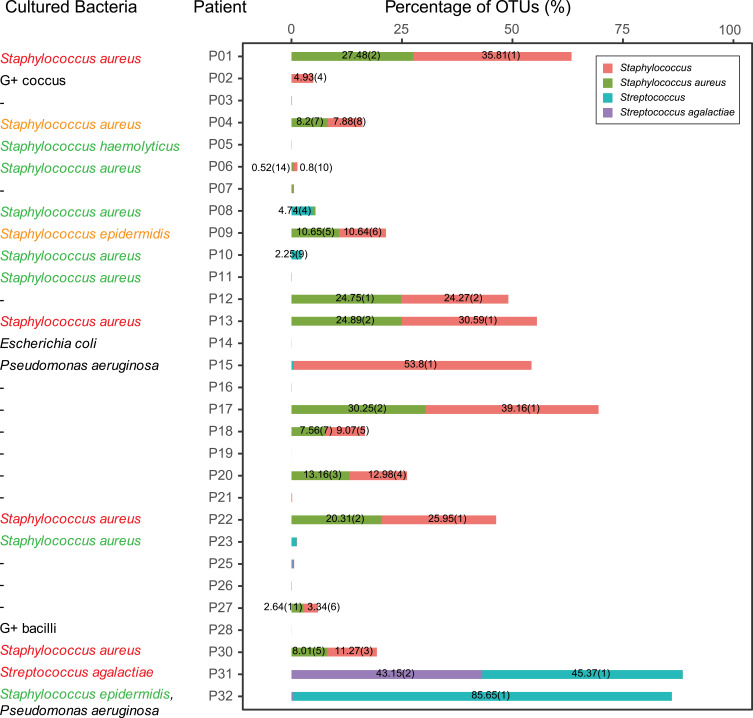
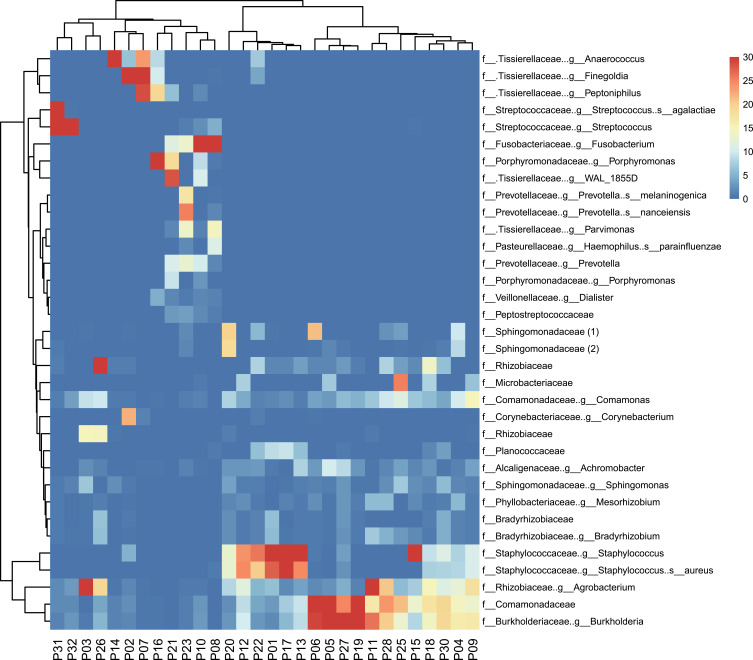
The study enrolled 30 patients with BJIs. Traditional bacterial culture successfully identified pathogens in 60% (18/30) of cases, predominantly . In contrast, 16S rRNA metagenomics sequencing revealed distinct microorganisms in all cases, it unveiled a diverse microbial landscape. The correlation between bacterial culture and metagenomics detection showcased both concordance and discrepancies. Consistency of detection between the two methods showed that metagenomics detection detected the same genus or species in 14 (87.5%) of the 16 samples identified as species by bacterial culture. In nearly half of the patients with negative cultures, pathogenic microorganisms were detected, highlighting the capability of 16S rRNA sequencing to identify microorganisms, even in samples with negative or unidentified culture results. Moreover, no significant correlation was observed between bacterial culture, metagenomics detection and the factors of blood routine and biochemical test.
This study deepens our understanding of the microbial complexity in BJIs. While traditional culture methods are cost-effective and practical, 16S rRNA gene sequencing proves valuable for complementary microbial analysis, particularly when traditional methods fail or rapid identification is critical. This emerging diagnostic approach can enhance the accuracy and speed of pathogen identification, enabling more effective interventions in the management of BJIs.
骨与关节感染(BJIs)的诊断具有挑战性。本研究评估了16S rRNA基因测序在BJIs诊断中的效用,将其与传统细菌培养进行比较,以探索骨科感染中的微生物多样性。
2019年1月至2020年9月在一个骨科中心招募了30例BJIs患者。诊断基于肌肉骨骼感染协会标准。进行了DNA提取、16S rRNA测序和微生物组成分析。将传统细菌培养结果与宏基因组学检测结果进行比较,并分析其与血常规和生化检测因素的相关性。
该研究纳入了30例BJIs患者。传统细菌培养在60%(18/30)的病例中成功鉴定出病原体,主要是……。相比之下,16S rRNA宏基因组学测序在所有病例中均揭示了不同的微生物,展现出多样的微生物格局。细菌培养与宏基因组学检测之间的相关性显示出一致性和差异。两种方法检测的一致性表明,在细菌培养鉴定为物种的16个样本中,宏基因组学检测在14个(87.5%)样本中检测到相同的属或种。在近一半培养结果为阴性的患者中检测到致病微生物,突出了16S rRNA测序识别微生物的能力,即使在培养结果为阴性或未明确的样本中也是如此。此外,细菌培养、宏基因组学检测与血常规和生化检测因素之间未观察到显著相关性。
本研究加深了我们对BJIs中微生物复杂性的理解。虽然传统培养方法具有成本效益且实用,但16S rRNA基因测序对于补充微生物分析具有重要价值,特别是在传统方法失败或快速鉴定至关重要时。这种新兴的诊断方法可以提高病原体鉴定的准确性和速度,从而在BJIs的管理中实现更有效的干预。