Ha Sung Min, Lee Kihyun, Kim Gun-Ha, Hurych Jakub, Cinek Ondřej, Shim Jung Ok
Department of Integrative Biology and Physiology, UCLA, Los Angeles, CA 957246, USA.
CJ Bioscience, Seoul 04527, Republic of Korea.
iScience. 2024 Nov 22;27(12):111442. doi: 10.1016/j.isci.2024.111442. eCollection 2024 Dec 20.
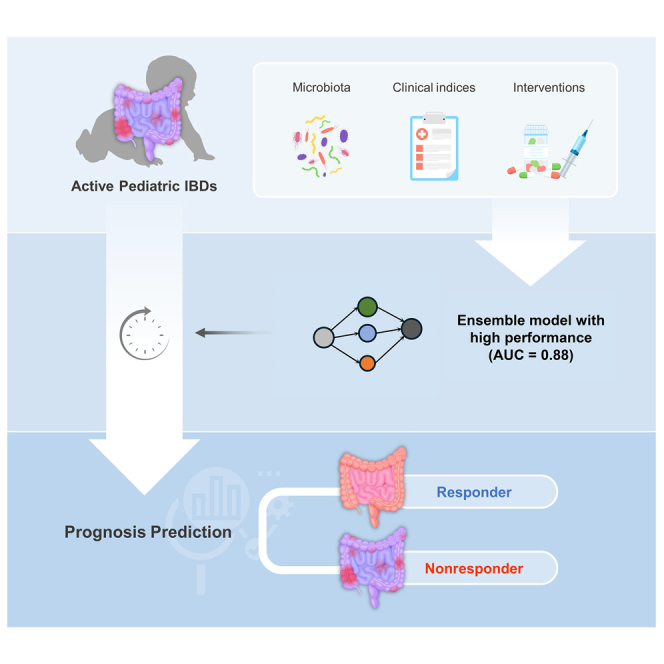
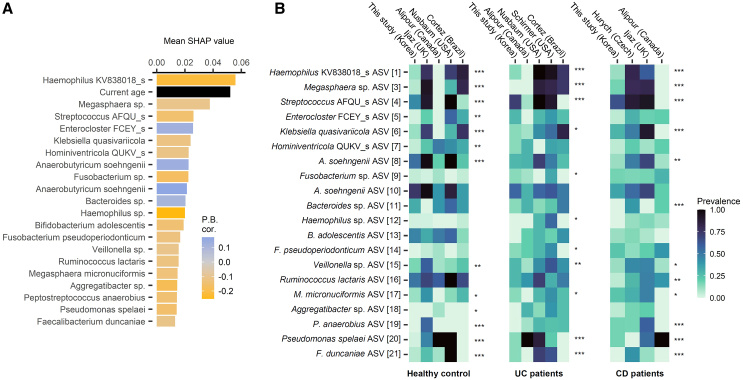
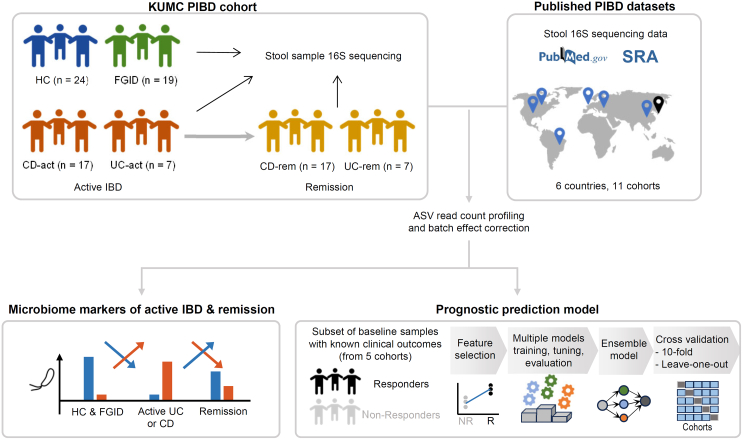
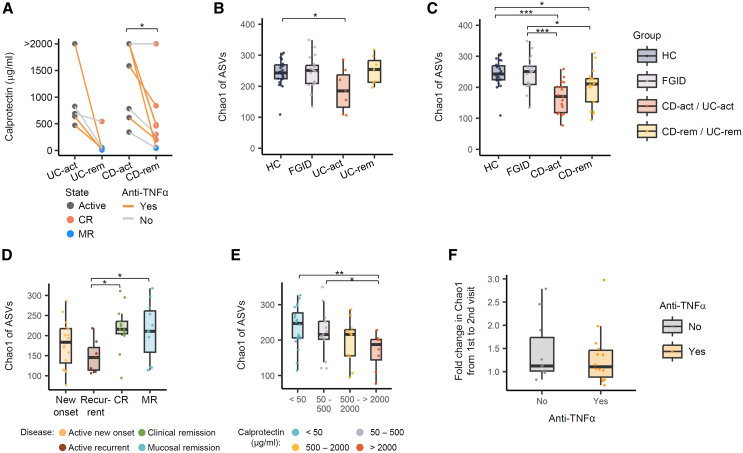
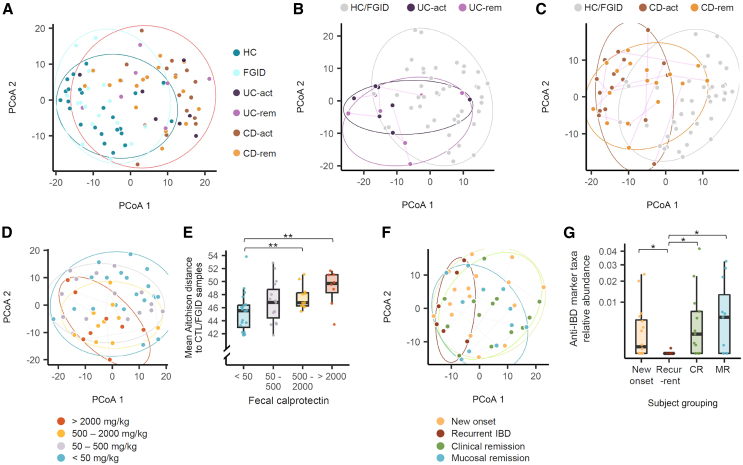
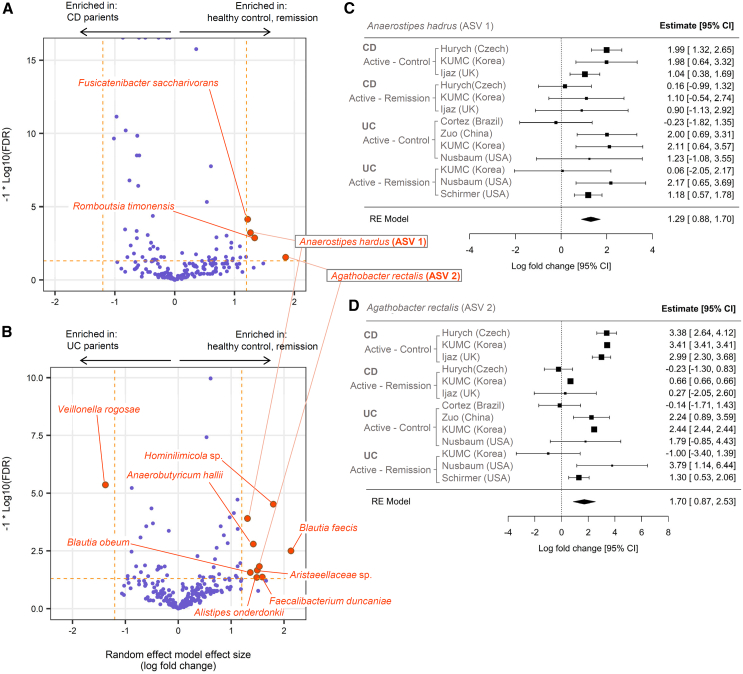
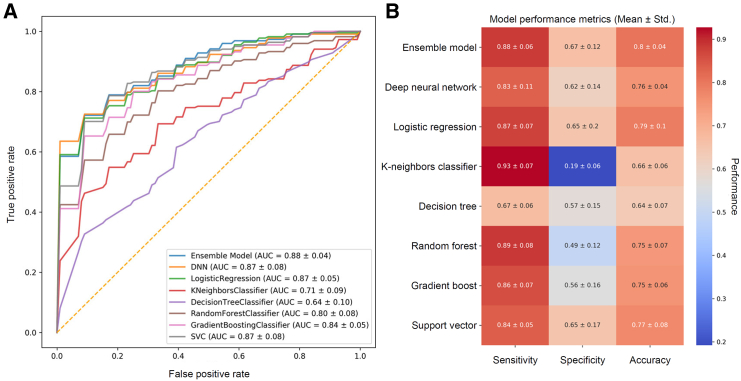
Developing microbiome-based markers for pediatric inflammatory bowel disease (PIBD) is challenging. Here, we evaluated the diagnostic and prognostic potential of the gut microbiome in PIBD through a case-control study and cross-cohort analyses. In a Korean PIBD cohort (24 patients with PIBD, 43 controls), we observed that microbial diversity and composition shifted in patients with active PIBD versus controls and recovered at remission. We employed a differential abundance meta-analysis approach to identify microbial markers consistently associated with active inflammation and remission across seven PIBD cohorts from six countries ( = 1,670) including our dataset. Finally, we trained and tested various machine learning models for their ability to predict a patient's future remission based on baseline bacterial composition. An ensemble model trained with the amplicon sequence variants effectively predicted future remission of PIBD. This research highlights the gut microbiome's potential to guide precision therapy for PIBD.
开发用于小儿炎症性肠病(PIBD)的基于微生物组的标志物具有挑战性。在此,我们通过病例对照研究和跨队列分析评估了肠道微生物组在PIBD中的诊断和预后潜力。在一个韩国PIBD队列(24例PIBD患者,43名对照)中,我们观察到与对照相比,活动期PIBD患者的微生物多样性和组成发生了变化,并在缓解期恢复。我们采用差异丰度荟萃分析方法,从包括我们数据集在内的六个国家的七个PIBD队列(n = 1670)中识别与活动炎症和缓解持续相关的微生物标志物。最后,我们训练并测试了各种机器学习模型,以评估它们基于基线细菌组成预测患者未来缓解的能力。用扩增子序列变异训练的集成模型有效地预测了PIBD的未来缓解情况。这项研究突出了肠道微生物组在指导PIBD精准治疗方面的潜力。