Sarovic Darko, Schneiderman Justin, Lundström Sebastian, Riaz Bushra, Orekhova Elena, Khan Sheraz, Gillberg Christopher
Gillberg Neuropsychiatry Centre, Department of Psychiatry and Neurochemistry, Institute of Neuroscience and Physiology, Sahlgrenska Academy, University of Gothenburg, Gothenburg, Sweden.
Department of Radiology, Sahlgrenska University Hospital, Bruna Straket 11B, Gothenburg, 413 45, Sweden.
BMC Psychiatry. 2024 Dec 18;24(1):900. doi: 10.1186/s12888-024-06400-z.
Autism is associated with alterations of social communication, such as during face-to-face interactions. This study aimed to probe face processing in autistics with normal IQ utilizing magnetoencephalography to examine event-related fields within the fusiform gyrus during face perception.
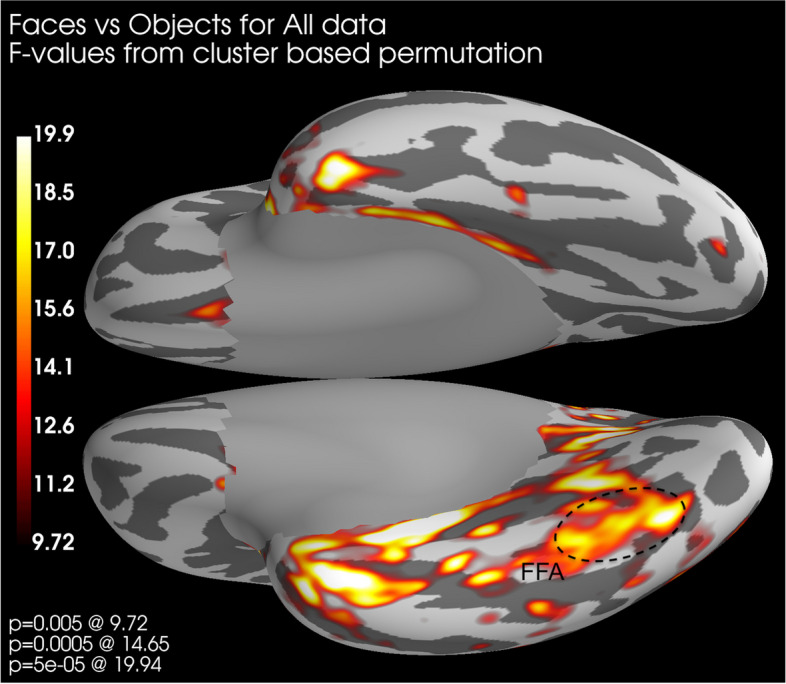
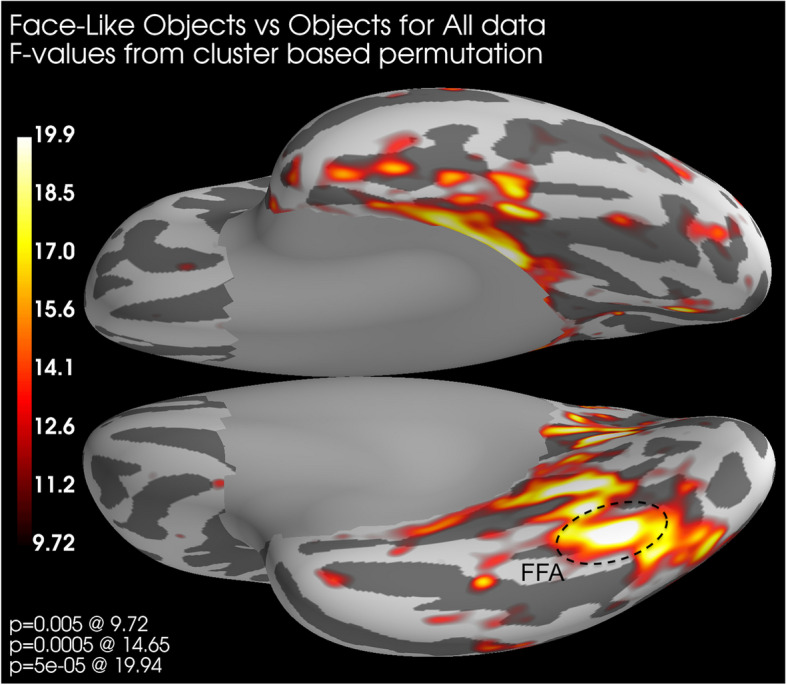
A case-control cohort of 22 individuals diagnosed with autism and 20 age-matched controls (all male, age 29.3 ± 6.9 years) underwent magnetoencephalographic scanning during an active task while observing neutral faces, face-like pareidolic objects, and non-face objects. The fusiform face area was identified using a face localizer for each participant, and the cortical activation pattern was normalized onto an average brain for subsequent analysis.
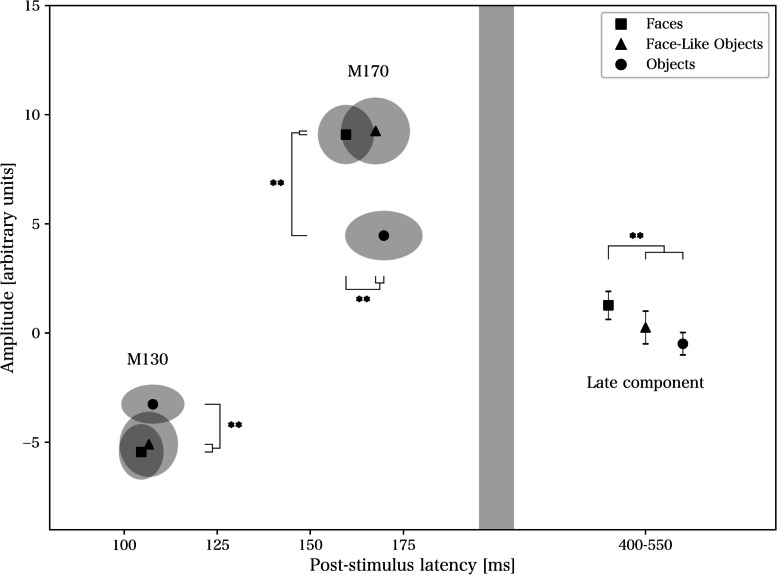
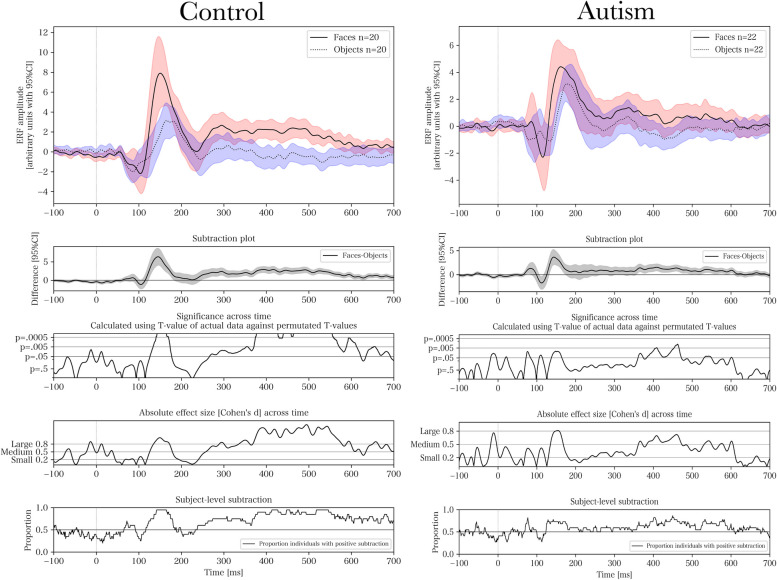
Early post-stimulus activation amplitudes (before 100-200 ms) indicated differentiation between stimuli containing fundamental facial features and non-face objects in both groups. In contrast, later activation (400-550 ms) differentiated real faces from both pareidolic and non-face objects across both groups and faces from objects in controls but not in autistics. There was no effect of autistic-like traits.
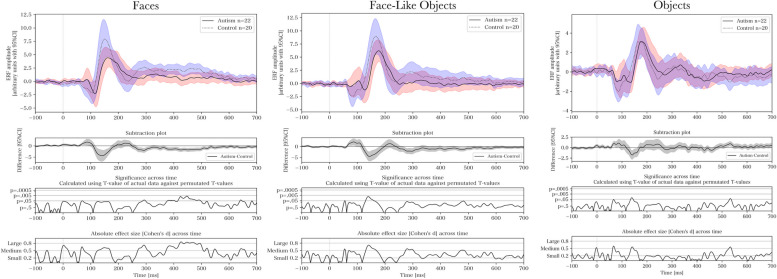
The absence of group differences in early activation suggest intact face detection in autistics possessing a normal IQ. Later activation captures a greater degree of the complexity and social information from actual faces. Although both groups distinguished faces from pareidolic and non-face objects, the control group exhibited a slightly heightened differentiation at this latency, indicating a potential disadvantage for autistics in real face processing. The subtle difference in late-stage face processing observed in autistic individuals may reflect specific cognitive mechanisms related to face perception in autism.
自闭症与社交沟通障碍有关,比如在面对面互动中。本研究旨在利用脑磁图技术,探究智商正常的自闭症患者在面部感知过程中梭状回内的事件相关场,以研究其面部加工情况。
一个病例对照队列,包括22名被诊断为自闭症的个体和20名年龄匹配的对照组(均为男性,年龄29.3±6.9岁),在执行一项主动任务观察中性面孔、类脸空想性视错觉物体和非面部物体时接受脑磁图扫描。使用面部定位器为每位参与者确定梭状面部区域,并将皮质激活模式标准化到平均脑上以便后续分析。
刺激后早期激活幅度(100 - 200毫秒之前)表明,两组中包含基本面部特征的刺激与非面部物体之间存在差异。相比之下,后期激活(400 - 550毫秒)在两组中区分了真实面孔与空想性视错觉物体和非面部物体,在对照组中区分了面孔与物体,但在自闭症患者中没有。类自闭症特征没有影响。
早期激活中没有组间差异,表明智商正常的自闭症患者面部检测功能完好。后期激活从实际面孔中捕捉到了更大程度的复杂性和社会信息。尽管两组都区分了面孔与空想性视错觉物体和非面部物体,但对照组在这个潜伏期表现出稍高的区分度,表明自闭症患者在真实面部加工中可能存在潜在劣势。在自闭症个体中观察到的后期面部加工的细微差异可能反映了自闭症中与面部感知相关的特定认知机制。