Yuanli Guo, Tanyu Cao, Caixia Yang, Wenfeng Fan, Xiaofang Dong, Min Wang, Huanhuan Gao, Peihua Lv, Keke Ma
The First Affiliated Hospital of Zhengzhou University, Zhengzhou, China.
Zhengzhou Technical College, Zhengzhou, China.
BMC Med Educ. 2024 Dec 18;24(1):1468. doi: 10.1186/s12909-024-06457-0.
Nursing leadership by head nurses is critical to enhancing nursing research activity and performance in hospitals but the impact mechanism is unclear.
To investigate the effect of nursing leadership of head nurses on research burnout, self-efficacy, and performance of highly-educated nurses in the hospital.
A cross-sectional survey was conducted and electronic questionnaires were distributed online. An online data analysis tool SPSSAU was adopted to conduct descriptive analysis, correlation analysis, and structural equation model construction. This study adhered to the STROBE guideline.
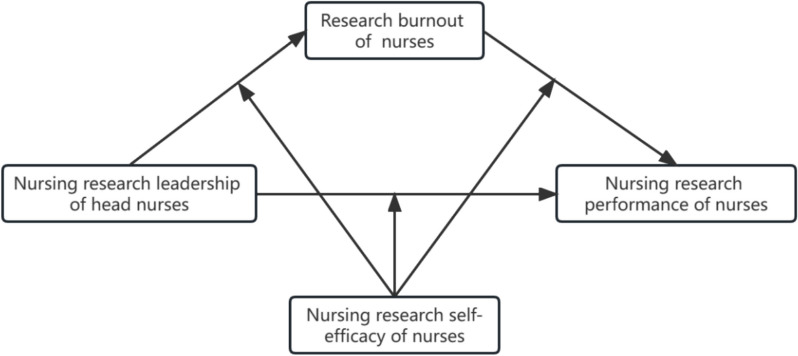
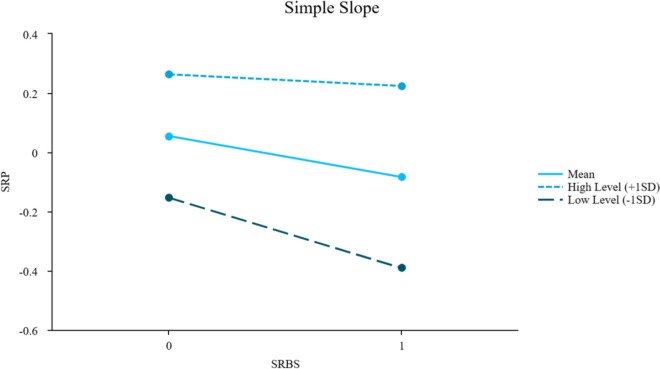
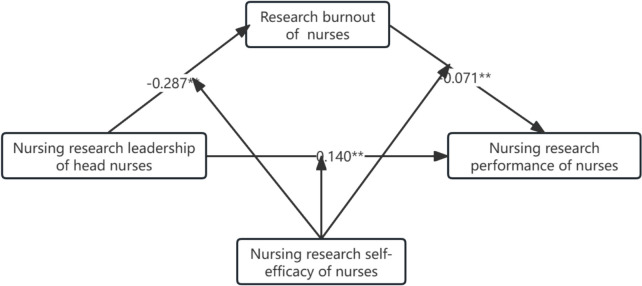
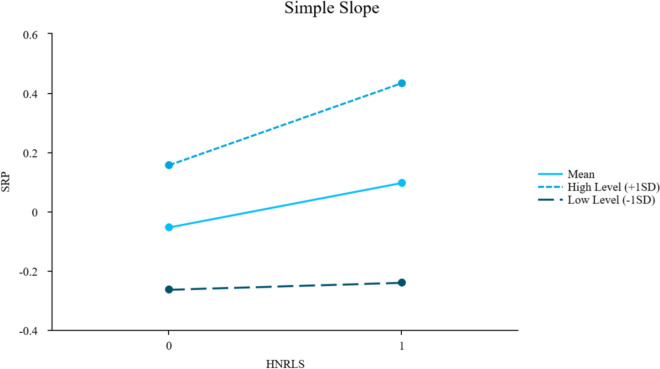
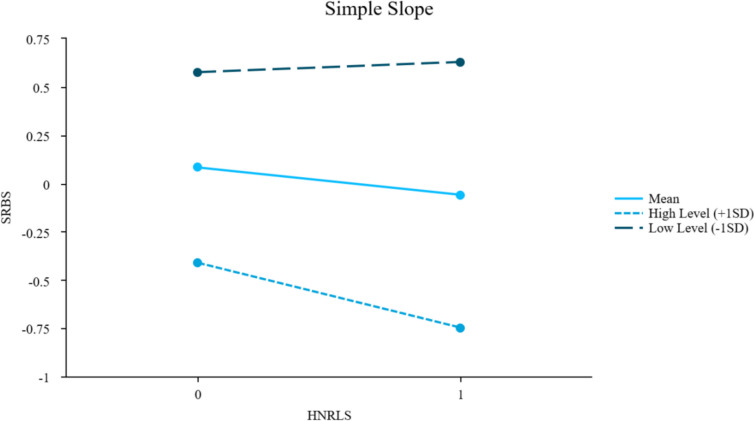
A total of 1918 questionnaires were collected in this survey. The results indicated that nursing research leadership of head nurses (β = 0.094, p < 0.001) could directly affect the research performance of highly-educated nurses or indirectly via research burnout (β = -0.287, p < 0.001, β = -0.071, p = 0.002). The indirect effect accounted for 12.74% of the total mediating effect. The research self-efficacy of highly-educated nurses was a moderator in the mediation model, and research leadership had no significant effect on research performance when the self-efficacy of nurses was low, while the direct effect [B = -0.041, CI(-0.098,0.017) vs B = 0.094, CI(0.051,0.138) vs B = 0.229, CI(0.171,0.287)] of research leadership and the inderct effect [B = -0.004, CI(-0.021,0.012) vs B = 0.010, CI(0.004,0.018) vs B = -0.031, CI(-0.051,-0.012)] of research burnout existed when the research self-efficacy was in mean and high level.
Research leadership of head nurses and self-efficacy of highly-educated nurses are crucial to enhancing nursing research performance in the hospitals.
护士长的护理领导力对于提高医院的护理研究活动和绩效至关重要,但影响机制尚不清楚。
探讨护士长的护理领导力对医院高学历护士研究倦怠、自我效能感和绩效的影响。
采用横断面调查,通过在线方式发放电子问卷。采用在线数据分析工具SPSSAU进行描述性分析、相关性分析和结构方程模型构建。本研究遵循STROBE指南。
本次调查共收集到1918份问卷。结果表明,护士长的护理研究领导力(β = 0.094,p < 0.001)可直接影响高学历护士的研究绩效,或通过研究倦怠间接影响(β = -0.287,p < 0.001,β = -0.071,p = 0.002)。间接效应占总中介效应的12.74%。高学历护士的研究自我效能感是中介模型中的调节变量,当护士自我效能感较低时,研究领导力对研究绩效无显著影响,而当研究自我效能感处于中等和较高水平时,研究领导力的直接效应[B = -0.041,CI(-0.098,0.017) 对比 B = 0.094,CI(0.051,0.138) 对比 B = 0.229,CI(0.171,0.287)]和研究倦怠的间接效应[B = -0.004,CI(-0.021,0.012) 对比 B = 0.010,CI(0.004,0.018) 对比 B = -0.031,CI(-0.051,-0.012)]存在。
护士长的研究领导力和高学历护士的自我效能感对于提高医院的护理研究绩效至关重要。