Yedjou Clement G, Sims Jennifer N, Njiki Sylvianne, Chitoh Ariane M, Joseph Manica, Cherkos Ashenafi S, Tchounwou Paul B
Department of Biological Sciences, College of Science and Technology, Florida Agricultural and Mechanical University, 1610 S. Martin Luther King Blvd, Tallahassee, FL 32307, USA.
College of Innovation and Design, Texas A&M University-Commerce, 2200 Campbell St, Commerce, TX 75428, USA.
J Community Med Public Health. 2024;8(3). doi: 10.29011/2577-2228.100460. Epub 2024 Aug 15.
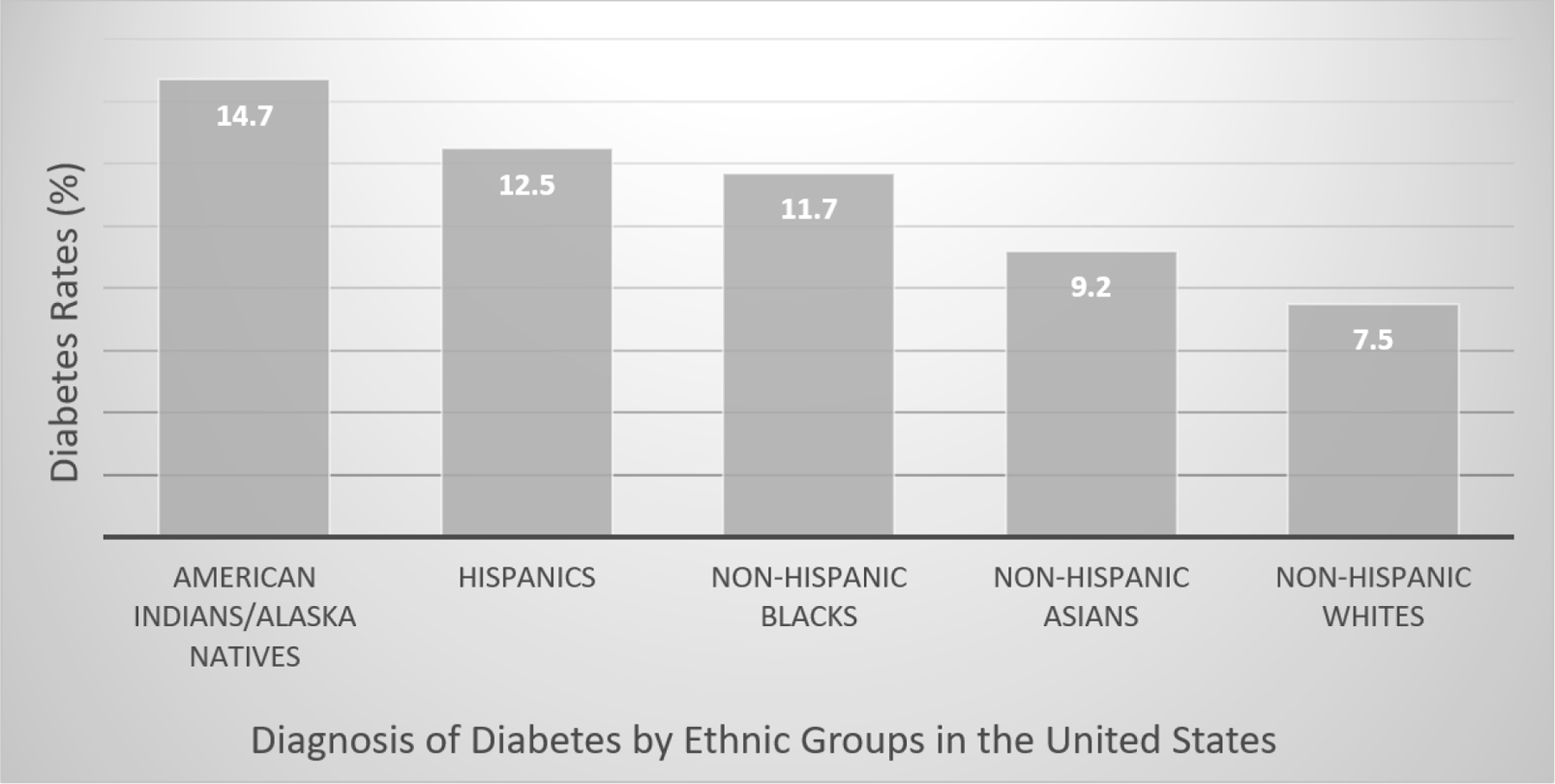
Diabetes Mellitus (DM) is a severe and chronic metabolic disorder characterized by hyperglycaemia and various complications, including cardiovascular disease. It is diagnosed when fasting plasma glucose (FPG) level is126 mg/dL (7.0 mmol/L) or higher [1]. Notable differences in DM prevalence are evident among populations in the United States. While DM affects 13% of the general adult population, specific groups, including American Indians/Alaska Natives (14.7%), Hispanics (12.5%), and non-Hispanic Blacks (11.7%), experience disproportionately higher rates. Conversely, lower prevalence rates are observed among non-Hispanic Asians (9.2%) and non-Hispanic Whites (7.5%). Black Americans are twice as likely to succumb to diabetes-related mortality compared to Whites [2]. The overall objective of this review article is to comprehensively address racial disparities in DM within the United States, emphasizing prevalence rates, management strategies, and health outcomes across diverse ethnic groups. To achieve this objective, we conducted a systematic review and meta-analysis utilizing data from nationally representative surveys, healthcare databases, and published literature spanning from 2014 to 2023. Our findings highlight significant racial disparities in DM prevalence, with minority populations, including African Americans, Hispanics, and Native Americans, consistently exhibiting higher rates than their Caucasian counterparts. Beyond prevalence, disparities extend to access to healthcare resources, diabetes education, and preventive measures. Additionally, challenges in DM management, including access to optimal treatment modalities, medication adherence, and diabetes self-management education, are identified among minority populations. Socioeconomic factors, particularly income and education, significantly contribute to these disparities. This review article contributes to the growing body of evidence guiding policymakers, healthcare professionals, and researchers in developing targeted strategies to achieve health equity in diabetes management and prevention. Addressing these disparities is crucial for fostering an inclusive and practical approach to DM care within diverse ethnic populations.
糖尿病(DM)是一种严重的慢性代谢紊乱疾病,其特征为高血糖以及包括心血管疾病在内的各种并发症。当空腹血糖(FPG)水平达到126毫克/分升(7.0毫摩尔/升)或更高时,即可确诊[1]。美国不同人群的糖尿病患病率存在显著差异。糖尿病影响着13%的普通成年人口,而特定群体,包括美国印第安人/阿拉斯加原住民(14.7%)、西班牙裔(12.5%)和非西班牙裔黑人(11.7%),患病率则高得多。相反,非西班牙裔亚洲人(9.2%)和非西班牙裔白人(7.5%)的患病率较低。与白人相比,美国黑人死于糖尿病相关疾病的可能性是白人的两倍[2]。这篇综述文章的总体目标是全面探讨美国糖尿病方面的种族差异,重点关注不同种族群体的患病率、管理策略和健康结果。为实现这一目标,我们利用2014年至2023年全国代表性调查、医疗保健数据库和已发表文献中的数据,进行了系统综述和荟萃分析。我们的研究结果凸显了糖尿病患病率方面显著的种族差异,包括非裔美国人、西班牙裔和美国原住民在内的少数族裔群体的患病率始终高于白人。除了患病率,差异还体现在获得医疗资源、糖尿病教育和预防措施方面。此外,在少数族裔群体中,还发现了糖尿病管理方面的挑战,包括获得最佳治疗方式、药物依从性和糖尿病自我管理教育。社会经济因素,特别是收入和教育,对这些差异有显著影响。这篇综述文章为不断增加的证据做出了贡献,指导政策制定者、医疗保健专业人员和研究人员制定有针对性的策略,以实现糖尿病管理和预防方面的健康公平。解决这些差异对于在不同种族人群中建立包容性和切实可行的糖尿病护理方法至关重要。