Vendramini Ana Carolina Macri Gaspar, Azevedo Rosemeiry Capriata de Souza, Mendes Priscila Aguiar, Silva Janderson Diego Pimenta da, Reiners Annelita Almeida Oliveira, Andrade Amanda Cristina de Souza
Universidade do Estado de Mato Grosso. Tangará da Serra, Mato Grosso, Brazil.
Universidade Federal de Mato Grosso. Cuiabá, Mato Grosso, Brazil.
Rev Bras Enferm. 2024 Dec 13;77(5):e20240011. doi: 10.1590/0034-7167-2024-0011. eCollection 2024.
to compare the knowledge and attitudes of nursing students regarding sexual behavior and sexually transmitted infections (STIs) in older adults before and after an educational intervention.
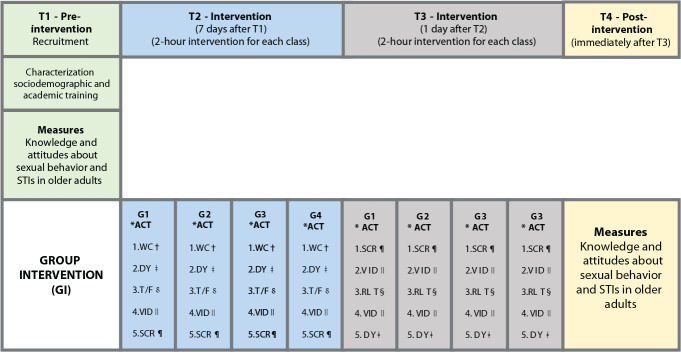
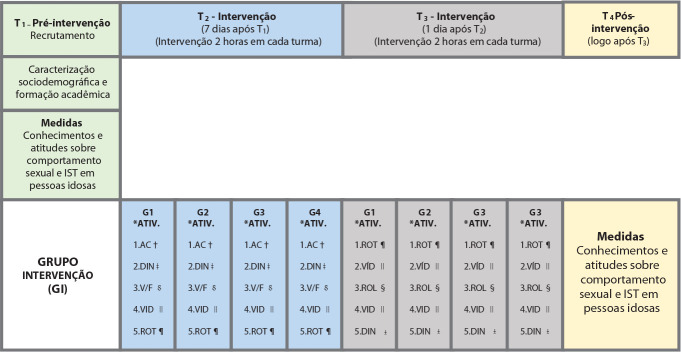
this quasi-experimental study involved a convenience sample of 45 nursing students from a public university, conducted in three stages: pre-intervention, intervention, and post-intervention. A questionnaire was used to assess sociodemographic characteristics, academic training, and knowledge and attitudes on the topic. The intervention was an educational web conference. Paired t-test and Wilcoxon test were used for data analysis.
there was a statistically significant difference in the knowledge and attitude scores of nursing students before and after the educational intervention (p < 0.001). A significant increase was observed in the knowledge score (from 9.3 to 12.2) and attitude score (from 108 to 117.2) in the post-intervention phase.
the knowledge of nursing students regarding the sexuality of older adults increased after the educational intervention, and their attitudes on the subject became more positive.
比较教育干预前后护理专业学生对老年人性行为和性传播感染(STIs)的知识及态度。
这项准实验研究采用了来自一所公立大学的45名护理专业学生的便利样本,分三个阶段进行:干预前、干预和干预后。使用问卷评估社会人口学特征、学术培训以及关于该主题的知识和态度。干预措施是一次教育网络会议。采用配对t检验和威尔科克森检验进行数据分析。
教育干预前后护理专业学生的知识和态度得分存在统计学上的显著差异(p < 0.001)。在干预后阶段,知识得分(从9.3提高到12.2)和态度得分(从108提高到117.2)均有显著提高。
教育干预后,护理专业学生对老年人性行为的知识有所增加,并且他们对该主题的态度变得更加积极。