Hacker Charlotte E, Cong Wei, Dai Yunchuan, Li Jia, Li Ye, Li Diqiang, Jackson Rodney, Janecka Jan E, Zhang Yuguang
Ecology and Nature Conservation Institute, Chinese Academy of Forestry, Key Laboratory of Biodiversity Conservation of National Forestry and Grassland Administration Beijing, Beijing, China.
Department of Biological Sciences, Duquesne University, Pittsburgh, Pennsylvania, United States of America.
PLoS One. 2024 Dec 19;19(12):e0315995. doi: 10.1371/journal.pone.0315995. eCollection 2024.
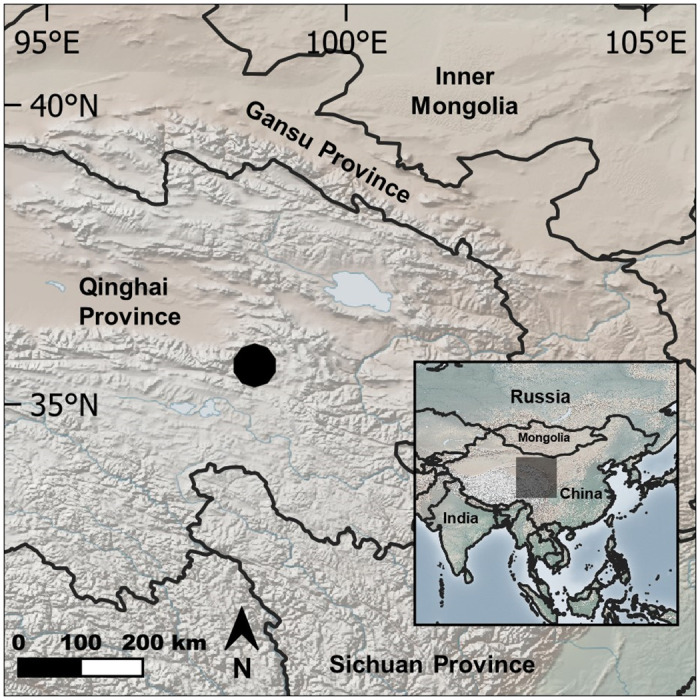
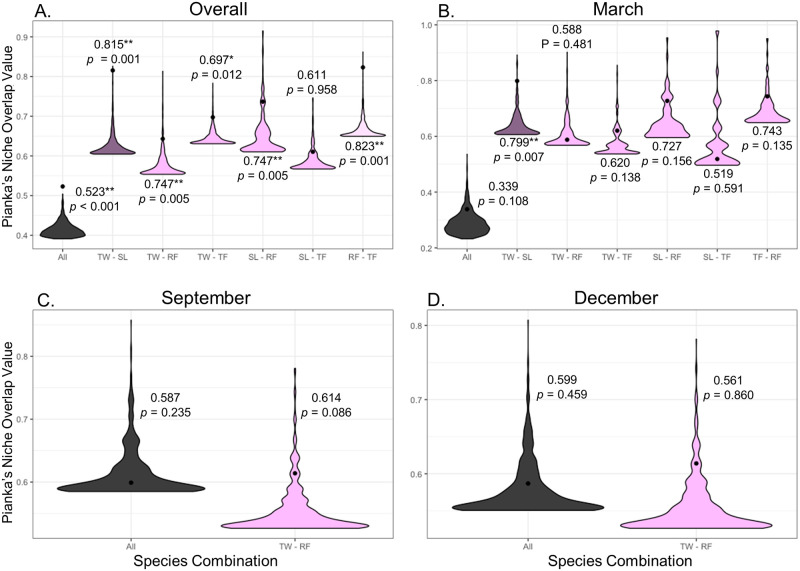
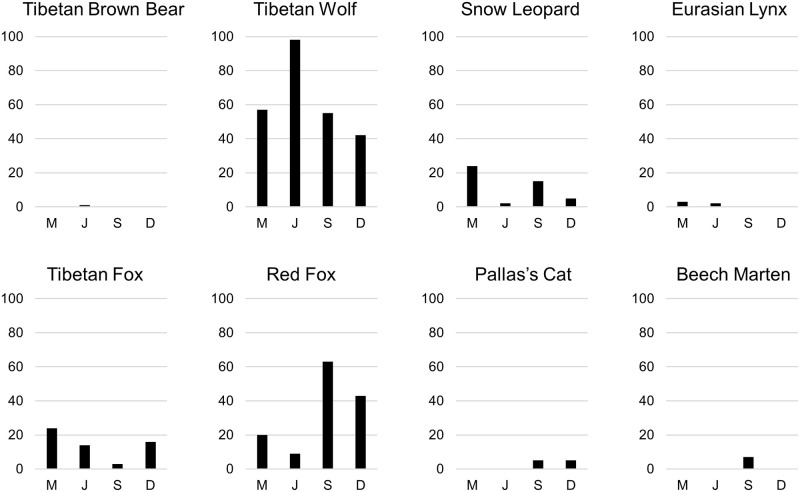
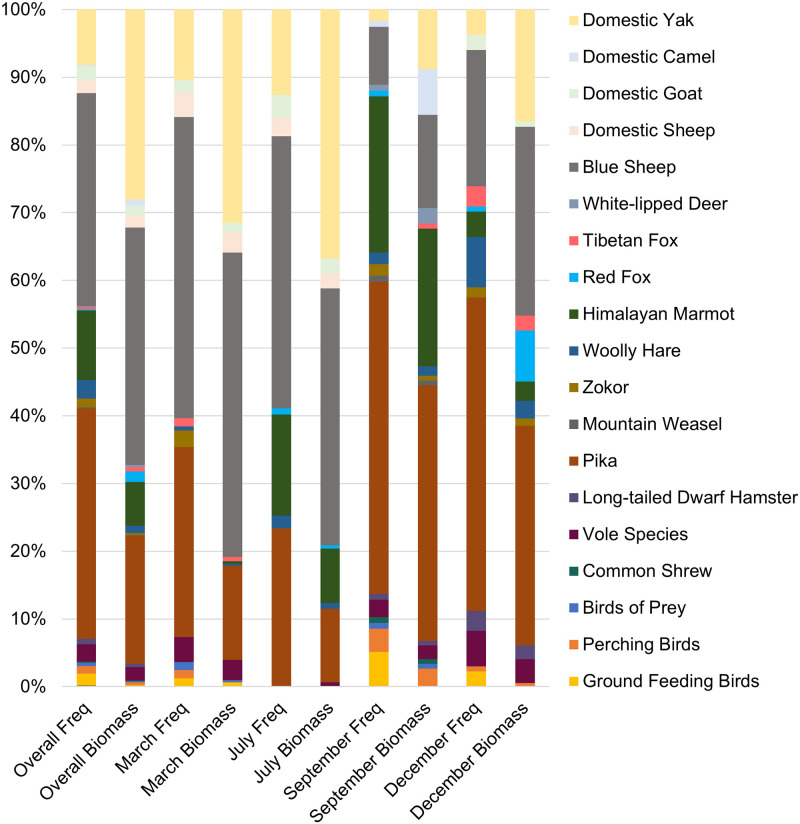
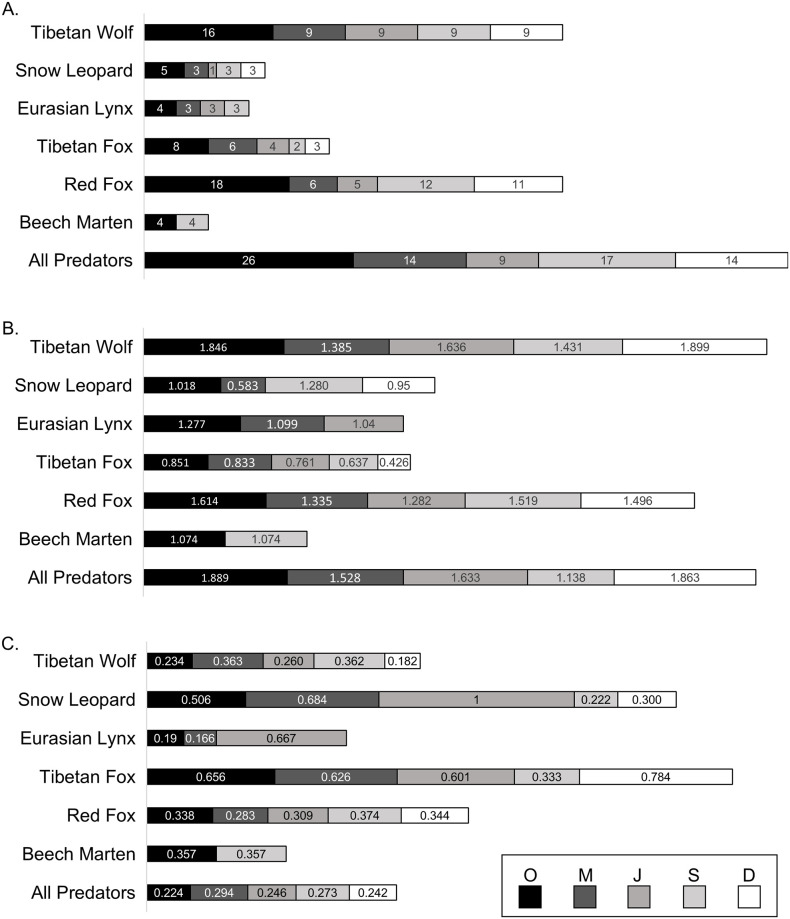
Understanding of predator feeding ecology, interactions among co-occurring predator species, and seasonal changes is critical for conservation management given the important role that predators play in shaping their ecosystems, but is lacking for most regions of the world. Dietary studies have demonstrated varying conclusions in the role that resource partitioning plays in the maintenance of predator communities due to complex inter-related factors that may shape prey use. We used DNA metabarcoding on 581 scat samples to determine the dietary composition, similarity, diversity, and niche overlap of eight predator species (Tibetan wolf (Canis lupus), snow leopard (Panthera uncia), Tibetan brown bear (Ursus arctos pruinosus), Eurasian lynx (Lynx lynx), Tibetan fox (Vulpes ferrilata), red fox (V. vulpes), Pallas's cat (Otocolobus manul), and beech marten (Martes foina)) across four sampling periods (September 2019, December 2019, March 2020, July 2020) in the Gouli Nature Reserve located in Dulan County, Qinghai Province, China. We identified 26 unique prey items, with blue sheep (Pseudois nayaur) and pika (Ochotona spp.) being most common. Small mammals had the highest frequency of occurrence, while domestic and wild ungulates contributed the most biomass. No significant differences in diet were detected across months, with the exception of March and December for the red fox (p = 0.010). Dietary niche overlap was greater than expected when considering all species (p < 0.001) across seasons and between the Tibetan wolf and snow leopard in March (p = 0.007) when compared for species pairs by season. This study contributes to understanding of fine-scale temporal changes in predator diet, and offers methodological and management strategies that may have applicability to other predator guilds living in complex landscapes.
鉴于食肉动物在塑造其生态系统中所起的重要作用,了解食肉动物的觅食生态、共生食肉动物物种之间的相互作用以及季节变化对于保护管理至关重要,但世界上大多数地区都缺乏这方面的了解。由于可能影响猎物利用的复杂相互关联因素,饮食研究在资源划分对食肉动物群落维持所起的作用方面得出了不同结论。我们对581份粪便样本进行了DNA代谢条形码分析,以确定中国青海省都兰县苟里自然保护区内八个食肉动物物种(藏狼(Canis lupus)、雪豹(Panthera uncia)、藏棕熊(Ursus arctos pruinosus)、欧亚猞猁(Lynx lynx)、藏狐(Vulpes ferrilata)、赤狐(V. vulpes)、兔狲(Otocolobus manul)和石貂(Martes foina))在四个采样期(2019年9月、2019年12月、2020年3月、2020年7月)的饮食组成、相似性、多样性和生态位重叠情况。我们识别出26种独特的猎物,其中岩羊(Pseudois nayaur)和鼠兔(Ochotona spp.)最为常见。小型哺乳动物出现频率最高,而家养和野生有蹄类动物贡献的生物量最大。除了赤狐在3月和12月(p = 0.010)外,各月份之间未检测到饮食上的显著差异。当考虑所有物种时,跨季节的饮食生态位重叠大于预期(p < 0.001),并且在按季节比较物种对时,3月藏狼和雪豹之间的饮食生态位重叠也大于预期(p = 0.007)。本研究有助于了解食肉动物饮食的精细时间变化,并提供了可能适用于生活在复杂景观中的其他食肉动物群体的方法和管理策略。