Hsu Po-Chun, Chang Yu-Hsun, Chiu Yu-Ning, Jie Wei-Ban
National Experimental High School at Hsinchu Science Park, Hsinchu City, Taiwan.
PLoS One. 2024 Dec 19;19(12):e0315838. doi: 10.1371/journal.pone.0315838. eCollection 2024.
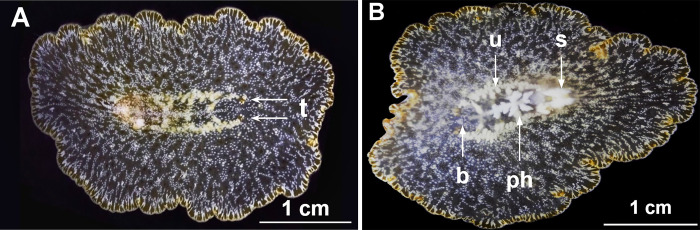
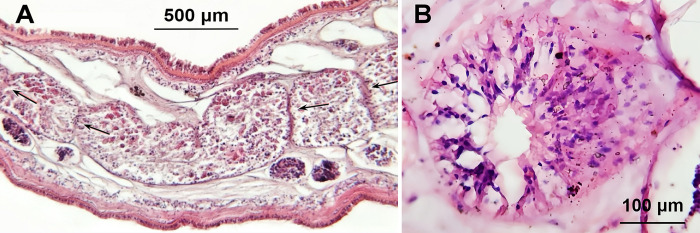
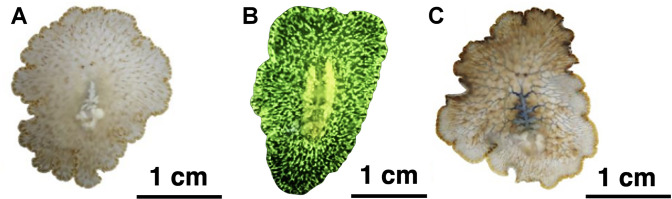
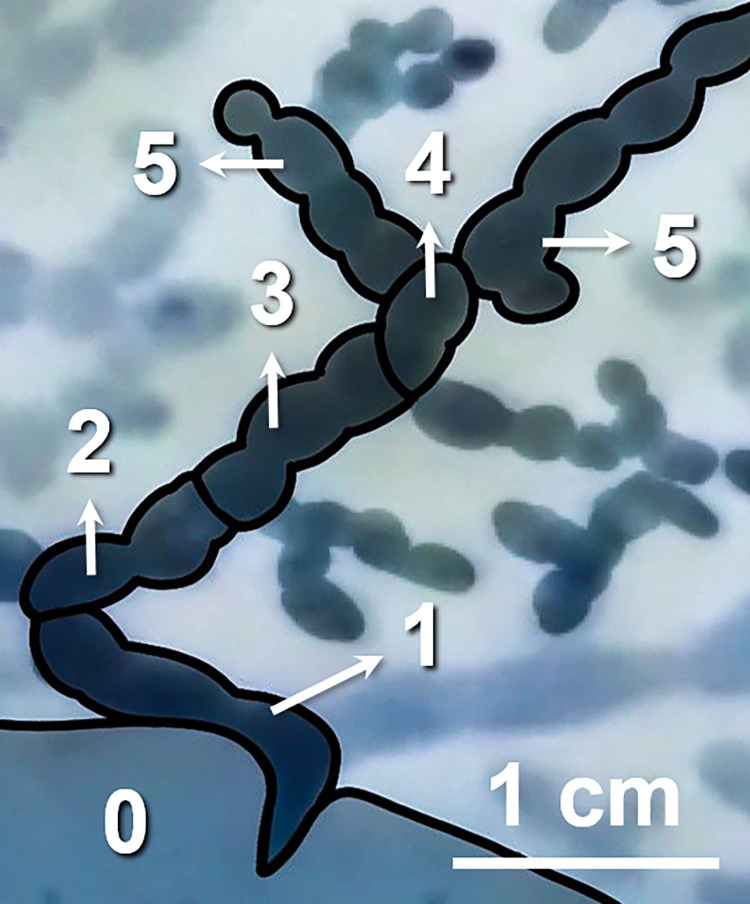
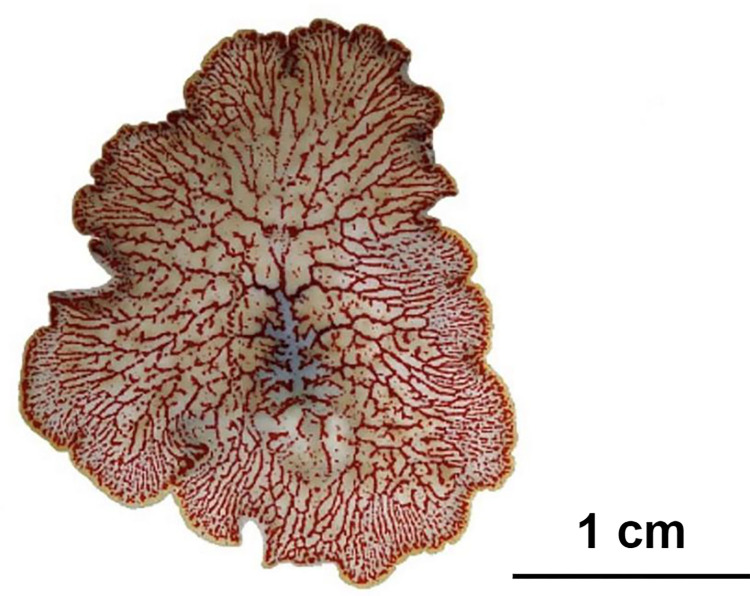
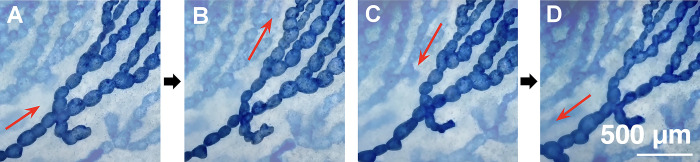
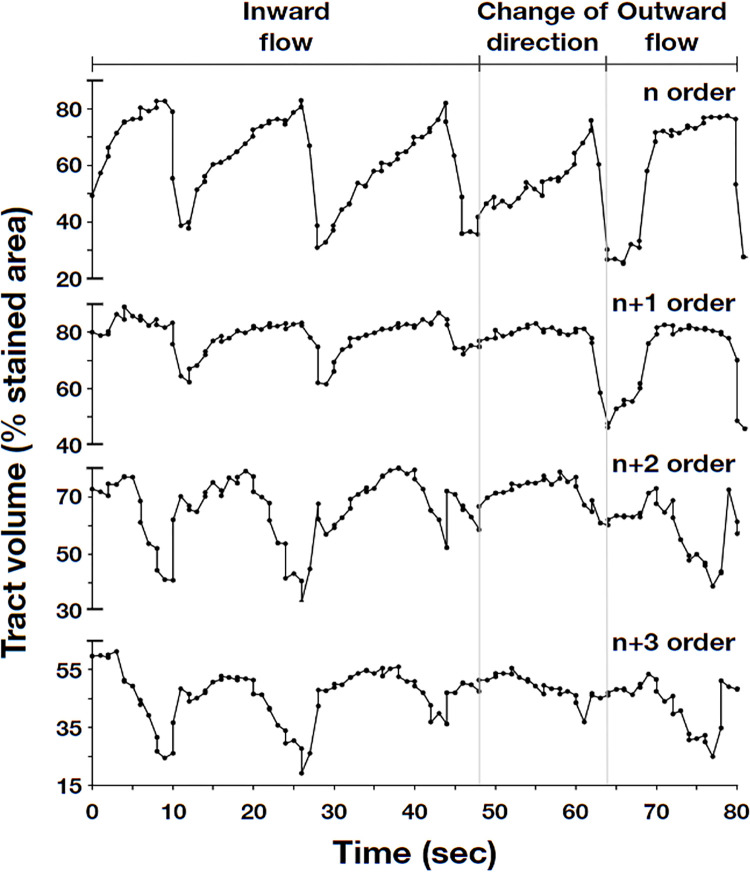
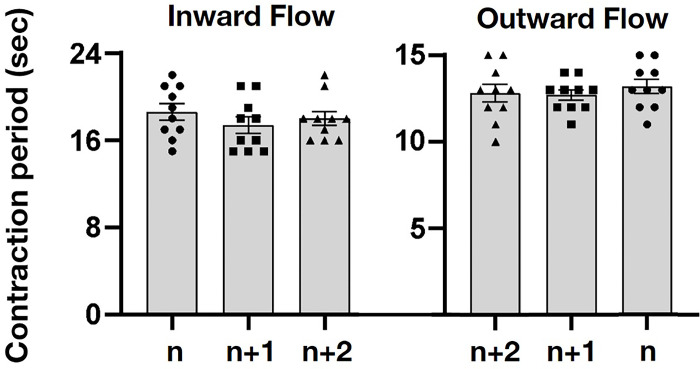
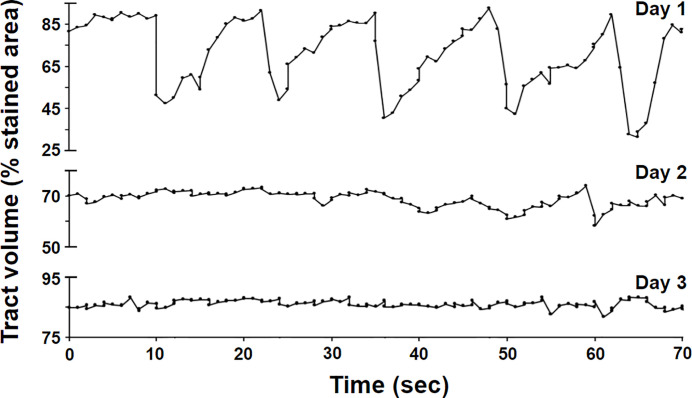
Polyclad flatworms possess an intricately branched digestive system combining features of a gastrovascular cavity as well as a gastrointestinal tract. Nonetheless, the functions of this system remain unconfirmed, due to a lack of effective observation methods. This paper presents a novel staining method to facilitate the analysis of this highly branched digestive system. Video recordings obtained during ingestion revealed sequentially bidirectional gastrovascular flows and a corresponding occurrence of regular contractions. Tissue sections revealed that the contractions can be attributed to a radial arrangement of muscles around the gastrointestinal tract. The highly branched digestive system of the flatworm revealed evidence of bidirectional flow and sequential peristalsis, which may allow for a diet of greater diversity than is possible in animals with only a gastrovascular cavity. The proposed staining technique opens up new avenues for research on the digestive behavior of lower organisms.
多肠目扁形虫拥有一个错综复杂的分支消化系统,它结合了消化循环腔和胃肠道的特征。尽管如此,由于缺乏有效的观察方法,该系统的功能仍未得到证实。本文提出了一种新颖的染色方法,以促进对这个高度分支的消化系统的分析。摄食过程中的视频记录显示出依次双向的消化循环流动以及相应的规律性收缩的出现。组织切片显示,这些收缩可归因于胃肠道周围肌肉的径向排列。扁形虫高度分支的消化系统显示出双向流动和顺序蠕动的证据,这可能使它们能够摄取比只有消化循环腔的动物更多样化的食物。所提出的染色技术为研究低等生物的消化行为开辟了新途径。