Department of Microbiology and Immunology, University of Texas Medical Branch, Galveston, Texas, USA.
Department of Microbiology and Immunology, University of Texas Medical Branch, Galveston, Texas, USA
mBio. 2019 Aug 13;10(4):e01869-19. doi: 10.1128/mBio.01869-19.
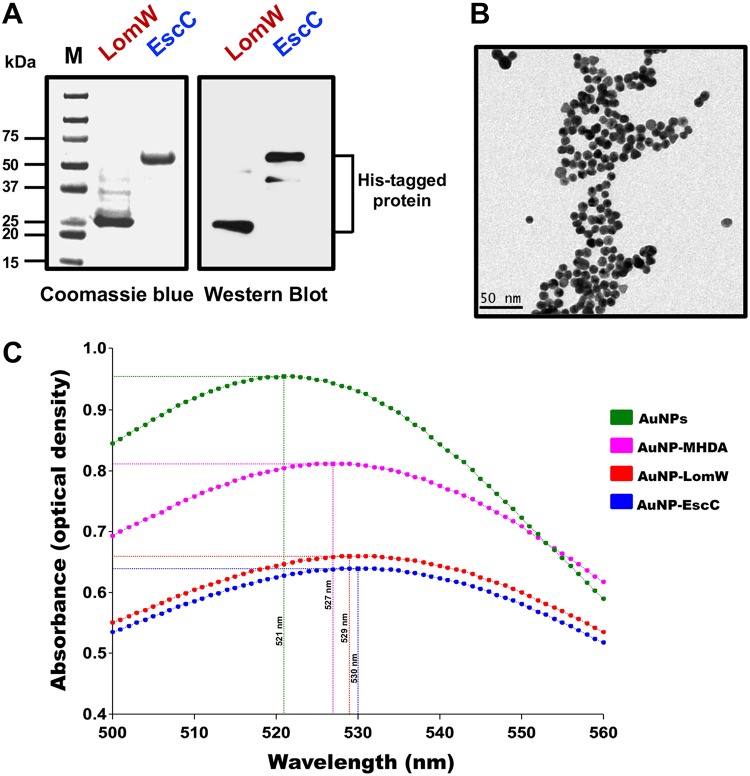
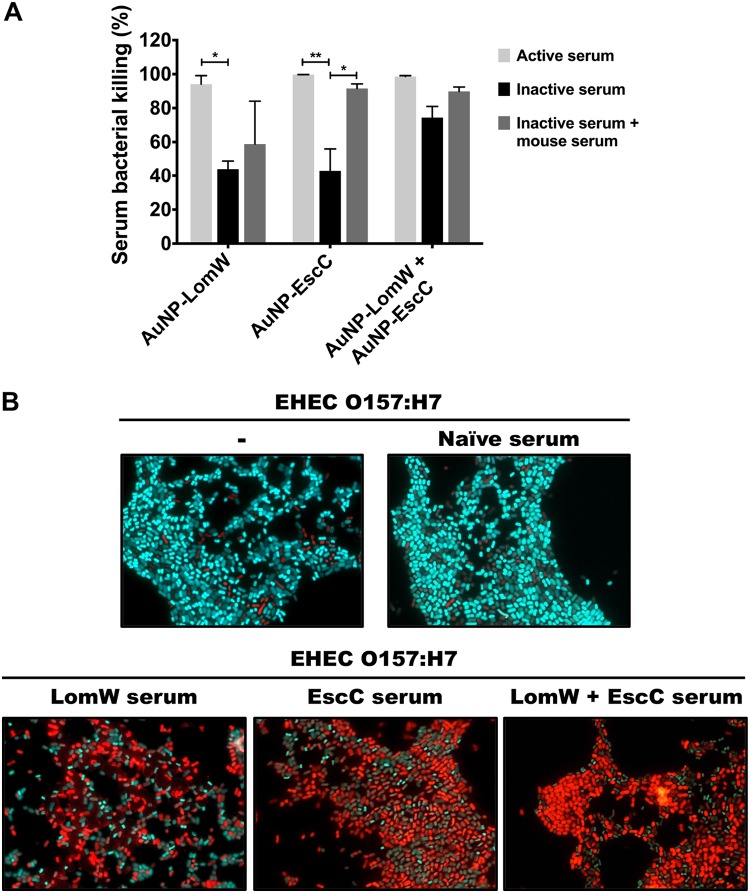
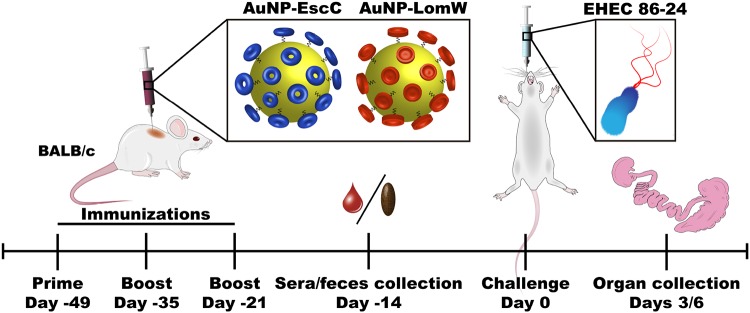
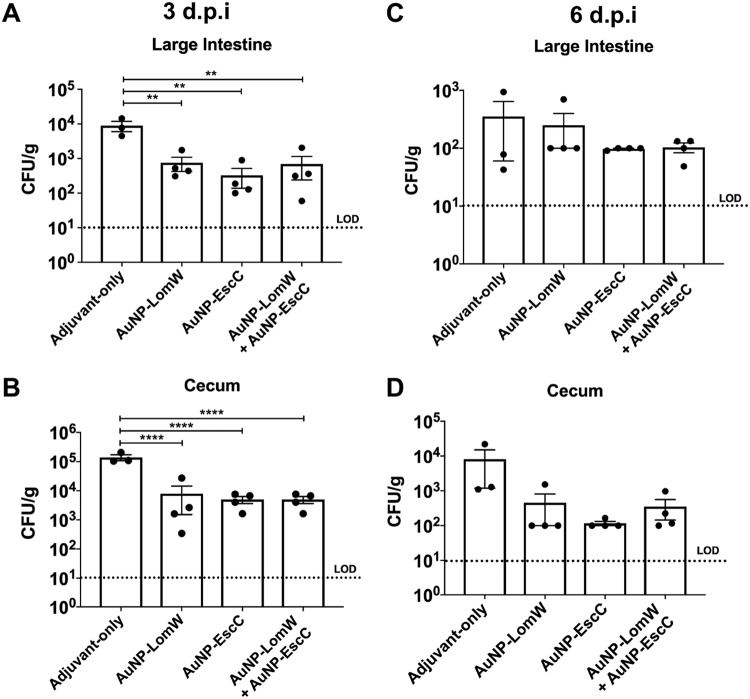
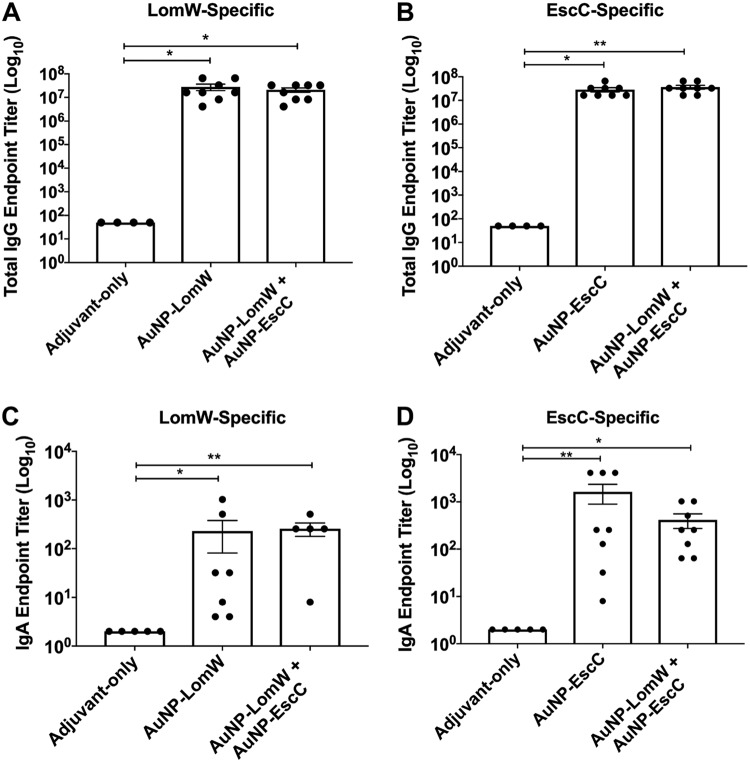
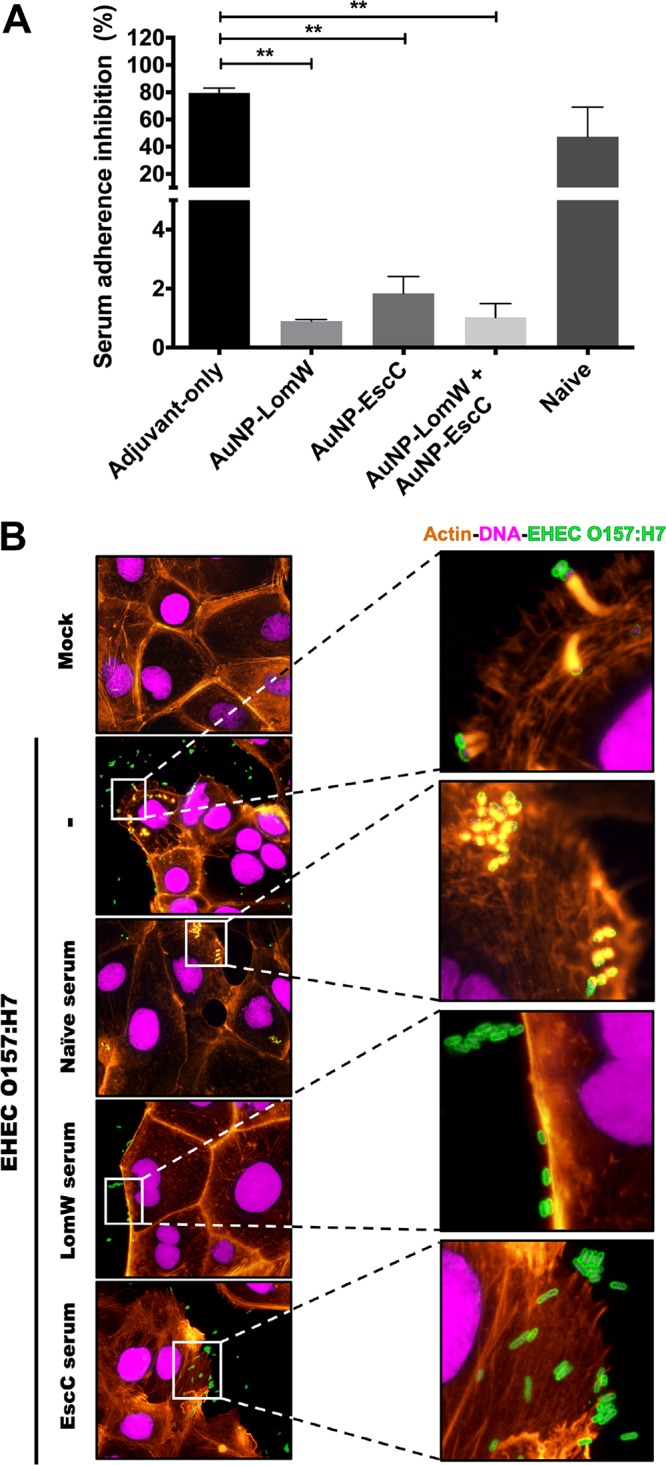
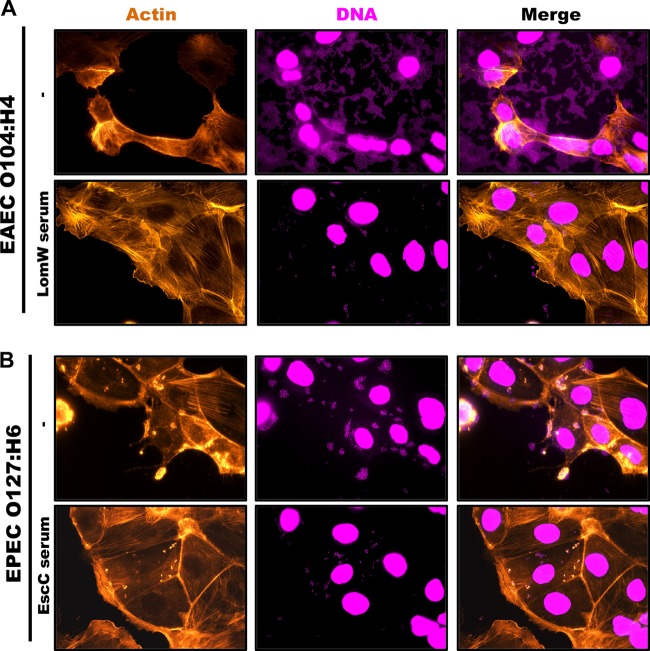
Here we exploit the natural properties of a synthetic nanoparticle (NP) scaffold as a subunit vaccine against enterohemorrhagic (EHEC). Two EHEC-specific immunogenic antigens, namely, LomW and EscC, either alone or in combination, were covalently linked on the surface of gold nanoparticles (AuNPs) and used to immunize mice prior to challenge with EHEC O157:H7 strain 86-24. LomW is a putative outer membrane protein encoded in bacteriophage BP-933W, while EscC is a structural type III secretion system protein which forms a ring in the outer membrane. The resulting AuNP preparations, AuNP-LomW and AuNP-EscC, showed that the nanoparticles were able to incorporate the antigens, forming stable formulations that retained robust immunogenicity after subcutaneous immunization. When administered subcutaneously, AuNP-LomW or AuNP-EscC or a combination containing equivalent amounts of both candidates resulted in higher IgG titers in serum and secretory IgA titers in feces. The serum IgG titers correlated with a significant reduction in EHEC intestinal colonization after 3 days postinoculation. In addition, we showed that serum from antigen-coated AuNP-immunized mice resulted in a reduction of adherence to human intestinal epithelial cells for EHEC, as well as for two other pathotypes (enteropathogenic [EPEC], encoding EscC, and enteroaggregative [EAEC], encoding LomW). Further, the serum had antigen-specific bactericidal properties, engaging the classical complement pathway. Overall, our results demonstrate the immunogenicity and stability of a novel nanovaccine against EHEC. These results also strengthen the prospect of development of a synthetic nanoparticle vaccine conjugated to antigens as a promising platform against other enteric pathogens. Enterohemorrhagic O157:H7 is a human pathogen and the causative agent of diarrhea and hemorrhagic colitis, which can progress to hemolytic uremic syndrome. These complications represent a serious global public health problem that requires laborious public health interventions and safety control measures to combat recurrent outbreaks worldwide. Today, there are no effective interventions for the control of EHEC infections, and, in fact, the use of antibiotics is counterindicated for EHEC disease. Therefore, a viable alternative for the prevention of human infections is the development of vaccines; however, no such vaccines are approved for human use. In this study, we developed a novel gold nanoparticle platform which acts as a scaffold for the delivery of various antigens, representing a nanovaccine technology which can be applied to several disease models.
在这里,我们利用合成纳米颗粒(NP)支架的天然特性作为针对肠出血性(EHEC)的亚单位疫苗。两种 EHEC 特异性免疫原性抗原,即 LomW 和 EscC,单独或组合使用,共价连接在金纳米颗粒(AuNPs)的表面,并用其对小鼠进行免疫,然后用 EHEC O157:H7 株 86-24 进行攻击。LomW 是编码在噬菌体 BP-933W 中的假定外膜蛋白,而 EscC 是一种结构型 III 型分泌系统蛋白,在 外膜中形成一个环。所得的 AuNP 制剂,AuNP-LomW 和 AuNP-EscC,表明纳米颗粒能够掺入抗原,形成稳定的制剂,在皮下免疫后保持强大的免疫原性。当皮下给药时,AuNP-LomW 或 AuNP-EscC 或含有两者等量候选物的组合导致血清 IgG 滴度和粪便分泌型 IgA 滴度升高。血清 IgG 滴度与接种后 3 天内 EHEC 肠道定植的显著减少相关。此外,我们表明,来自抗原包被的 AuNP 免疫小鼠的血清导致对 EHEC 的粘附减少,以及对另外两种 血清型(肠致病性 [EPEC],编码 EscC,和肠聚集性 [EAEC],编码 LomW)的粘附减少。此外,血清具有抗原特异性杀菌特性,涉及经典补体途径。总的来说,我们的结果证明了针对 EHEC 的新型纳米疫苗的免疫原性和稳定性。这些结果还加强了将抗原缀合到合成纳米颗粒疫苗作为针对其他肠道病原体的有前途的平台的发展前景。肠出血性 O157:H7 是一种人类病原体,也是腹泻和出血性结肠炎的病原体,可进展为溶血性尿毒症综合征。这些并发症代表了一个严重的全球公共卫生问题,需要艰苦的公共卫生干预和安全控制措施来对抗全球范围内的反复爆发。目前,没有针对 EHEC 感染的有效干预措施,实际上,抗生素的使用是禁忌的。因此,预防人类感染的可行替代方案是开发疫苗;然而,尚无此类疫苗获准用于人类。在这项研究中,我们开发了一种新型金纳米颗粒平台,作为各种抗原的递送支架,代表了一种可以应用于几种疾病模型的纳米疫苗技术。