
具有整体DNA保护作用的分层靶向纳米药物用于急性肾损伤的有效治疗
Hierarchical Targeting Nanodrug with Holistic DNA Protection for Effective Treatment of Acute Kidney Injury.
作者信息
Chen Qiaohui, Yang Yongqi, Ying Xiaohong, Huang Changkun, Chen Jianlin, Wang Jue, Wu Ziyu, Zeng Wan, Miao Chenxi, Shi Xiaojing, Nan Yayun, Huang Qiong, Ai Kelong
机构信息
Department of Pharmacy, Xiangya Hospital, Central South University, Changsha, 410008, China.
Xiangya School of Pharmaceutical Sciences, Central South University, Changsha, 410013, China.
出版信息
Adv Sci (Weinh). 2025 Feb;12(6):e2411254. doi: 10.1002/advs.202411254. Epub 2024 Dec 20.
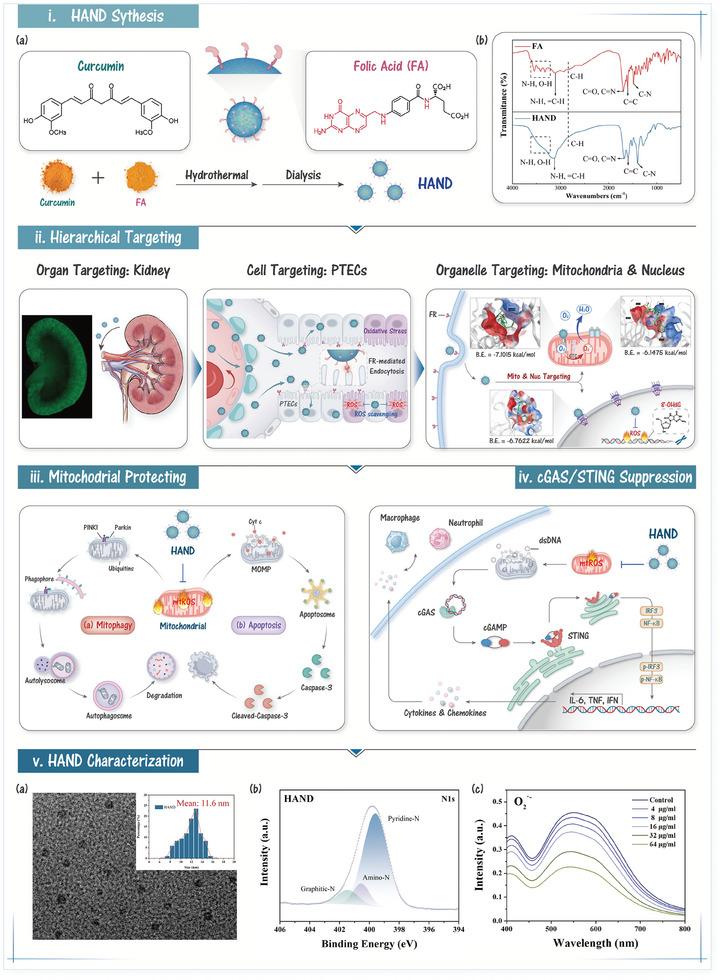
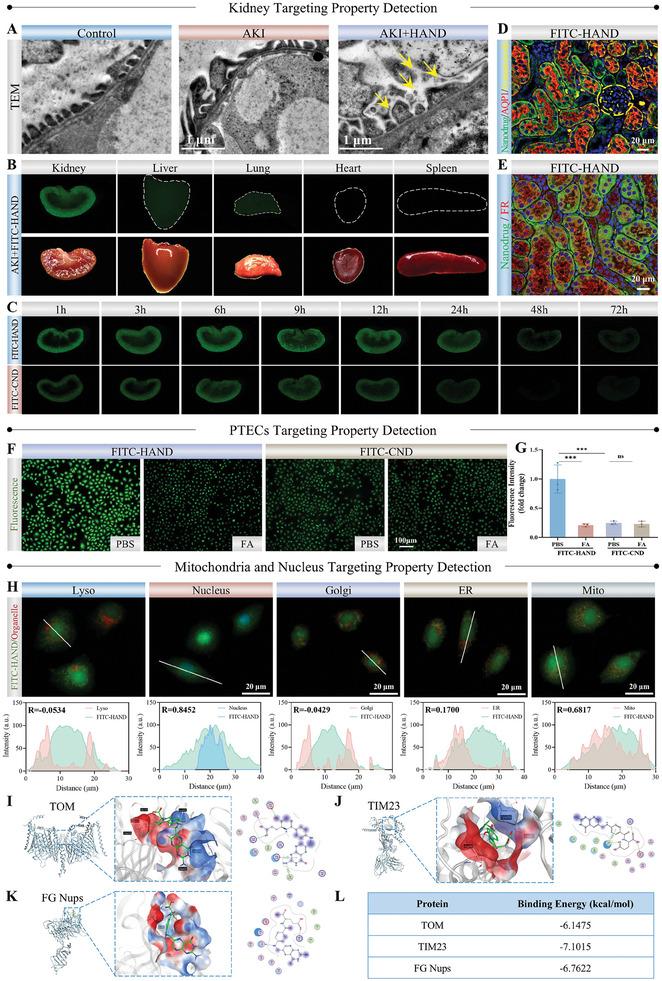
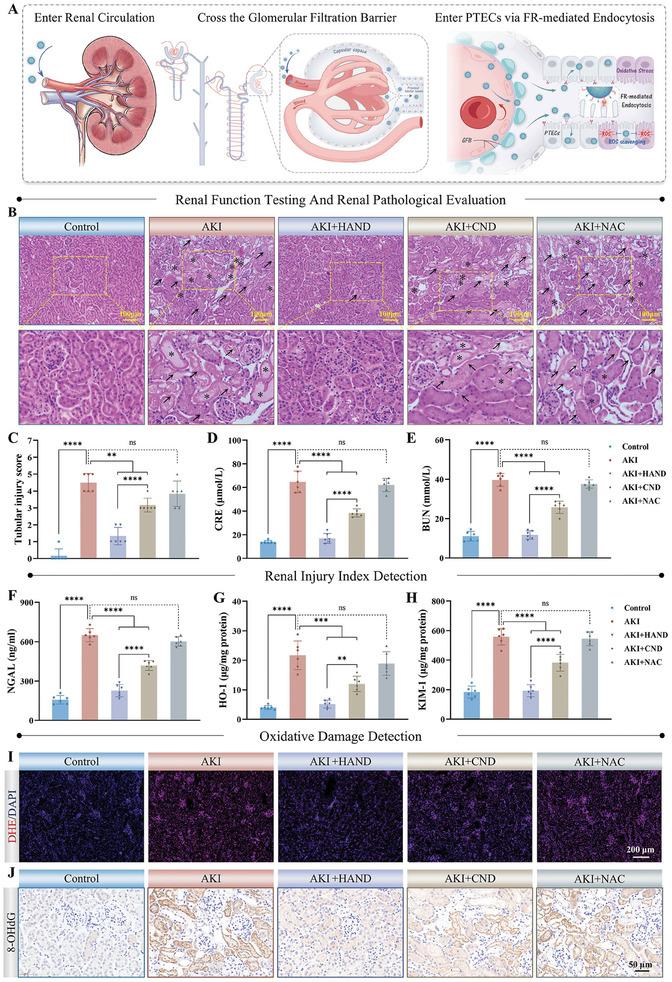
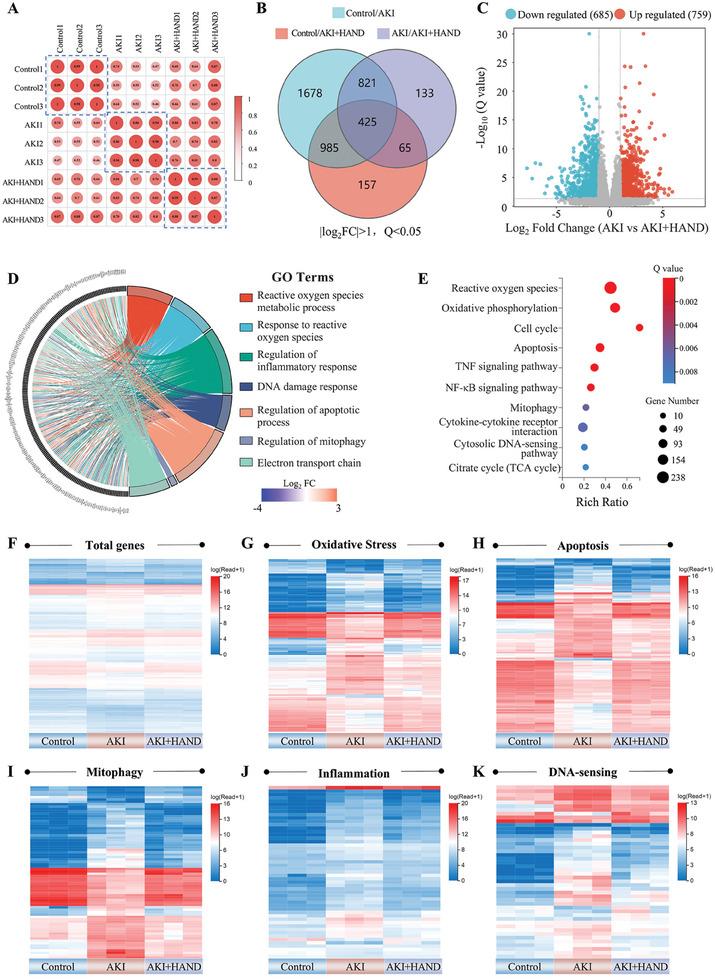
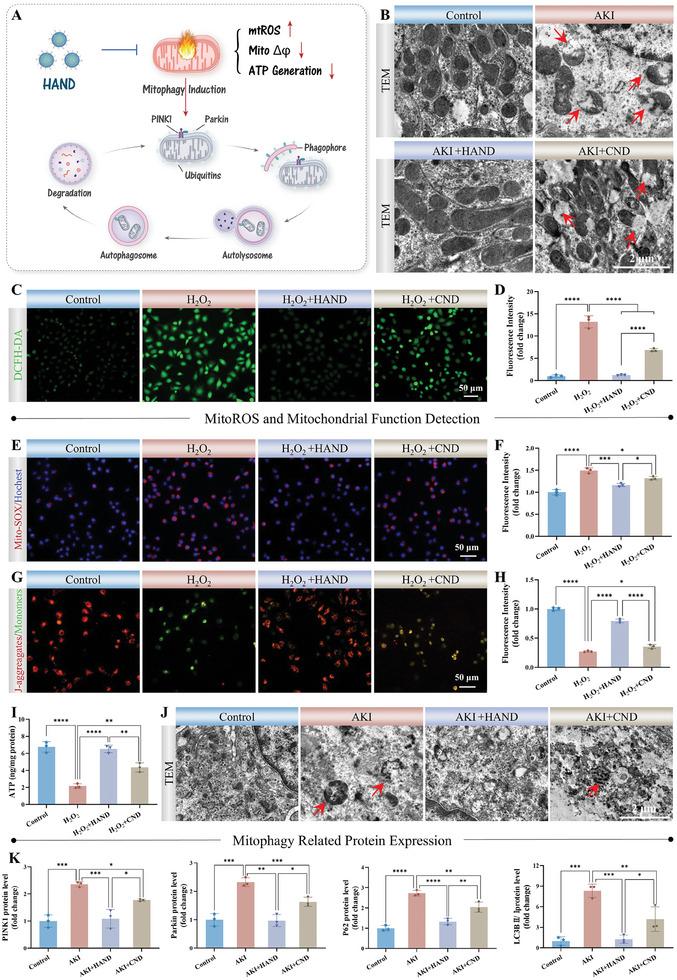
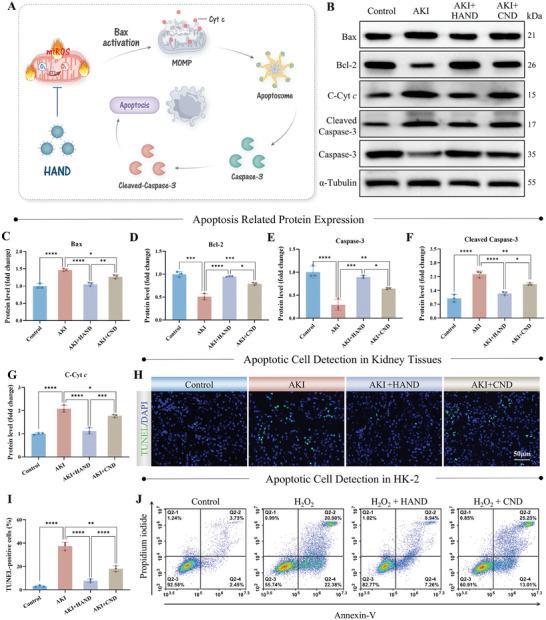
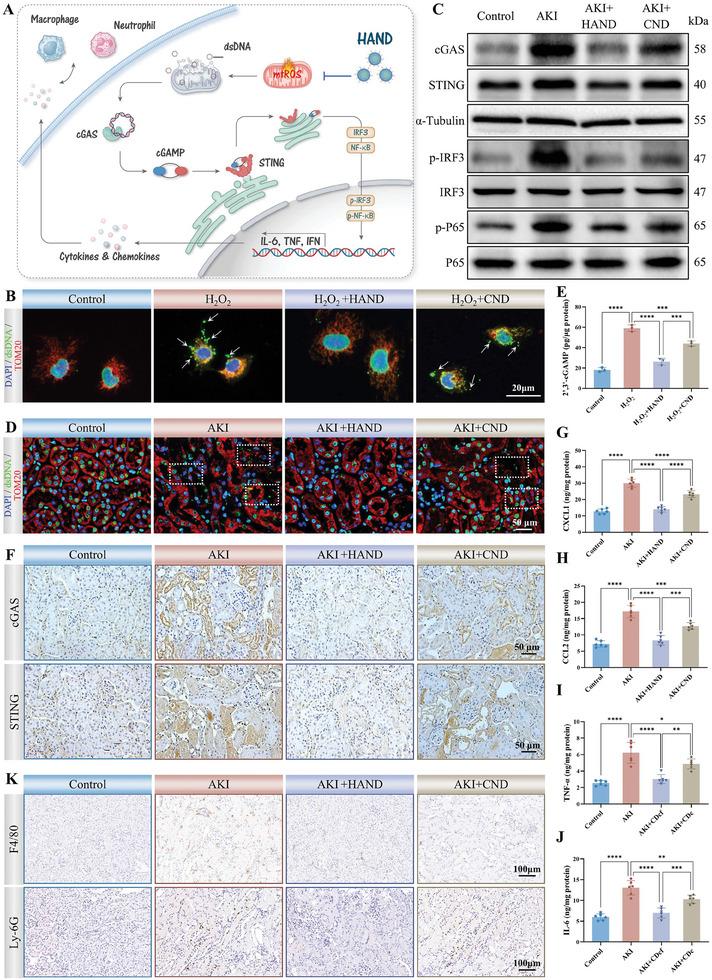
Acute kidney injury (AKI) manifests a hallmark pathological feature of extensive and severe DNA damage in renal tubules, primarily induced by the excessive of toxic reactive oxygen species (ROS) from the mitochondrial electron transport chain. The kidney's complex intricate physiological architecture and the heterogeneous intracellular environment pose significant challenges for effective sequential and high-resolution drug delivery-an urgent issue that remains unresolved. To address this, a hierarchical-targeting antioxidant nanodrug has been developed with a folic acid moiety (HAND) designed for high-resolution drug delivery in AKI treatment. For the first time, HAND enables sequential targeting from the kidney to the most severely damaged proximal tubular epithelial cells (PTECs), ultimately concentrating in the DNA-rich mitochondria and nucleus. As a result, HAND effectively scavenges ROS in situ, protecting both mitochondria and nuclei along with their vital genetic material. This action restores mitochondrial function, mitigates DNA oxidation and fragmentation, reduces apoptosis, and inhibits cGAS/STING-mediated sterile inflammation. Consequently, HAND demonstrates remarkable efficacy in safeguarding injured kidneys during AKI. Overall, this work pioneers a hierarchical, high-resolution antioxidant strategy, providing innovative guidance for the development of AKI therapies.
急性肾损伤(AKI)表现出肾小管广泛且严重的DNA损伤这一标志性病理特征,主要由线粒体电子传递链产生的过量有毒活性氧(ROS)诱导。肾脏复杂精细的生理结构和异质性的细胞内环境对有效的序贯性和高分辨率药物递送构成了重大挑战,这一紧迫问题仍未得到解决。为解决此问题,已开发出一种具有叶酸部分的分级靶向抗氧化纳米药物(HAND),用于在AKI治疗中进行高分辨率药物递送。HAND首次实现了从肾脏到受损最严重的近端肾小管上皮细胞(PTECs)的序贯靶向,最终集中在富含DNA的线粒体和细胞核中。因此,HAND能在原位有效清除ROS,保护线粒体和细胞核及其重要的遗传物质。这一作用恢复了线粒体功能,减轻了DNA氧化和片段化,减少了细胞凋亡,并抑制了cGAS/STING介导的无菌性炎症。因此,HAND在保护AKI期间受损肾脏方面显示出显著疗效。总体而言,这项工作开创了一种分级、高分辨率的抗氧化策略,为AKI治疗的发展提供了创新指导。
 Zotero 插件