Lee Craig, Britto Shawn, Diwan Khaled
General Internal Medicine, University Hospitals Plymouth NHS Trust, Plymouth, GBR.
Cureus. 2024 Nov 19;16(11):e73994. doi: 10.7759/cureus.73994. eCollection 2024 Nov.
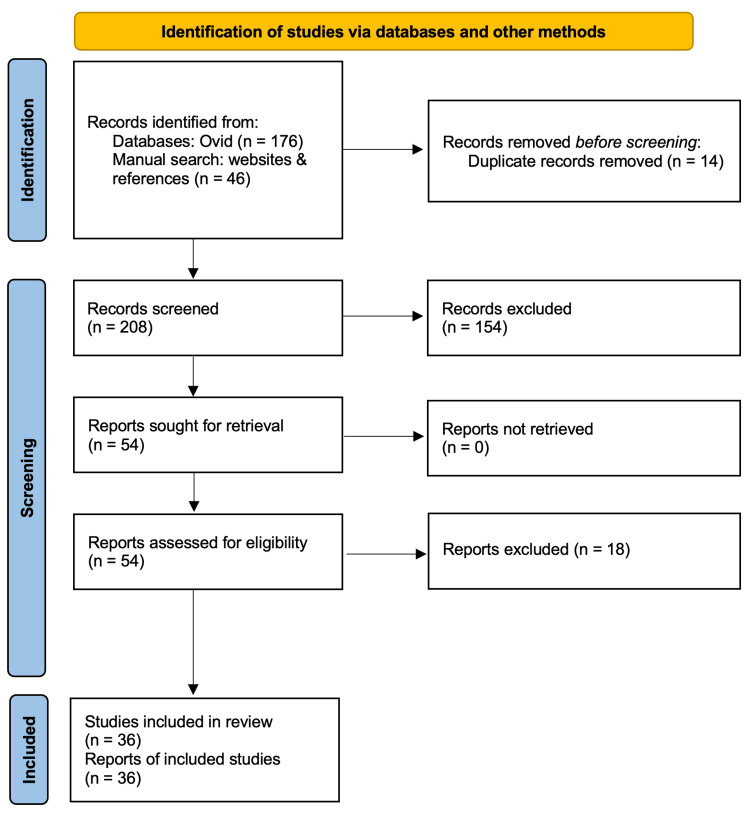
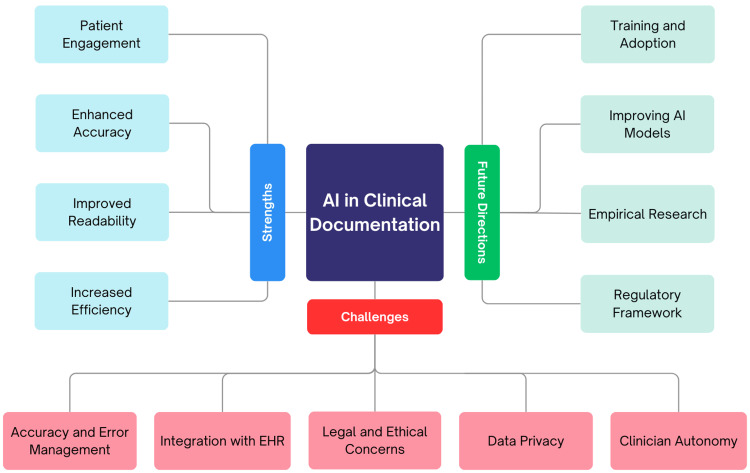
Artificial intelligence (AI) technologies (natural language processing (NLP), speech recognition (SR), and machine learning (ML)) can transform clinical documentation in healthcare. This scoping review evaluates the impact of AI on the accuracy and efficiency of clinical documentation across various clinical settings (hospital wards, emergency departments, and outpatient clinics). We found 176 articles by applying a specific search string on Ovid. To ensure a more comprehensive search process, we also performed manual searches on PubMed and BMJ, examining any relevant references we encountered. In this way, we were able to add 46 more articles, resulting in 222 articles in total. After removing duplicates, 208 articles were screened. This led to the inclusion of 36 studies. We were mostly interested in articles discussing the impact of AI technologies, such as NLP, ML, and SR, and their accuracy and efficiency in clinical documentation. To ensure that our research reflected recent work, we focused our efforts on studies published in 2019 and beyond. This criterion was pilot-tested beforehand and necessary adjustments were made. After comparing screened articles independently, we ensured inter-rater reliability (Cohen's kappa=1.0), and data extraction was completed on these 36 articles. We conducted this study according to the Preferred Reporting Items for Systematic Reviews and Meta-Analyses (PRISMA) guidelines. This scoping review shows improvements in clinical documentation using AI technologies, with an emphasis on accuracy and efficiency. There was a reduction in clinician workload, with the streamlining of the documentation processes. Subsequently, doctors also had more time for patient care. However, these articles also raised various challenges surrounding the use of AI in clinical settings. These challenges included the management of errors, legal liability, and integration of AI with electronic health records (EHRs). There were also some ethical concerns regarding the use of AI with patient data. AI shows massive potential for improving the day-to-day work life of doctors across various clinical settings. However, more research is needed to address the many challenges associated with its use. Studies demonstrate improved accuracy and efficiency in clinical documentation with the use of AI. With better regulatory frameworks, implementation, and research, AI can significantly reduce the burden placed on doctors by documentation.
人工智能(AI)技术(自然语言处理(NLP)、语音识别(SR)和机器学习(ML))可以改变医疗保健中的临床文档。本范围综述评估了AI对各种临床环境(医院病房、急诊科和门诊诊所)中临床文档的准确性和效率的影响。我们通过在Ovid上应用特定的搜索字符串找到了176篇文章。为确保搜索过程更加全面,我们还在PubMed和BMJ上进行了手动搜索,检查我们遇到的任何相关参考文献。通过这种方式,我们又增加了46篇文章,总共达到222篇文章。去除重复项后,筛选了208篇文章。这导致纳入了36项研究。我们主要关注讨论AI技术(如NLP、ML和SR)的影响及其在临床文档中的准确性和效率的文章。为确保我们的研究反映最新的工作,我们将重点放在2019年及以后发表的研究上。该标准事先进行了预测试并进行了必要的调整。在独立比较筛选出的文章后,我们确保了评分者间的可靠性(Cohen's kappa = 1.0),并对这36篇文章完成了数据提取。我们根据系统评价和Meta分析的首选报告项目(PRISMA)指南进行了这项研究。本范围综述显示,使用AI技术可改善临床文档,重点在于准确性和效率。临床医生的工作量有所减少,文档流程得到了简化。随后,医生也有更多时间用于患者护理。然而,这些文章也提出了在临床环境中使用AI的各种挑战。这些挑战包括错误管理、法律责任以及AI与电子健康记录(EHR)的整合。在使用AI处理患者数据方面也存在一些伦理问题。AI在改善各种临床环境中医生的日常工作生活方面显示出巨大潜力。然而,需要更多研究来应对与其使用相关的诸多挑战。研究表明,使用AI可提高临床文档的准确性和效率。通过更好的监管框架、实施和研究,AI可以显著减轻文档给医生带来的负担。