Alwadi Maram Ali, AlJameel AlBandary Hassan, Baker Sarah R, Owens Janine
Department of Dental Health, College of Applied Medical Sciences, King Saud University, Riyadh, Saudi Arabia.
King Salman Center for Disability Research, Riyadh, 11614, Saudi Arabia.
BMC Oral Health. 2024 Dec 20;24(1):1526. doi: 10.1186/s12903-024-05344-w.
Children with disabilities worldwide experience disparities in oral health. Parents and children encounter challenges in accessing quality dental care. Similar challenges are experienced in Saudi Arabia. This study aimed to explore the barriers and facilitators of oral healthcare for children with disabilities in Saudi Arabia.
This was an ethnographic study. The sample size was 25 participants, comprising of 12 pediatric dentists and 13 parents of children with disabilities. Data were collected through in-depth interviews, employing a topic guide. A pre-defined analytical framework was developed from the study objectives and framework analysis used to analyse data.
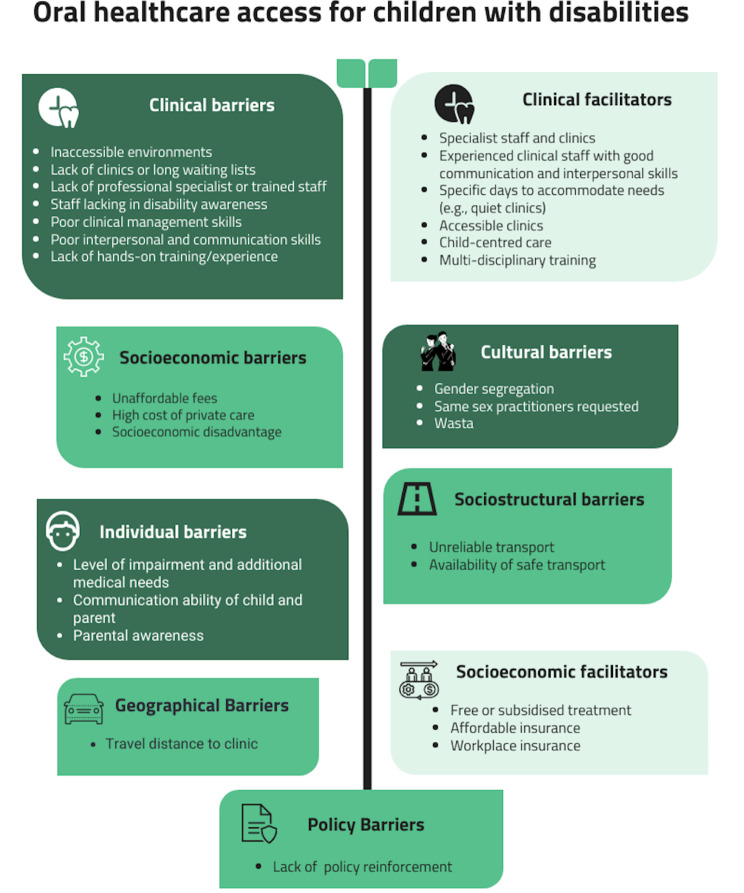
The study identified significant barriers and facilitators to oral healthcare for children with disabilities. Barriers included long travel distances, inadequate clinic facilities, a shortage of specialist pediatric dentists, inefficiencies in referral systems, and financial constraints. Other challenges were related to physical barriers in clinics, cultural norms, and socioeconomic inequalities. Facilitators, though fewer, included personal connections, specialized disability friendly clinics, and the Priority Card Program, albeit with limited effectiveness. Suggestions for improvement highlighted the need for better training for dental professionals, enhanced clinic accessibility, and greater financial support for families.
Accessibility of dental care for children with disabilities in Saudi Arabia remains a significant challenge due to systemic barriers and individual-level obstacles. The study underscores the need for policy reforms, enhanced professional training, and the improvement of physical and financial accessibility to dental services. Addressing these issues through comprehensive educational programs and targeted interventions is essential for reducing oral health disparities and improving care for children with disabilities.
全球残疾儿童在口腔健康方面存在差异。家长和儿童在获得优质牙科护理方面面临挑战。沙特阿拉伯也存在类似挑战。本研究旨在探讨沙特阿拉伯残疾儿童口腔医疗保健的障碍和促进因素。
这是一项人种志研究。样本量为25名参与者,包括12名儿科牙医和13名残疾儿童的家长。通过深入访谈收集数据,采用主题指南。根据研究目标制定了一个预先定义的分析框架,并使用框架分析来分析数据。
该研究确定了残疾儿童口腔医疗保健的重大障碍和促进因素。障碍包括路途遥远、诊所设施不足、儿科专科牙医短缺、转诊系统效率低下以及经济限制。其他挑战与诊所的物理障碍、文化规范和社会经济不平等有关。促进因素虽然较少,但包括个人关系、专门的残疾友好型诊所和优先卡计划,尽管效果有限。改进建议强调需要对牙科专业人员进行更好的培训、提高诊所的可达性以及为家庭提供更多的财政支持。
由于系统性障碍和个人层面的障碍,沙特阿拉伯残疾儿童获得牙科护理仍然是一项重大挑战。该研究强调需要进行政策改革、加强专业培训以及改善牙科服务的物理和经济可达性。通过全面的教育计划和有针对性的干预措施来解决这些问题,对于减少口腔健康差异和改善残疾儿童的护理至关重要。