Cao Hu, Yue Liang, Shao Jingyuan, Kong Fanxuan, Liu Shenghua, Huai Hongyu, He Zhichao, Mao Zhuang, Yang Yuefeng, Tan Yingxia, Wang Hua
Beijing Institute of Radiation Medicine, Beijing, 100850, China.
Department of Stem Cell and Regenerative Medicine, Institute of Health Service and Transfusion Medicine, 27 Taiping Road, Beijing, 100850, P.R. China.
Stem Cell Res Ther. 2024 Dec 20;15(1):493. doi: 10.1186/s13287-024-04115-2.
Radiation-induced heart disease (RIHD) is one of the most serious complications of radiation therapy (RT) for thoracic tumors, and new interventions are needed for its prevention and treatment. Small extracellular vesicles (sEVs) from stem cells have attracted much attention due to their ability to repair injury. However, the role of umbilical cord mesenchymal stem cell (UCMSC)-derived sEVs in protecting cardiac organoids from radiation-induced injury and the underlying mechanisms are largely unknown.
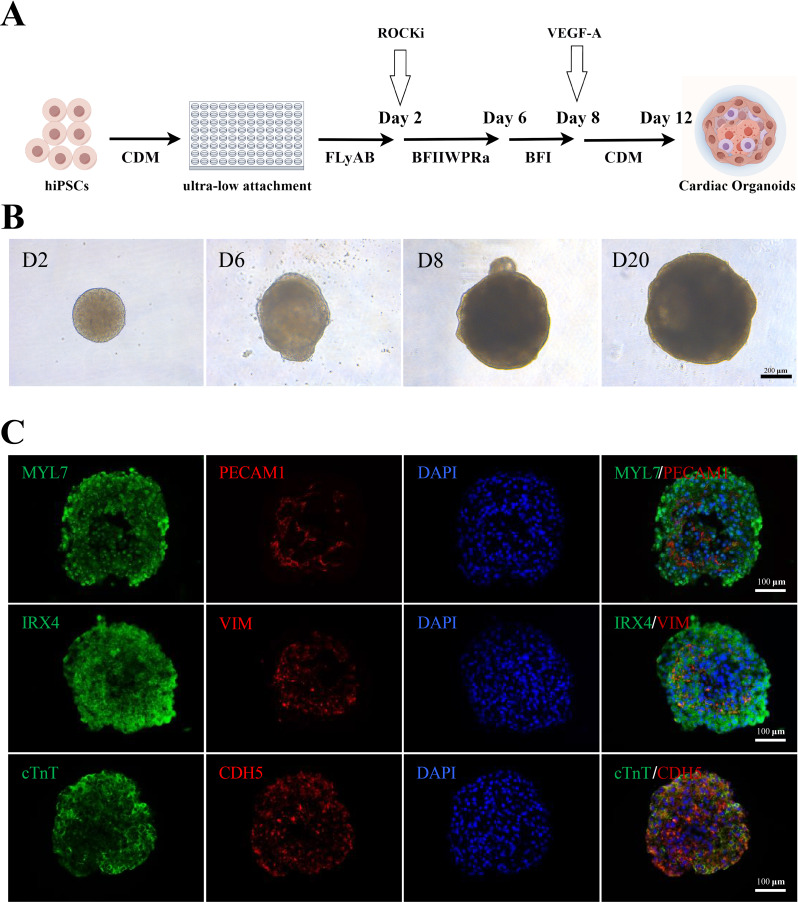
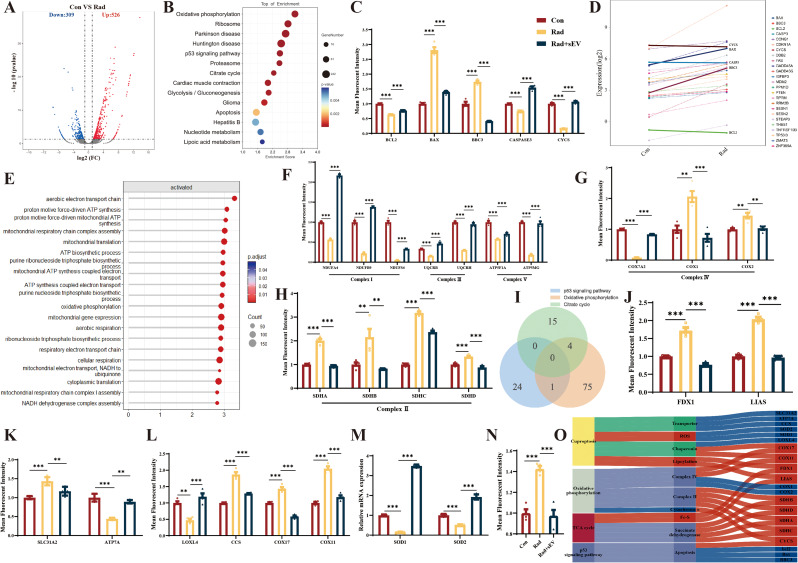
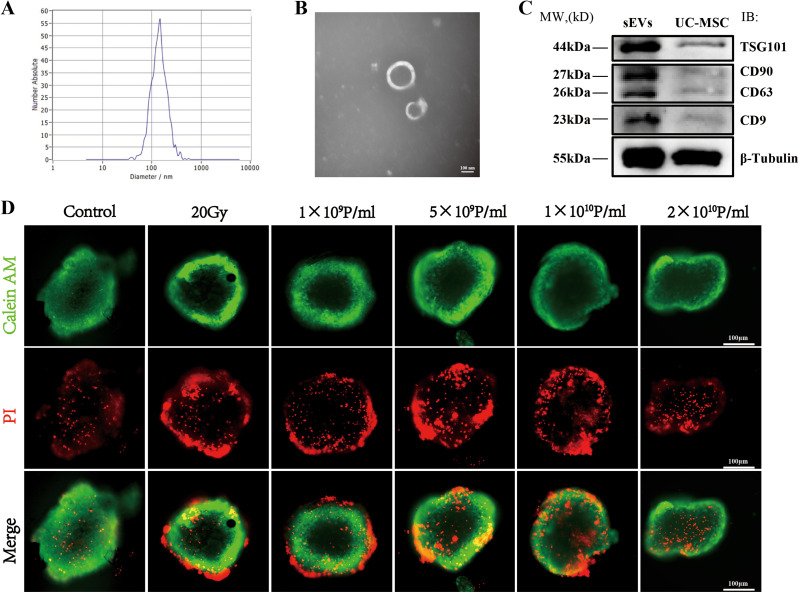
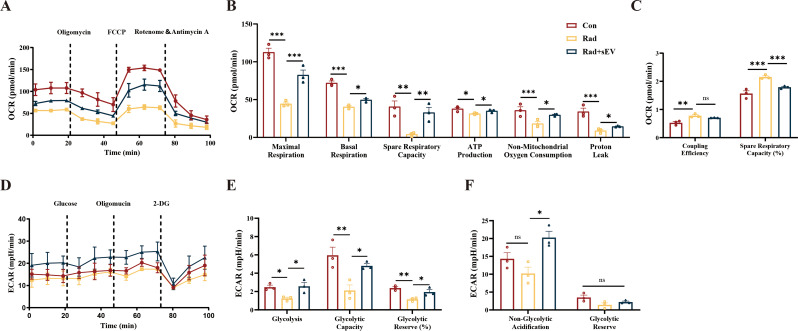
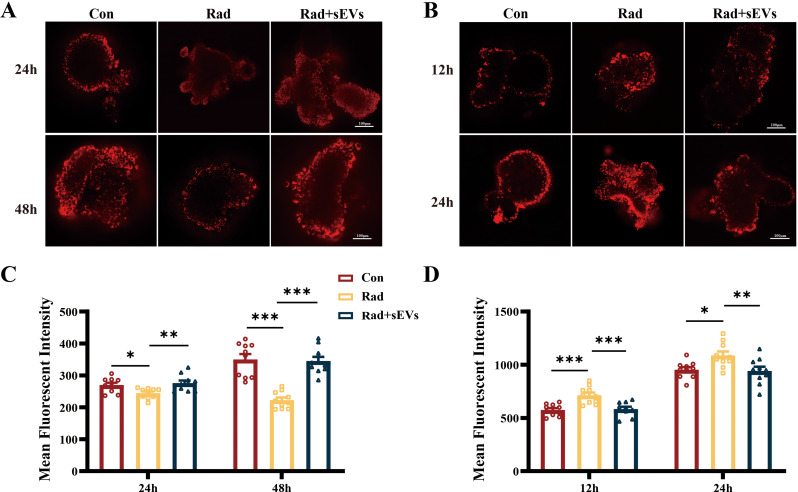
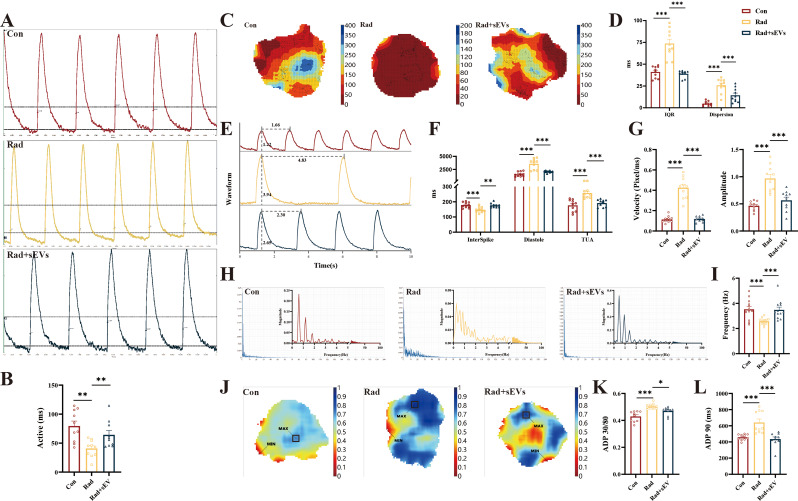
A radiation-induced cardiac organoid injury model was established by using X-ray radiation, and the optimal radiation dose of 20 Gy was determined by live/dead staining. After radiation, the cardiac organoids were treated with sEVs derived from UCMSCs, and energy metabolism, calcium transient changes and the ultrastructure of the organoids were assessed through Seahorse analysis, optical mapping and transmission electron microscopy, respectively. Confocal microscopy was used to observe the changes in mitochondrial ROS and mitochondrial membrane potential (ΔΨm). Furthermore, real-time quantitative PCR was used to verify the RNA-seq results.
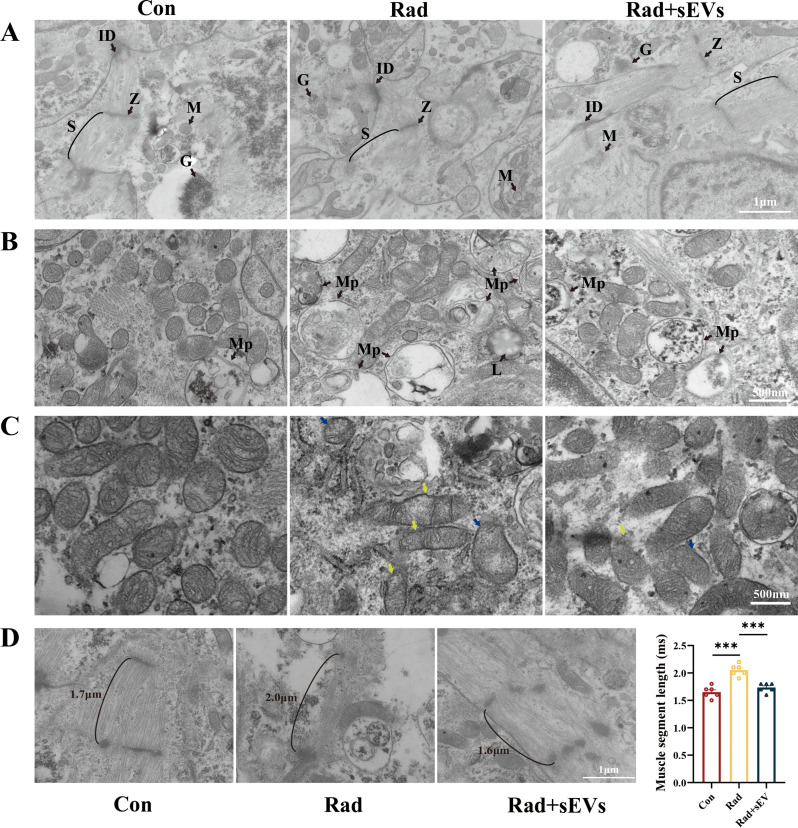
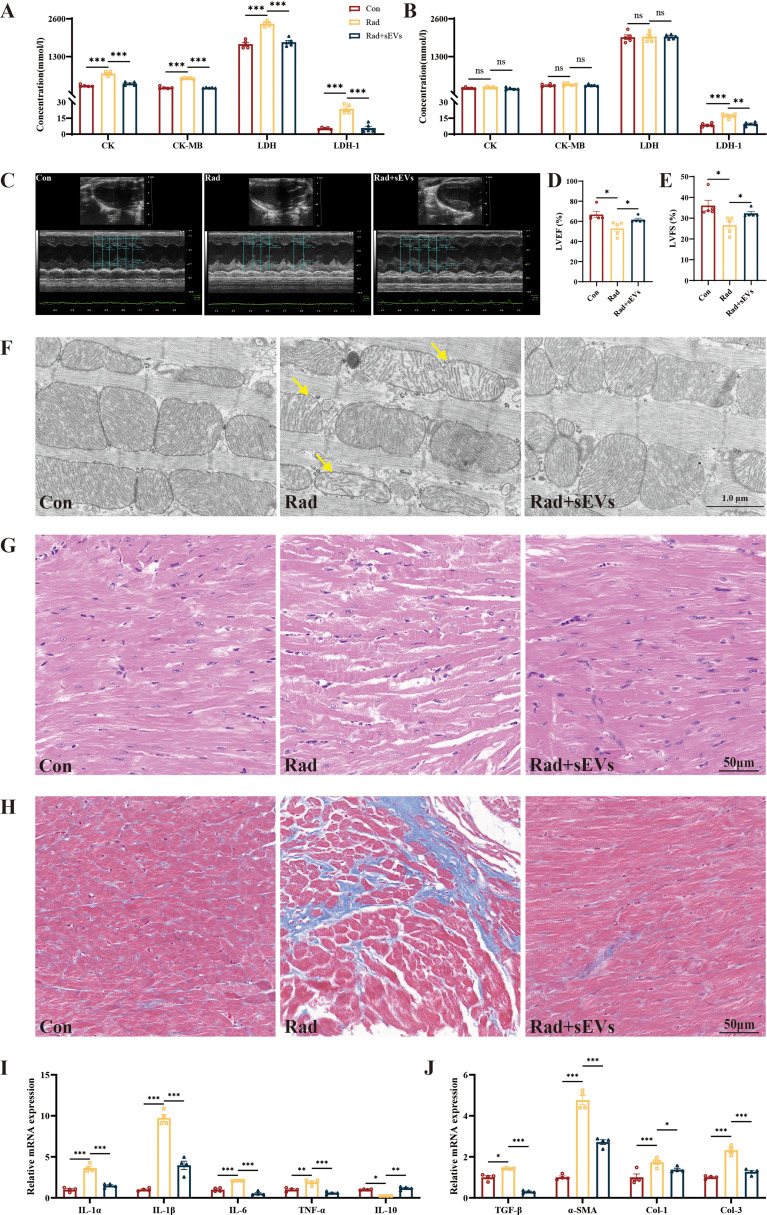
After X-ray radiation, the mortality of cardiac organoids significantly increased, energy metabolism decreased, and calcium transients changed. We also observed that the mitochondrial structure of cardiac organoids was disrupted and that ΔΨm was decreased. These effects could be inhibited by sEVs treatment. sEVs may protect against radiation-induced cardiac organoid injury by regulating oxidative phosphorylation and the p53 signaling pathway.
sEVs derived from UCMSCs can be used as a potential therapeutic strategy for radiation-induced heart disease.
放射性心脏病(RIHD)是胸部肿瘤放射治疗(RT)最严重的并发症之一,其预防和治疗需要新的干预措施。干细胞来源的小细胞外囊泡(sEVs)因其修复损伤的能力而备受关注。然而,脐带间充质干细胞(UCMSC)来源的sEVs在保护类心脏器官免受辐射诱导损伤中的作用及其潜在机制在很大程度上尚不清楚。
利用X射线辐射建立辐射诱导的类心脏器官损伤模型,并通过活/死染色确定20 Gy的最佳辐射剂量。辐射后,用UCMSCs来源的sEVs处理类心脏器官,分别通过海马分析、光学映射和透射电子显微镜评估类心脏器官的能量代谢、钙瞬变变化和超微结构。共聚焦显微镜用于观察线粒体活性氧(ROS)和线粒体膜电位(ΔΨm)的变化。此外,实时定量PCR用于验证RNA测序结果。
X射线辐射后,类心脏器官的死亡率显著增加,能量代谢下降,钙瞬变发生变化。我们还观察到类心脏器官的线粒体结构被破坏,ΔΨm降低。这些影响可通过sEVs处理得到抑制。sEVs可能通过调节氧化磷酸化和p53信号通路来保护类心脏器官免受辐射诱导的损伤。
UCMSCs来源的sEVs可作为放射性心脏病的一种潜在治疗策略。