Zeng Yucui, Li Yushan, Du Hui, Li Changzhong, Dai Wenkui, Wu Ruifang
Department of Obstetrics and Gynecology, Peking University Shenzhen Hospital, Shenzhen, China.
Department of Traditional Chinese Medicine, Peking University Shenzhen Hospital, Shenzhen, China.
BMC Womens Health. 2024 Dec 21;24(1):654. doi: 10.1186/s12905-024-03505-1.
The aim of this study was to compare the effectiveness of two different vitrification methods and slow freezing in terms of the recovery of endocrine function, follicular morphology and proliferation, apoptosis of stromal cells, and angiogenesis after heterotopic transplantation of human ovarian tissue.
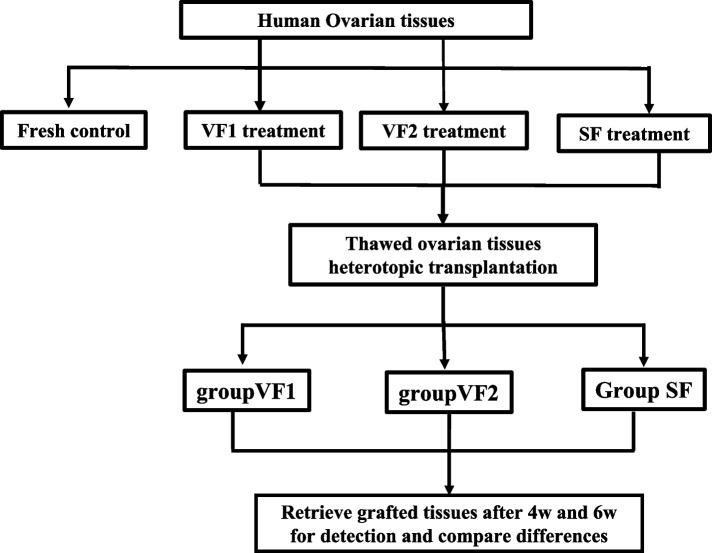
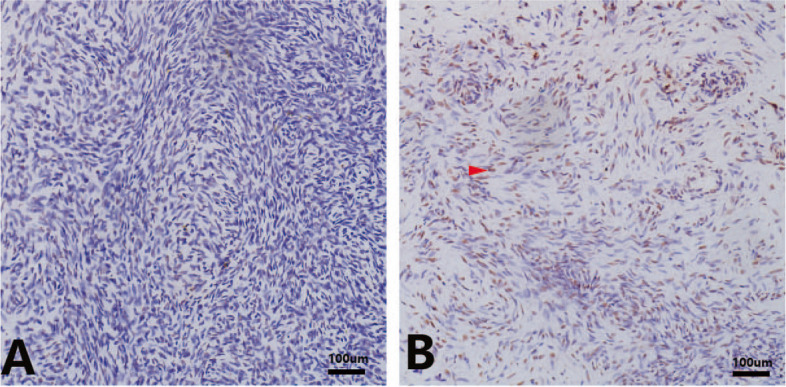
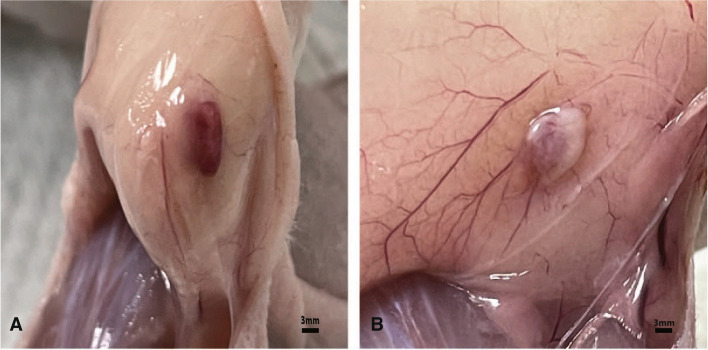
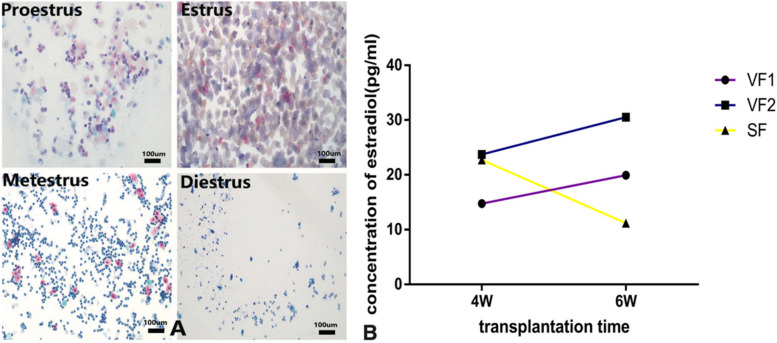
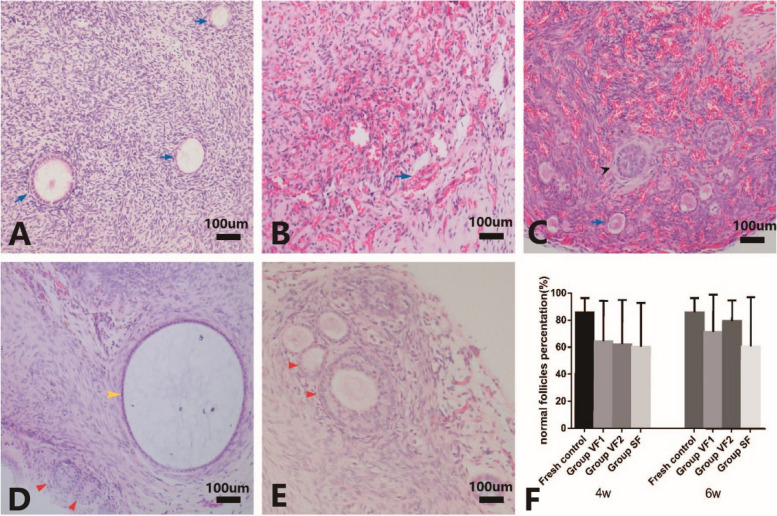
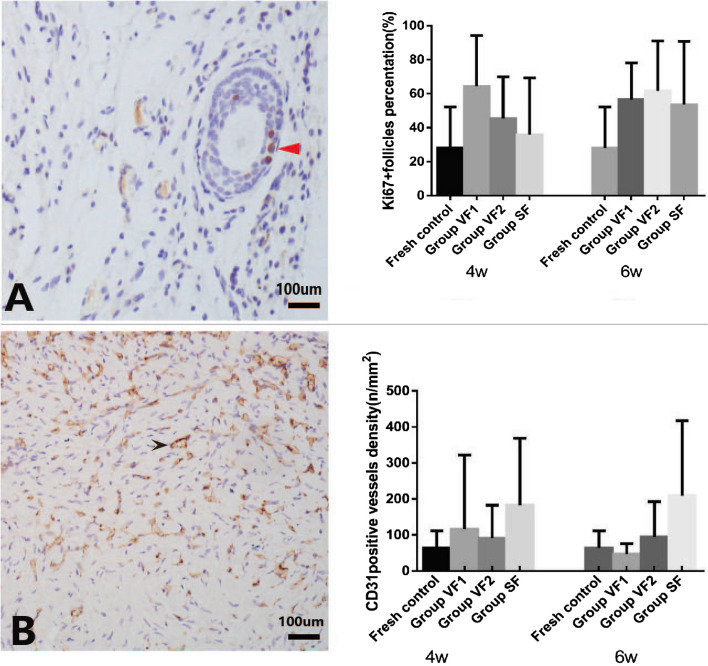
Ovarian tissue from young women aged 29 to 40 was subjected to two vitrification methods and one slow freezing method. The thawed ovarian tissue was then transplanted into nude mice and divided into three groups (VF1 group, VF2 group, SF group) according to the different freezing methods. Ovarian tissue samples were collected at 4 and 6 weeks post-transplantation. The recovery of ovarian function was evaluated by observing the estrous cycle and measuring estradiol levels using Elisa. Histological evaluation was performed to assess the integrity of ovarian follicles. TUNEL assay was used to detect stromal cell apoptosis, and immunohistochemistry was conducted to evaluate follicular proliferation and tissue angiogenesis.
After heterotopic transplantation, mice in the experimental groups exhibited restoration of the estrous cycle. Hormone levels showed an increasing trend in the vitrification groups. At 6 weeks post-transplantation, the VF2 group had significantly higher hormone levels compared to the VF1 group and the slow freezing (SF) group (P < 0.05). At 4 weeks post-transplantation, the proportion of normal follicles was higher in the VF2 group compared to the other two groups (P > 0.05), and at 6 weeks post-transplantation, the VF2 group was significantly higher than the SF group (P < 0.05) and slightly higher than the VF1 group. Immunohistochemistry analysis indicated a higher proportion of proliferating follicles in the vitrification groups compared to the slow freezing group (P > 0.05). CD31 expression was established in all groups at 4 and 6 weeks post-transplantation, with better results in the slow freezing group compared to the vitrification group. TUNEL analysis showed that stromal cell apoptosis was higher in the SF group compared to the vitrification group at 4 weeks post-transplantation (P < 0.05), while there was no significant statistical difference among the groups at 6 weeks post-transplantation.
Vitrification showed better results than slow freezing, with the VF2 group performing slightly better than the VF1 group. Considering the lower economic and time costs associated with vitrification, it may be more suitable for ovarian tissue cryopreservation in major research centers in the future.
本研究旨在比较两种不同玻璃化方法和慢速冷冻在人卵巢组织异位移植后内分泌功能恢复、卵泡形态与增殖、基质细胞凋亡及血管生成方面的效果。
将29至40岁年轻女性的卵巢组织分别采用两种玻璃化方法和一种慢速冷冻方法处理。解冻后的卵巢组织移植到裸鼠体内,并根据不同冷冻方法分为三组(VF1组、VF2组、SF组)。在移植后4周和6周采集卵巢组织样本。通过观察发情周期并使用酶联免疫吸附测定法(ELISA)测量雌二醇水平来评估卵巢功能的恢复情况。进行组织学评估以评估卵巢卵泡的完整性。采用TUNEL法检测基质细胞凋亡,并进行免疫组织化学以评估卵泡增殖和组织血管生成。
异位移植后,实验组小鼠的发情周期得以恢复。玻璃化组的激素水平呈上升趋势。移植后6周,VF2组的激素水平显著高于VF1组和慢速冷冻(SF)组(P < 0.05)。移植后4周,VF2组正常卵泡的比例高于其他两组(P > 0.05),移植后6周,VF2组显著高于SF组(P < 0.05)且略高于VF1组。免疫组织化学分析表明,与慢速冷冻组相比,玻璃化组增殖卵泡的比例更高(P > 0.05)。移植后4周和6周,所有组均有CD31表达,慢速冷冻组的结果优于玻璃化组。TUNEL分析显示,移植后4周,SF组的基质细胞凋亡高于玻璃化组(P < 0.05),而移植后6周各组间无显著统计学差异。
玻璃化法的效果优于慢速冷冻法,VF2组的表现略优于VF1组。考虑到玻璃化法较低的经济和时间成本,未来它可能更适合主要研究中心的卵巢组织冷冻保存。