Wu Hongjiang, Sun Liang, Huo Tong, Wensel Theodore G, Horrigan Frank T, Wang Zhao
Verna and Marrs McLean Department of Biochemistry and Molecular Pharmacology, Baylor College of Medicine, Houston, TX 77030, USA.
These authors contributed equally.
Res Sq. 2024 Dec 11:rs.3.rs-4457423. doi: 10.21203/rs.3.rs-4457423/v1.
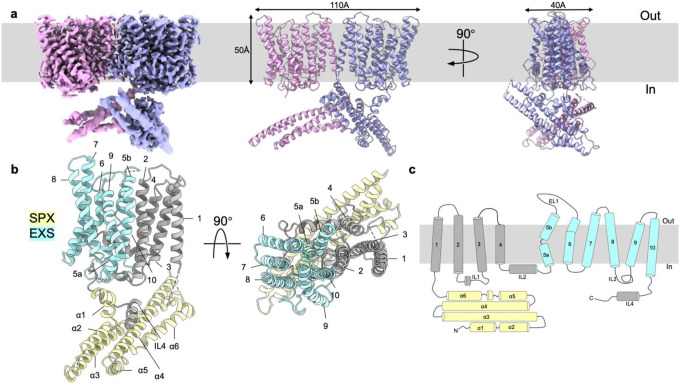
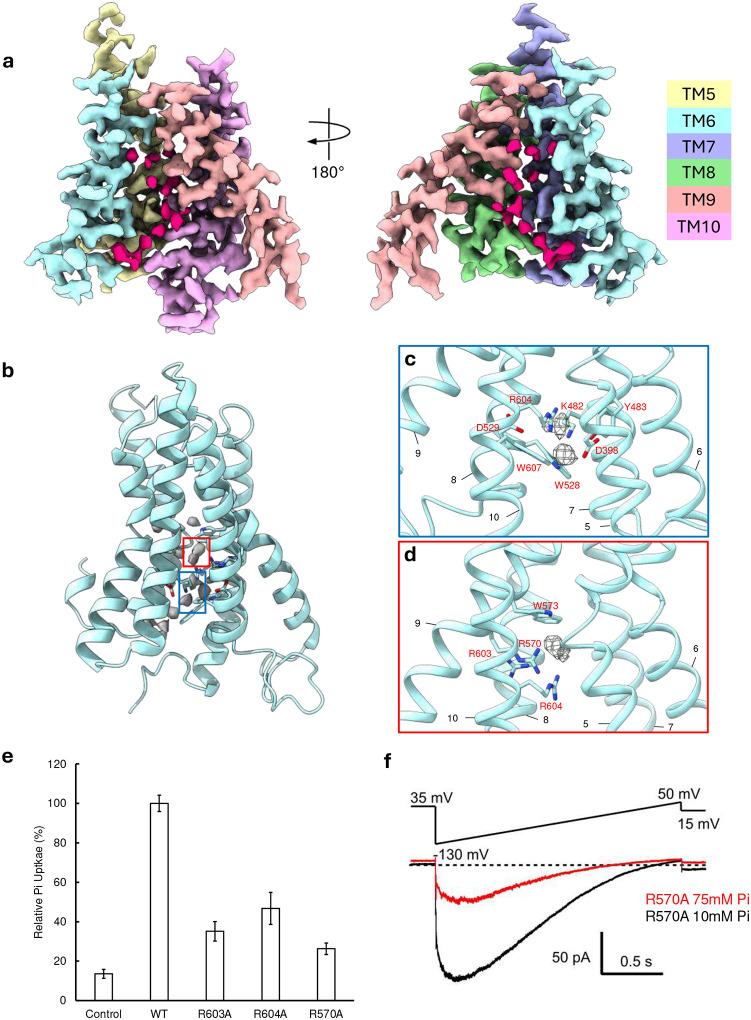
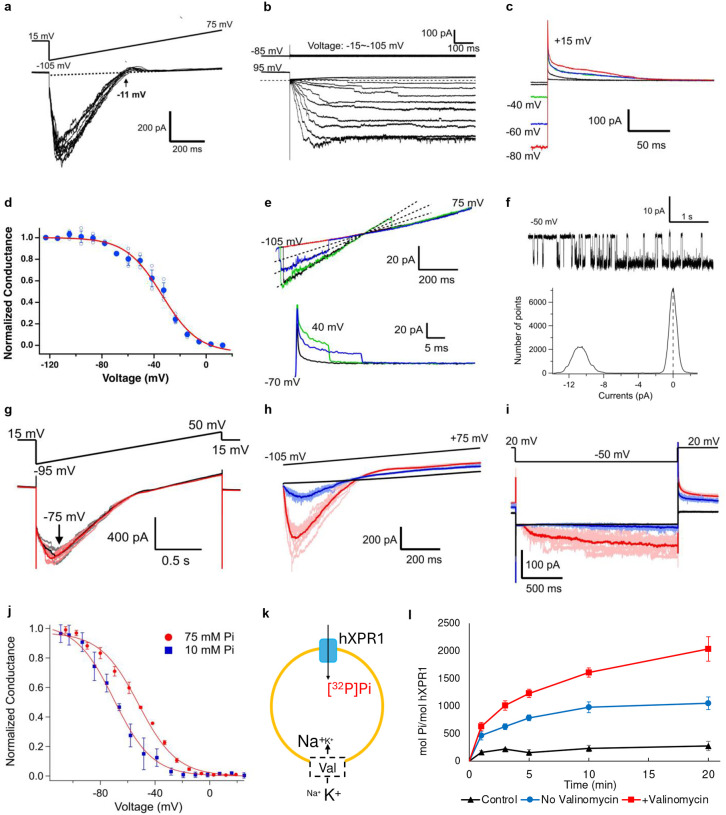
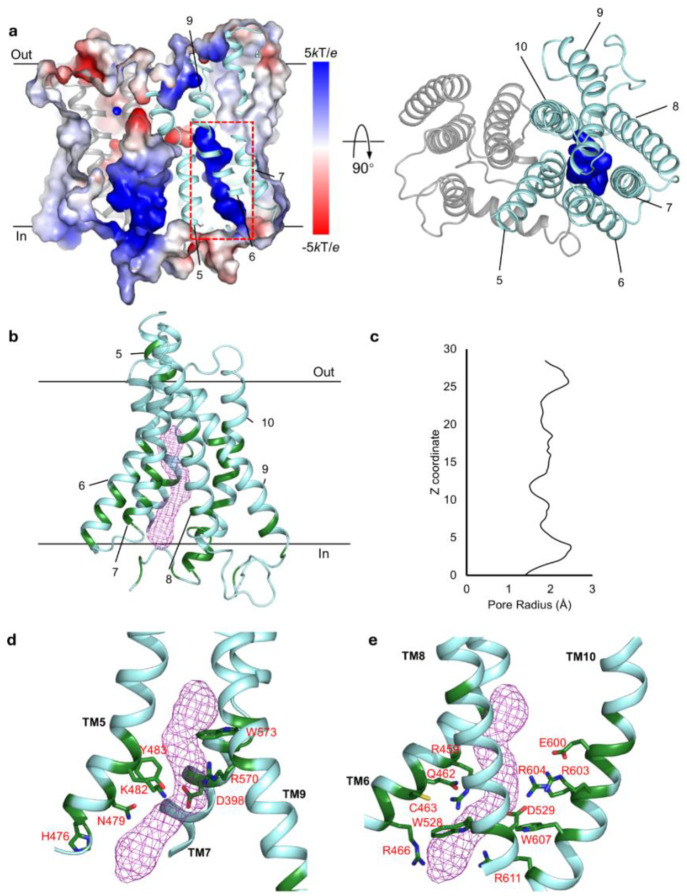
Maintaining a balance of inorganic phosphate (Pi) is vital for cellular functionality due to Pi's essential role in numerous biological processes. Proper phosphate levels are managed through Pi import and export, facilitated by specific Pi transport proteins. Although the mechanisms of Pi import have been extensively studied, the processes governing Pi export remain less understood. Xenotropic and Polytropic retrovirus Receptor 1 (XPR1) has been identified as the only known Pi export protein in mammals, playing a key role in facilitating Pi efflux from cells. Malfunctions in XPR1 are associated with human diseases, such as primary familial brain calcification and certain cancers, highlighting its critical role in maintaining Pi homeostasis. In this study, we introduce the cryogenic electron microscopy structure of human XPR1 (hXPR1), unveiling a structural arrangement distinct from that of any known ion transporter, with a topology not identified in previous computational predictions. Our structural results suggest that hXPR1 may operate as an ion channel, a hypothesis supported by patch clamp recordings revealing hXPR1's voltage- and Pi-dependent activity and large unitary conductance. Using proteoliposomal uptake assays, we demonstrate that purified and reconstituted hXPR1 catalyzes transport of Pi. Further analysis, including the structure of hXPR1 in presence of Pi, and functional effects of mutating a putative Pi binding site, leads us to propose a plausible ion permeation pathway. Together, our results provide novel perspectives on the Pi transport mechanism of XPR1 and its homologues.
维持无机磷酸盐(Pi)的平衡对于细胞功能至关重要,因为Pi在众多生物过程中发挥着关键作用。适当的磷酸盐水平通过特定的Pi转运蛋白促进的Pi进出细胞来进行调节。尽管Pi的输入机制已得到广泛研究,但控制Pi输出的过程仍不太清楚。异嗜性和多嗜性逆转录病毒受体1(XPR1)已被确定为哺乳动物中唯一已知的Pi输出蛋白,在促进Pi从细胞中流出方面发挥着关键作用。XPR1功能异常与人类疾病相关,如原发性家族性脑钙化和某些癌症,突出了其在维持Pi稳态中的关键作用。在本研究中,我们介绍了人类XPR1(hXPR1)的低温电子显微镜结构,揭示了一种与任何已知离子转运蛋白不同的结构排列,其拓扑结构在先前的计算预测中未被识别。我们的结构结果表明,hXPR1可能作为离子通道发挥作用,膜片钳记录显示hXPR1的电压依赖性和Pi依赖性活性以及大的单通道电导支持了这一假设。使用脂质体摄取试验,我们证明纯化和重组的hXPR1催化Pi的转运。进一步的分析,包括Pi存在时hXPR1的结构以及突变一个假定的Pi结合位点的功能效应,使我们提出了一个合理的离子渗透途径。总之,我们的结果为XPR1及其同源物的Pi转运机制提供了新的见解。