Mei Shengmin, Xiang Jie, Wang Li, Xu Yuan, Li Zhiwei
From the Department of Hepatobiliary and Pancreatic Surgery, the First Affiliated Hospital, Zhejiang University School of Medicine, Hangzhou, China.
Department of Surgery, Zhejiang Hospital, Hangzhou, Zhejiang, China.
Ann Surg Open. 2024 Nov 25;5(4):e522. doi: 10.1097/AS9.0000000000000522. eCollection 2024 Dec.
To evaluate the impact of cardiac arrest time (CAT) in brain-dead donors on graft and recipient outcomes following liver transplantation.
The outcome of livers from brain-dead donors with a history of cardiac arrest (CA) remains controversial, and the duration of the CAT has never been evaluated.
A retrospective review of data from the Scientific Registry of Transplant Recipients between 2003 and 2022 was conducted. Propensity score matching was performed to minimize confounding effects.
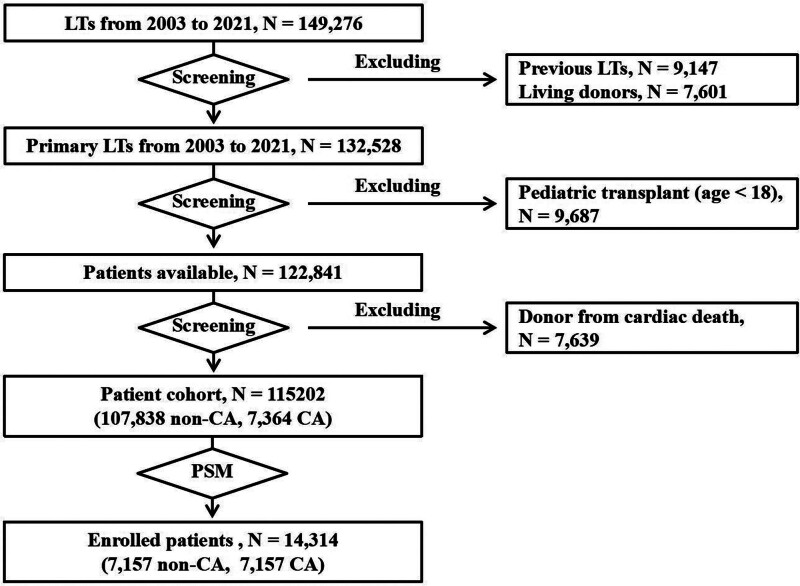
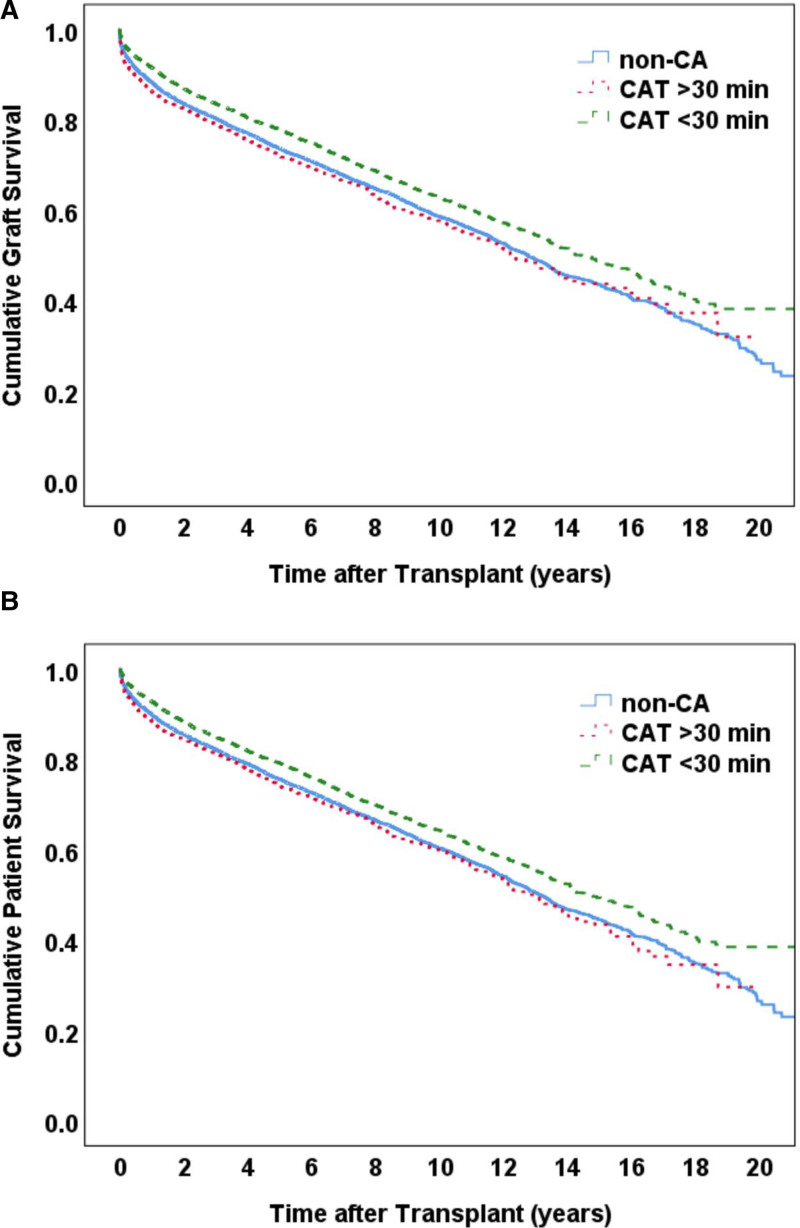
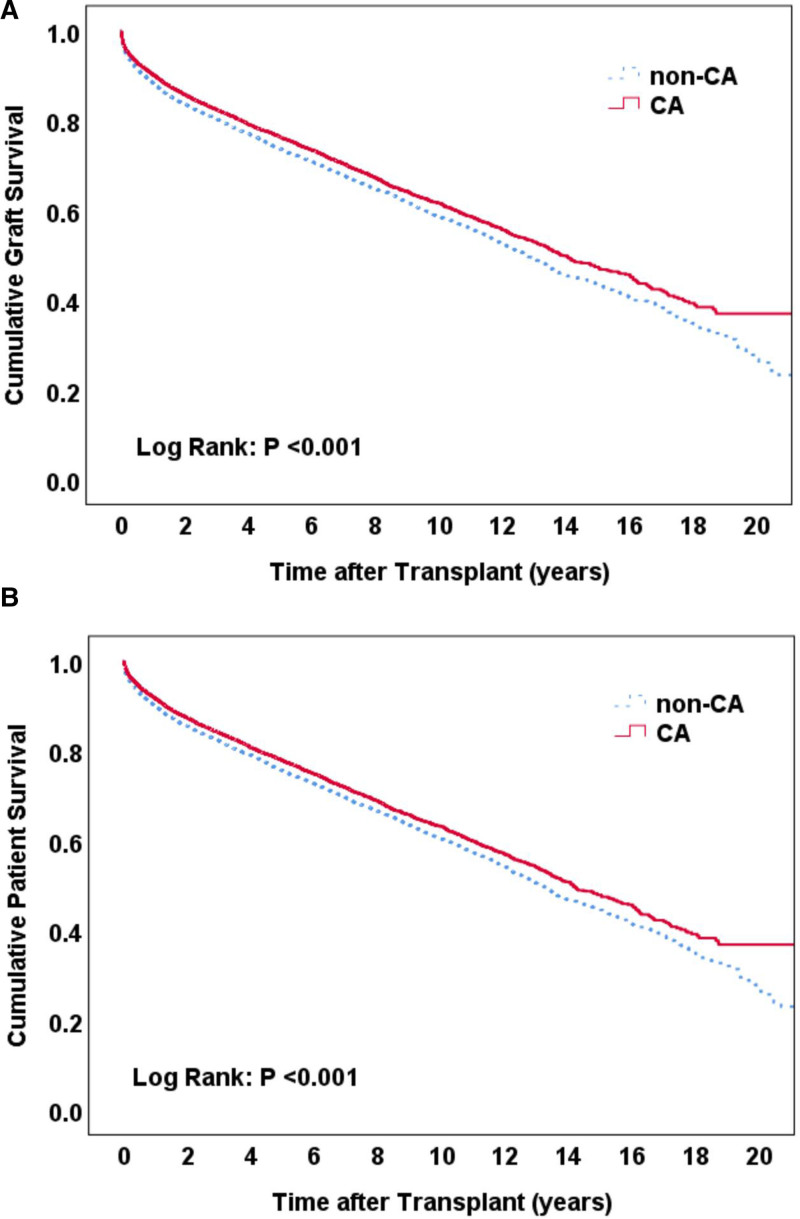
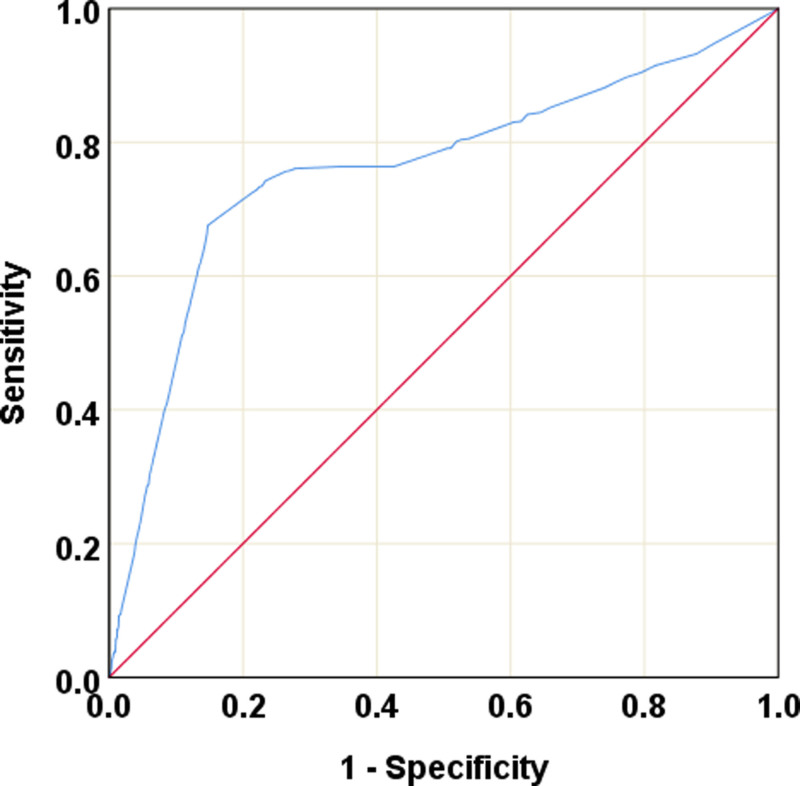
A total of 115,202 recipients were included, 7364 (6.4%) and 107,838 (93.6%) of whom were of the CA and non-CA group, respectively. After 1:1 propensity score matching, each group consisted of 7157 cases. The CA group demonstrated shorter hospital stay (15.5 ± 20.0 days vs. 16.2 ± 21.3 days, = 0.041), with comparable incidence of early graft failure (EGF, 5.8% vs. 6.2%, = 0.161). The CA group demonstrated slightly higher graft survival rates (1 year, 90% vs. 88%; 5 years, 76% vs. 74%; and 10 years, 61% vs. 58%, < 0.001). CAT positively correlated with EGF [odds ratio (OR) = 1.03, 95% confidence interval (CI) = 1.02-1.04, < 0.001], with a sensitivity and specificity of 73% and 86% at a cutoff of 30 minutes. The CAT <30 minutes group demonstrated significantly lower incidence of EGF (5.0%), compared with 7.8% of the CAT >30 minutes group and 6.2% of the non-CA group ( < 0.001).
The use of brain-dead donors with a history of CA did not increase the risk of liver graft failure in our study. A downtime of <30 minutes may confer protective effects on transplanted grafts.
评估脑死亡供体的心脏骤停时间(CAT)对肝移植后移植物和受者结局的影响。
有心脏骤停(CA)病史的脑死亡供体肝脏的结局仍存在争议,且从未评估过CAT的时长。
对2003年至2022年移植受者科学登记处的数据进行回顾性分析。进行倾向评分匹配以尽量减少混杂效应。
共纳入115202名受者,其中7364名(6.4%)和107838名(93.6%)分别属于CA组和非CA组。经过1:1倾向评分匹配后,每组各有7157例。CA组住院时间较短(15.5±20.0天 vs. 16.2±21.3天,P = 0.041),早期移植物功能衰竭(EGF)发生率相当(5.8% vs. 6.2%,P = 0.161)。CA组移植物存活率略高(1年时为90% vs. 88%;5年时为76% vs. 74%;10年时为61% vs. 58%,P < 0.001)。CAT与EGF呈正相关[比值比(OR)= 1.03,95%置信区间(CI)= 1.02 - 1.04,P < 0.001],在截断值为30分钟时,敏感性和特异性分别为73%和86%。CAT<30分钟组的EGF发生率显著较低(5.0%),而CAT>30分钟组为7.8%,非CA组为6.2%(P < 0.001)。
在我们的研究中,使用有CA病史的脑死亡供体并未增加肝移植移植物功能衰竭的风险。停机时间<30分钟可能对移植的移植物具有保护作用。