Rahman Tauseef Ur, Jan Zahoor, Alam Aftab, Ali Raian
Department of Computer Science, Islamia College Peshawar, Peshawar, Pakistan.
College of Science and Engineering, Hamad Bin Khalifa University, Doha, Qatar.
Digit Health. 2024 Dec 19;10:20552076241295797. doi: 10.1177/20552076241295797. eCollection 2024 Jan-Dec.
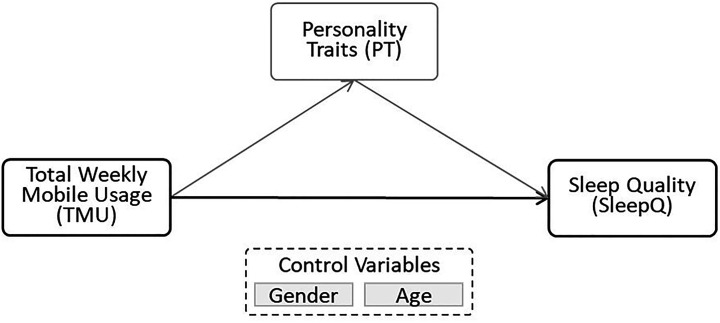
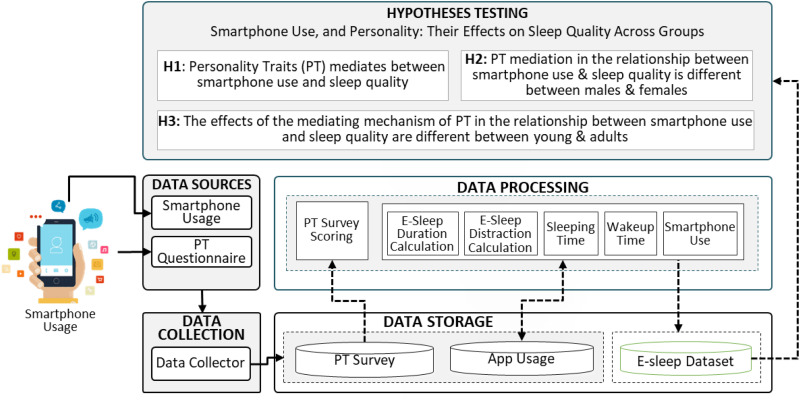
The rapid rise in smartphone use has led to declining sleep quality. Excessive internet use has been linked to negative impacts on physical and mental health, and individual personality traits (PT) may contribute to internet addiction and mitigate its harmful effects. This study aims to: (1) examine whether PT mediate the relationship between smartphone use and sleep quality, and (2) investigate whether the relationship between smartphone use and sleep quality varies across different gender and age groups.
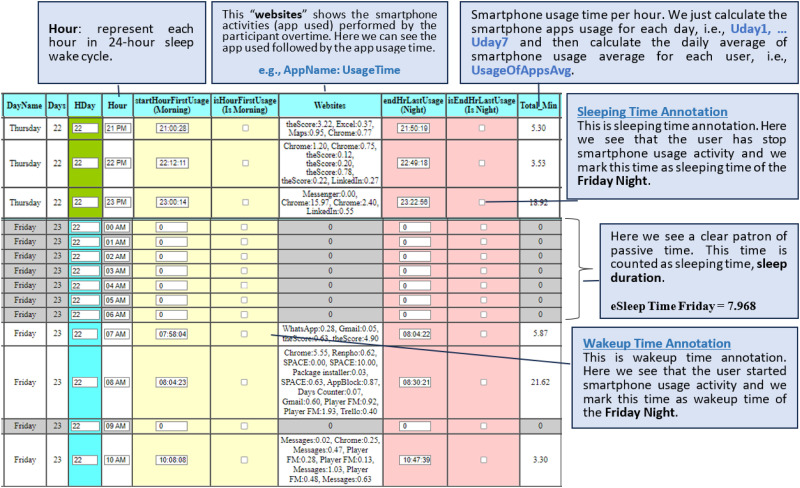
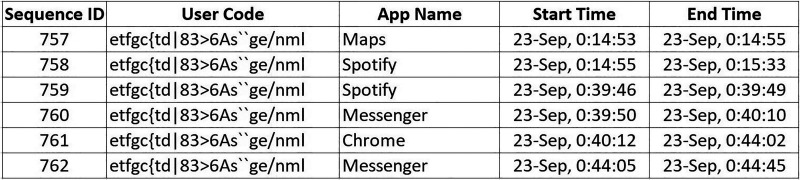
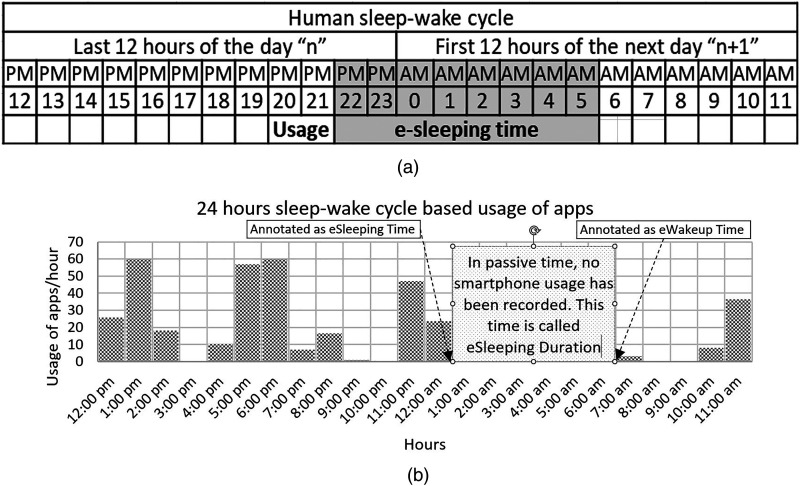
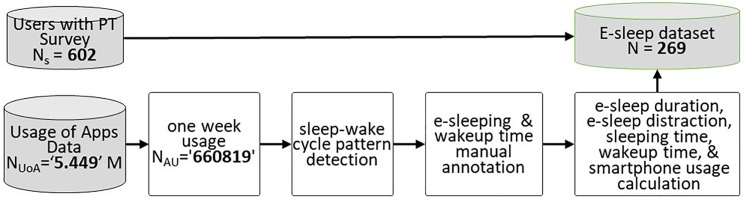
There were 269 participants in the dataset. The daily averages for sleep duration, sleep distraction, and smartphone use were extracted from the usage data acquired through a dedicated smartphone application. Structural equation modeling was employed to investigate the mediating role of personality in the relationship of smartphone use and sleep quality.
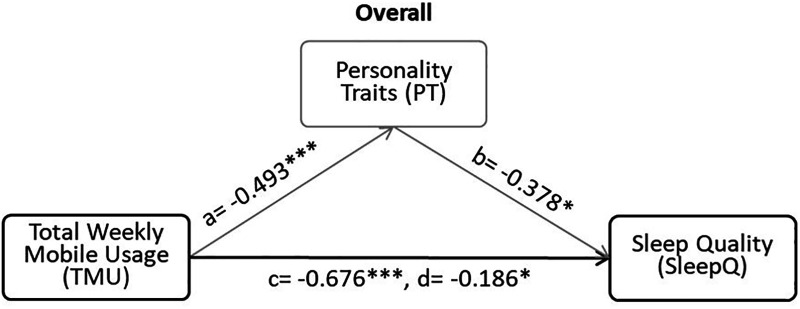
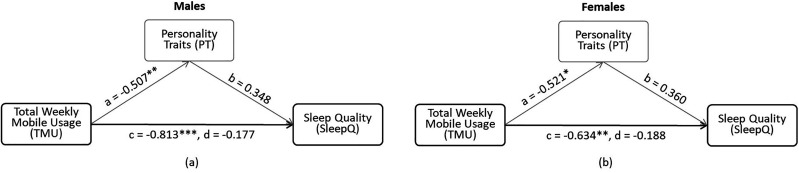
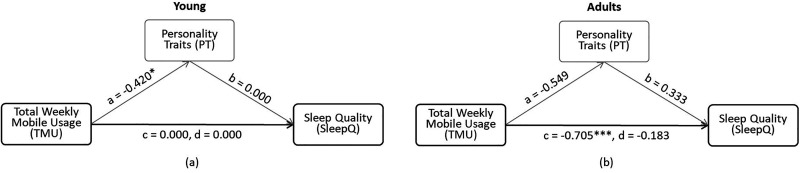
Results indicated that PT partially mediated the relationship, with a significant negative indirect impact of smartphone use on sleep quality. Age differences were observed, showing distinct patterns between younger and older participants, while no significant gender differences emerged.
This study found that excessive smartphone use, coupled with low personality indicators, leads to poor sleep quality. Positive personality traits improve sleep outcomes, with age influencing the impact of smartphone use on sleep. Our findings support and contribute to existing concerns about technology overuse and highlight the need for targeted interventions to promote more beneficial technology design and usage patterns.
智能手机使用的迅速增加导致睡眠质量下降。过度使用互联网已被证明对身心健康有负面影响,而个体人格特质可能会导致网络成瘾并减轻其有害影响。本研究旨在:(1)检验人格特质是否在智能手机使用与睡眠质量之间的关系中起中介作用;(2)调查智能手机使用与睡眠质量之间的关系在不同性别和年龄组中是否存在差异。
数据集中有269名参与者。通过一款专门的智能手机应用程序获取使用数据,从中提取睡眠时长、睡眠干扰和智能手机使用的日均数据。采用结构方程模型研究人格在智能手机使用与睡眠质量关系中的中介作用。
结果表明,人格特质起到了部分中介作用,智能手机使用对睡眠质量有显著的负面间接影响。研究观察到了年龄差异,年轻参与者和年长参与者呈现出不同模式,但未发现显著的性别差异。
本研究发现,过度使用智能手机,再加上人格指标较低,会导致睡眠质量差。积极的人格特质能改善睡眠结果,年龄会影响智能手机使用对睡眠的影响。我们的研究结果支持并补充了现有对技术过度使用的担忧,并强调需要有针对性的干预措施,以促进更有益的技术设计和使用模式。