Erzincanli Yıldız, Geçikli Fatma
Aşkale Vocational High School, Department of Office Management and Executive Assistance, Atatürk University, Erzurum, Türkiye.
Department of Public Relations and Advertising, Public Relations, Faculty of Communication, Atatürk University, Erzurum, Türkiye.
Front Public Health. 2024 Dec 6;12:1449847. doi: 10.3389/fpubh.2024.1449847. eCollection 2024.
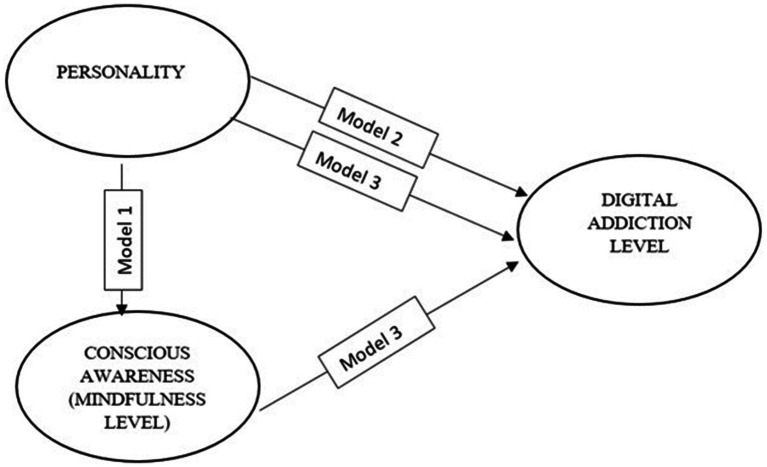
Digital addiction is discussed in the literature as a type of addiction that negatively affects the personal, social, and societal lives of individuals. Digital addiction is a behavioral addiction that occurs as a result of the problematic and unconscious use of digital tools with features such as compulsive, excessive, impulsivity, and includes human-machine interaction. What is meant to be expressed with conscious awareness is to accept the facts and experiences as they are without judgment, and to be aware of them. With awareness, it is aimed to contribute to individuals to evaluate their past experiences more objectively, to get rid of automatic behavioral and emotional patterns, and to show more moderate reactions by avoiding aggressive reactions. In this context, this study examines the Big Five and Mindfulness as predictive variables for digital addiction, focusing on them as a cause and a solution variable that can be used in interventions for digital addiction. Given its prevalence and negative effects, it is important to identify and analyze the relationship patterns between digital addiction and related variables in order to define and resolve the problem. In this context, the present study aims to determine the levels of conscious awareness and digital addiction among university students and to examine the predictive effect of conscious awareness levels and Big Five variables on predicting digital addiction behaviors.
The present study is designed to employ the survey method. Data were collected from 1,664 university students selected by using the convenience sampling method, and the data obtained were analyzed by using descriptive statistics and structural equation modeling. The SPSS 25 and LISREL 8.8 software packages were used in the analysis process.
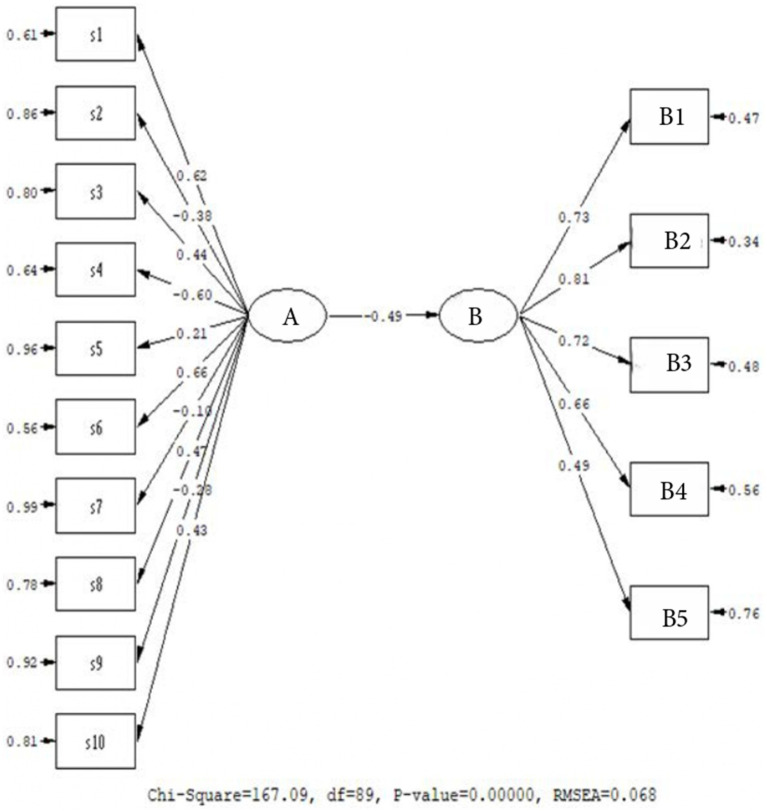
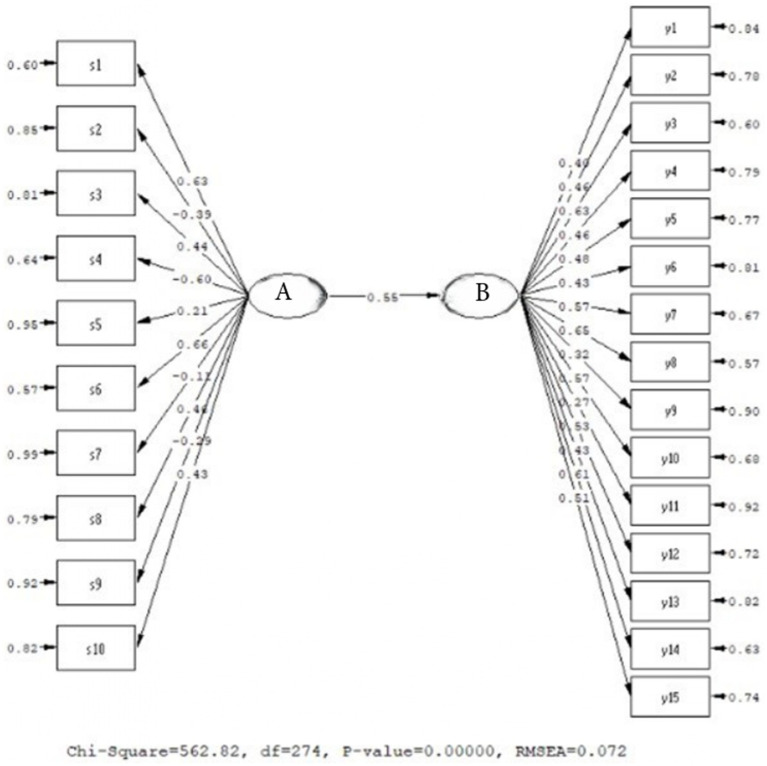
The results achieved in this study revealed that university students have a moderate level of conscious awareness and that the overall level of digital addiction is generally moderate. The results achieved from the structural equation modeling for the measurement model constructed for the relationships between variables confirmed the validity of the proposed model. It was determined that the model had a good fit with the latent variables, which represent the indicator variables, and also other latent variables. In conclusion, it was found that Big Five and the level of conscious awareness have a reducing effect on digital addiction and serve a protective function against this negativity among university students.
文献中将数字成瘾作为一种会对个人的个人生活、社交生活和社会生活产生负面影响的成瘾类型进行了探讨。数字成瘾是一种行为成瘾,它是由于对具有强迫性、过度性、冲动性等特征的数字工具进行有问题的、无意识的使用而产生的,并且包括人机交互。有意识觉知所要表达的意思是不加评判地接受事实和经历,并对其有所觉察。通过觉知,旨在帮助个体更客观地评估他们过去的经历,摆脱自动的行为和情绪模式,并通过避免攻击性反应来表现出更适度的反应。在此背景下,本研究考察大五人格和正念作为数字成瘾的预测变量,将它们视为可用于数字成瘾干预的一个成因和解决变量。鉴于其普遍性和负面影响,识别和分析数字成瘾与相关变量之间的关系模式对于界定和解决该问题很重要。在此背景下,本研究旨在确定大学生的有意识觉知水平和数字成瘾水平,并考察有意识觉知水平和大五人格变量对预测数字成瘾行为的预测作用。
本研究采用调查法设计。通过便利抽样法从1664名大学生中收集数据,并使用描述性统计和结构方程模型对所获得的数据进行分析。分析过程中使用了SPSS 25和LISREL 8.8软件包。
本研究取得的结果表明,大学生的有意识觉知水平中等,数字成瘾的总体水平一般也为中等。针对变量之间关系构建的测量模型进行结构方程建模所得到的结果证实了所提出模型的有效性。确定该模型与代表指标变量的潜在变量以及其他潜在变量拟合良好。总之,发现大五人格和有意识觉知水平对数字成瘾有降低作用,并在大学生中对这种消极影响起到保护作用。