Centre National de la Recherche Scientifique, UMR7357 CNRS, ICube Research Department, Université de Strasbourg and Hôpitaux Universitaires de Strasbourg, Pavillon Clovis Vincent, F-67085 Strasbourg, France.
Team MIMESIS, INRIA, UMR7357 CNRS, ICube Research Department, F-67085 Strasbourg, France.
Int J Environ Res Public Health. 2022 Jun 5;19(11):6910. doi: 10.3390/ijerph19116910.
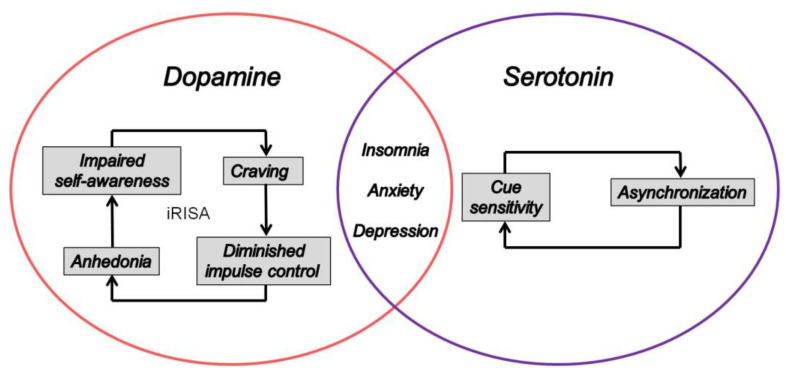
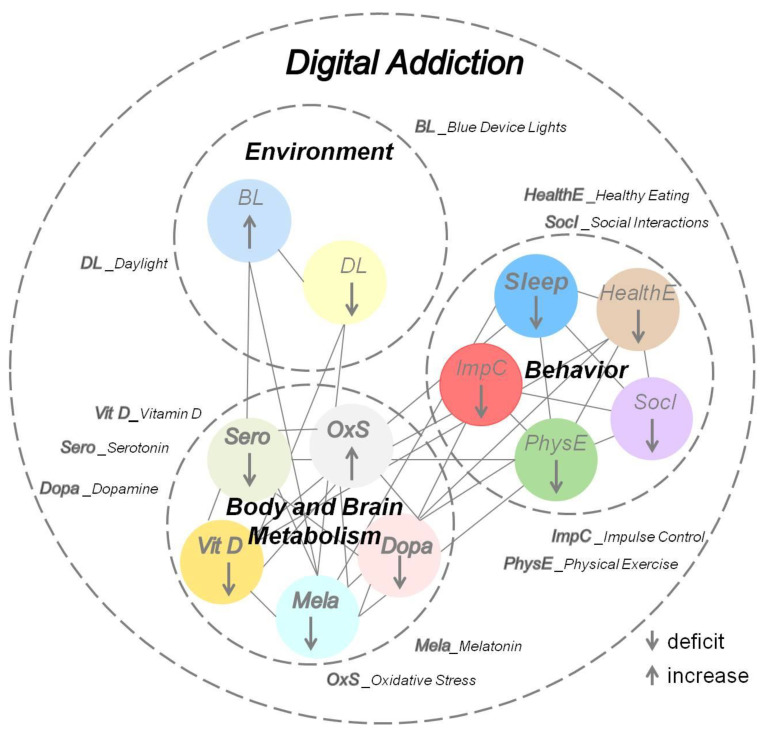
In 2020, the World Health Organization formally recognized addiction to digital technology (connected devices) as a worldwide problem, where excessive online activity and internet use lead to inability to manage time, energy, and attention during daytime and produce disturbed sleep patterns or insomnia during nighttime. Recent studies have shown that the problem has increased in magnitude worldwide during the COVID-19 pandemic. The extent to which dysfunctional sleep is a consequence of altered motivation, memory function, mood, diet, and other lifestyle variables or results from excess of blue-light exposure when looking at digital device screens for long hours at day and night is one of many still unresolved questions. This article offers a narrative overview of some of the most recent literature on this topic. The analysis provided offers a conceptual basis for understanding digital addiction as one of the major reasons why people, and adolescents in particular, sleep less and less well in the digital age. It discusses definitions as well as mechanistic model accounts in context. Digital addiction is identified as functionally equivalent to all addictions, characterized by the compulsive, habitual, and uncontrolled use of digital devices and an excessively repeated engagement in a particular online behavior. Once the urge to be online has become uncontrollable, it is always accompanied by severe sleep loss, emotional distress, depression, and memory dysfunction. In extreme cases, it may lead to suicide. The syndrome has been linked to the known chronic effects of all drugs, producing disturbances in cellular and molecular mechanisms of the GABAergic and glutamatergic neurotransmitter systems. Dopamine and serotonin synaptic plasticity, essential for impulse control, memory, and sleep function, are measurably altered. The full spectrum of behavioral symptoms in digital addicts include eating disorders and withdrawal from outdoor and social life. Evidence pointing towards dysfunctional melatonin and vitamin D metabolism in digital addicts should be taken into account for carving out perspectives for treatment. The conclusions offer a holistic account for digital addiction, where sleep deficit is one of the key factors.
2020 年,世界卫生组织正式将对数字技术(联网设备)的成瘾认定为全球性问题,其中过度的线上活动和互联网使用导致白天无法管理时间、精力和注意力,并导致夜间睡眠模式紊乱或失眠。最近的研究表明,在 COVID-19 大流行期间,全球范围内该问题的严重程度有所增加。睡眠功能障碍在多大程度上是由于动机、记忆功能、情绪、饮食和其他生活方式变量改变,或者是由于白天和黑夜长时间看数字设备屏幕导致蓝光暴露过多引起的,这是众多尚未解决的问题之一。本文对该主题的一些最新文献进行了综述。提供的分析为理解数字成瘾提供了概念基础,数字成瘾是人们,尤其是青少年在数字时代睡眠质量越来越差的主要原因之一。本文讨论了定义以及机制模型解释,并结合上下文进行了分析。数字成瘾与所有成瘾一样,具有强迫性、习惯性和失控性地使用数字设备以及过度重复特定在线行为的特点,被认为是功能等效的。一旦上网的冲动变得无法控制,就会伴随着严重的睡眠不足、情绪困扰、抑郁和记忆功能障碍。在极端情况下,它可能导致自杀。该综合征与所有已知药物的慢性影响有关,导致 GABA 能和谷氨酸能神经递质系统的细胞和分子机制紊乱。多巴胺和血清素突触可塑性对于冲动控制、记忆和睡眠功能至关重要,其可测量地发生改变。数字成瘾者的所有行为症状包括饮食失调和逃避户外和社交生活。数字成瘾者的褪黑素和维生素 D 代谢功能障碍的证据应该被考虑在内,以制定治疗方案。结论提供了数字成瘾的整体解释,其中睡眠不足是关键因素之一。