Toyoda Hayato, Ishikawa Katsuhiko, Omi Yasuhiro
Integrated Graduate School of Medicine, Engineering, and Agricultural Sciences, University of Yamanashi, Yamanashi, Japan.
Japan Society for the Promotion of Science (JSPS), Tokyo, Japan.
Front Psychol. 2024 Dec 6;15:1463641. doi: 10.3389/fpsyg.2024.1463641. eCollection 2024.
Victims of interpersonal violence in sports show various mental health concerns. However, no studies have quantitatively examined their primary complaints, considering psychological symptoms such as denial of self-concept and interpersonal challenges not captured by conventional post-traumatic stress disorder (PTSD). Recently, an association between interpersonal violence victimization and complex PTSD (CPTSD) has been noted in Japanese sports coaching situations, specifically for extracurricular sports activities. This study aimed to examine the applicability of the International Trauma Questionnaire (ITQ) and determine whether interpersonal violence victimization and related risk factors predicted PTSD and CPTSD in extracurricular sports activities in Japan.
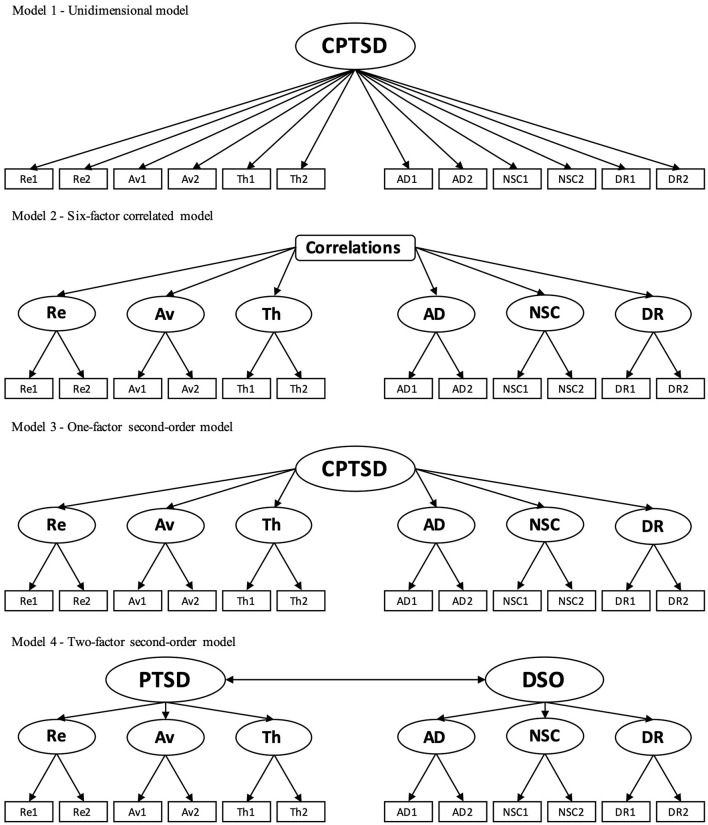
This study included 651 adults aged 18-25 who had previously participated in extracurricular sports activities in junior high and high school. The ITQ was examined using confirmatory factor analysis with maximum likelihood with robust standard errors, fit indices comparisons, a graded response model, differential item functioning, and rank correlation designs. A binomial logistic regression model with robust standard errors examined the association of PTSD and CPTSD with interpersonal violence victimization and related risk factors.
The optimal factor structure, measurement precision, and validity of the ITQ were confirmed. Physical and psychological violence victimization and the ITQ were positively correlated with PTSD, difficulties in emotion regulation, self-disgust, and interpersonal problems subscales, respectively. A high frequency of psychological and physical violence victimization experiences and self-identified LGB (lesbian, gay, or bisexual) were associated with PTSD and CPTSD diagnosability. Additionally, being a woman and in school life away from parents were associated solely with PTSD diagnosability.
This is the first quantitative study to examine CPTSD in a study on interpersonal violence in sports. Our findings can provide insights into desirable victim support and enhanced clinical care in interpersonal violence in a sports context.
体育运动中人际暴力的受害者存在各种心理健康问题。然而,尚无研究对他们的主要诉求进行定量分析,未考虑诸如自我概念否认和人际挑战等心理症状,而这些症状未被传统创伤后应激障碍(PTSD)所涵盖。最近,在日本体育教练情境中,特别是在课外体育活动中,人际暴力受害与复杂性创伤后应激障碍(CPTSD)之间的关联已被注意到。本研究旨在检验国际创伤问卷(ITQ)的适用性,并确定人际暴力受害情况及相关风险因素是否能预测日本课外体育活动中的PTSD和CPTSD。
本研究纳入了651名年龄在18 - 25岁之间、曾在初中和高中参加过课外体育活动的成年人。使用具有稳健标准误差的最大似然法进行验证性因素分析、拟合指数比较、等级反应模型、项目功能差异分析和等级相关设计来检验ITQ。采用具有稳健标准误差的二项逻辑回归模型检验PTSD和CPTSD与人际暴力受害情况及相关风险因素之间的关联。
确认了ITQ的最佳因素结构、测量精度和效度。身体暴力和心理暴力受害情况与PTSD、情绪调节困难、自我厌恶以及人际问题分量表分别呈正相关。心理和身体暴力受害经历的高频率以及自我认定为LGB(女同性恋、男同性恋或双性恋)与PTSD和CPTSD的可诊断性相关。此外,女性身份以及远离父母的学校生活仅与PTSD的可诊断性相关。
这是第一项在体育运动中人际暴力研究中检验CPTSD的定量研究。我们的研究结果可为体育背景下人际暴力的理想受害者支持和强化临床护理提供见解。