Farid Babur, Rehman Haseena, Ali Mukhtiar, Miraj Muska, Amjad Mahnoor, Ali Basit, Khan Zarak, Abu Bakkar Muhammad
Medicine and Surgery, Musgrove Park Hospital, Taunton, GBR.
General Surgery, Lady Reading Hospital Medical Teaching Institution (MTI), Peshawar, PAK.
Cureus. 2024 Nov 22;16(11):e74216. doi: 10.7759/cureus.74216. eCollection 2024 Nov.
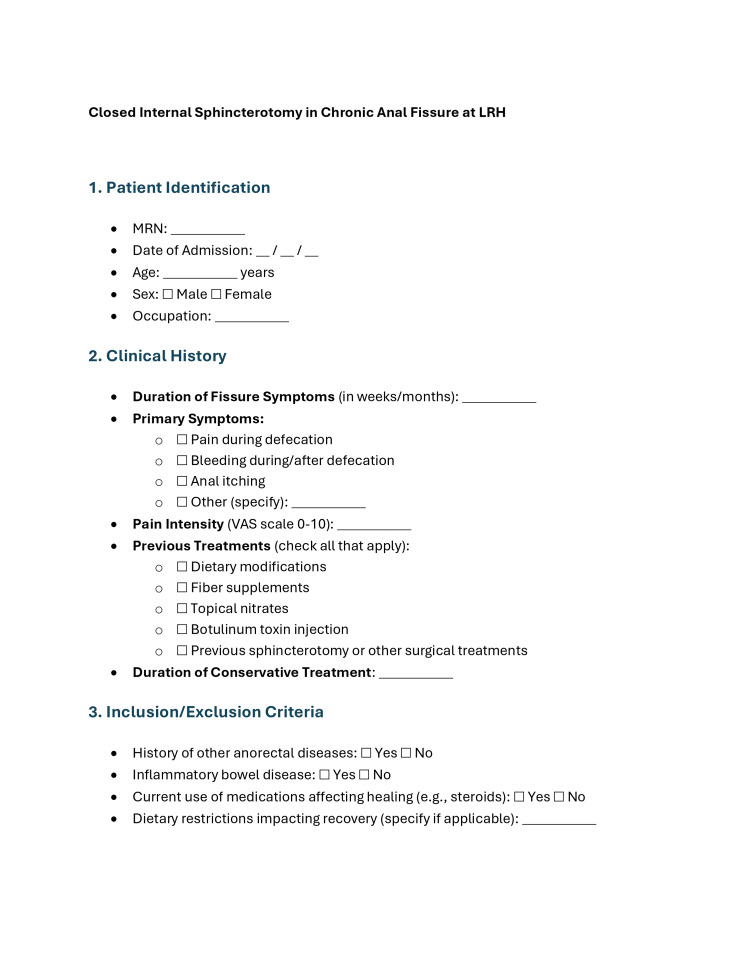
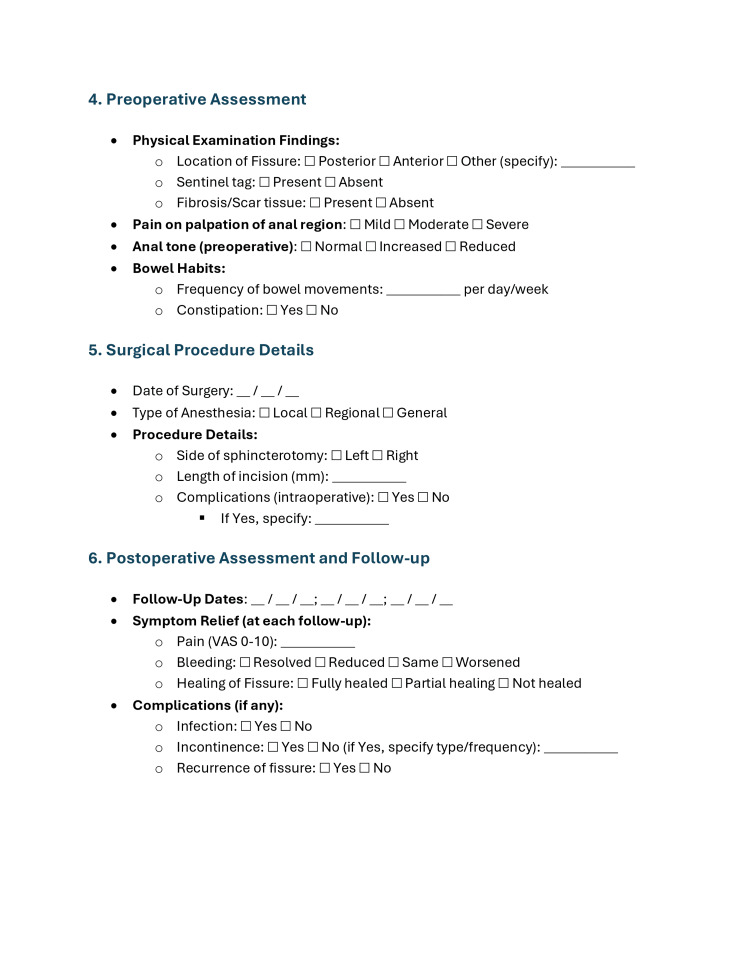
Introduction An anal fissure is marked by a longitudinal tear in the mucosal lining of the lower anal canal, causing painful defecation and mild anal bleeding. The classical triad includes an anal ulcer, a sentinel tag, and a hypertrophic papilla. This study investigates the frequency of fecal incontinence in patients with anal fissure undergoing closed internal sphincterotomy, offering recent insights for treatment recommendations. Objective To determine the prevalence of fecal incontinence in individuals with chronic anal fissure undergoing closed internal sphincterotomy. Methodology The study design was a descriptive case series, conducted over a 6-month period (August 21, 2018 to February 21, 2019). It was carried out at the General Surgery Department, Lady Reading Hospital MTI, Peshawar, Pakistan. The participants included a total of 139 patients diagnosed with chronic anal fissures. Data collection To gather comprehensive information, a detailed approach was adopted. This included history taking, general physical examinations, and digital rectal examinations for all patients. All patients diagnosed with chronic anal fissure were prepared for lateral internal sphincterotomy (LIS). Variables The variable of interest was the occurrence of fecal incontinence, assessed during follow-up visits at the end of the 2nd and 6th week post-surgery. Ethical consideration The study received approval from the hospital's ethical committee and the College of Physicians and Surgeons of Pakistan (CPSP) research committee. Results In our study, the mean age was 30 years (SD ± 12.16). Forty-five percent of patients were male, and 55% were female. Fecal incontinence was observed in 10% of patients. Conclusion Our study reveals a fecal incontinence frequency of 10% in patients undergoing closed LIS for chronic anal fissure.
引言
肛裂表现为肛管下段黏膜的纵向撕裂,导致排便疼痛和轻度便血。典型三联征包括肛门溃疡、哨兵痔和肥大乳头。本研究调查了接受闭合性内括约肌切开术的肛裂患者中大便失禁的发生率,为治疗建议提供最新见解。
目的
确定接受闭合性内括约肌切开术的慢性肛裂患者中大便失禁的患病率。
方法
本研究设计为描述性病例系列,为期6个月(2018年8月21日至2019年2月21日)。研究在巴基斯坦白沙瓦Lady Reading医院MTI的普通外科进行。参与者共有139例被诊断为慢性肛裂的患者。
数据收集
为收集全面信息,采用了详细的方法。这包括对所有患者进行病史采集、全身体格检查和直肠指检。所有被诊断为慢性肛裂的患者均准备接受外侧内括约肌切开术(LIS)。
变量
感兴趣的变量是大便失禁的发生情况,在术后第2周和第6周结束时的随访中进行评估。
伦理考量
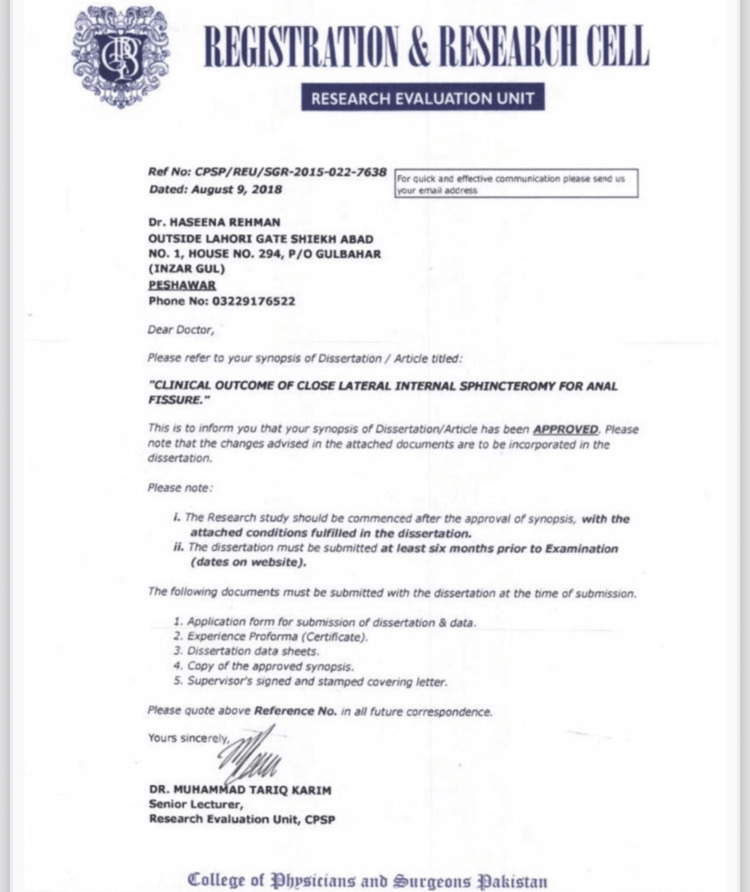
本研究获得了医院伦理委员会和巴基斯坦医师与外科医师学院(CPSP)研究委员会的批准。
结果
在我们的研究中,平均年龄为30岁(标准差±12.16)。45%的患者为男性,55%为女性。10%的患者出现大便失禁。
结论
我们的研究显示,接受闭合性LIS治疗慢性肛裂的患者中,大便失禁发生率为10%。