• 文献检索
  • 文档翻译
  • 深度研究
  • 学术资讯
  • Suppr Zotero 插件Zotero 插件
  • 邀请有礼
  • 套餐&价格
  • 历史记录
应用&插件
Suppr Zotero 插件Zotero 插件浏览器插件Mac 客户端Windows 客户端微信小程序
定价
高级版会员购买积分包购买API积分包
服务
文献检索文档翻译深度研究API 文档MCP 服务
关于我们
关于 Suppr公司介绍联系我们用户协议隐私条款
关注我们

Suppr 超能文献

核心技术专利:CN118964589B侵权必究
粤ICP备2023148730 号-1Suppr @ 2026

文献检索

告别复杂PubMed语法,用中文像聊天一样搜索,搜遍4000万医学文献。AI智能推荐,让科研检索更轻松。

立即免费搜索

文件翻译

保留排版,准确专业,支持PDF/Word/PPT等文件格式,支持 12+语言互译。

免费翻译文档

深度研究

AI帮你快速写综述,25分钟生成高质量综述,智能提取关键信息,辅助科研写作。

立即免费体验

用于光伏能源系统中增强热控制的深度回归分析。

Deep regression analysis for enhanced thermal control in photovoltaic energy systems.

作者信息

Elmessery Wael M, Habib Abadeer, Shams Mahmoud Y, Abd El-Hafeez Tarek, El-Messery Tamer M, Elsayed Salah, Fodah Ahmed E M, Abdelwahab Taha A M, Ali Khaled A M, Osman Yasser K O T, Abdelshafie Mohamed F, El-Wahhab Gomaa G Abd, Elwakeel Abdallah E

机构信息

Agricultural Engineering Department, Faculty of Agriculture, Kafrelsheikh University, Kafr El-Shaikh, 33516, Egypt.

International Research Centre "Biotechnologies of the Third Millennium", Faculty of Biotechnologies (BioTech), ITMO University, St. Petersburg, 191002, Russia.

出版信息

Sci Rep. 2024 Dec 23;14(1):30600. doi: 10.1038/s41598-024-81101-x.

DOI:10.1038/s41598-024-81101-x
PMID:39715782
原文链接:https://pmc.ncbi.nlm.nih.gov/articles/PMC11666595/
Abstract

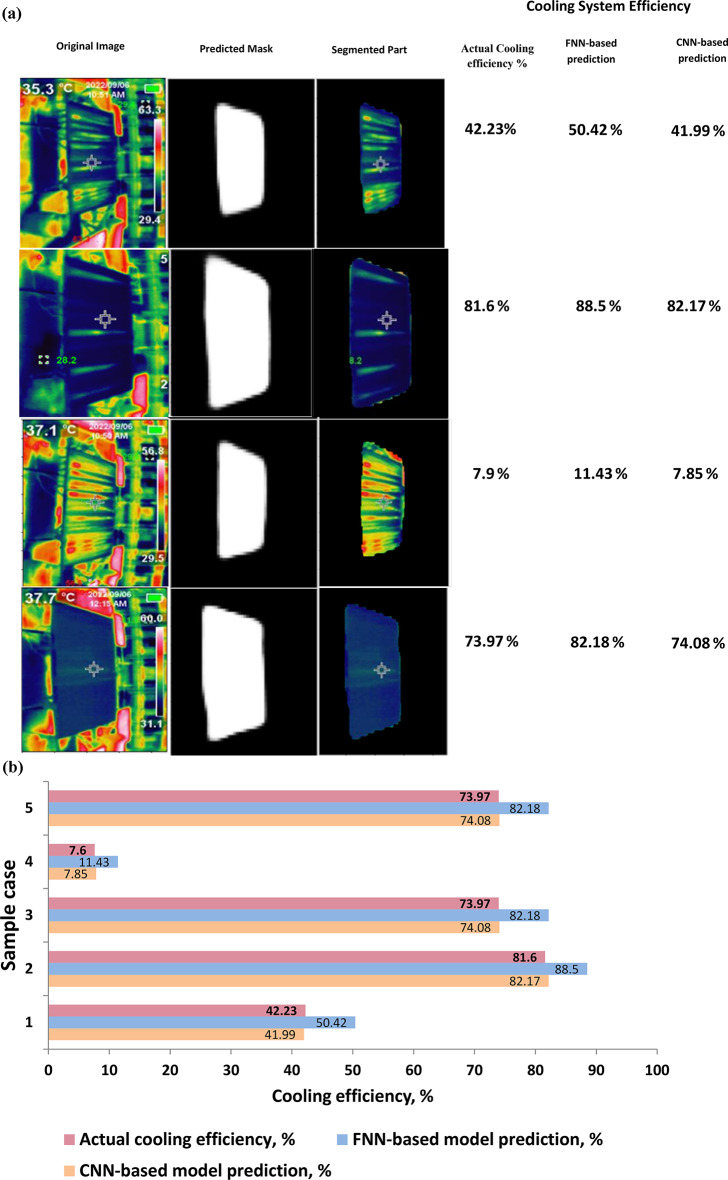
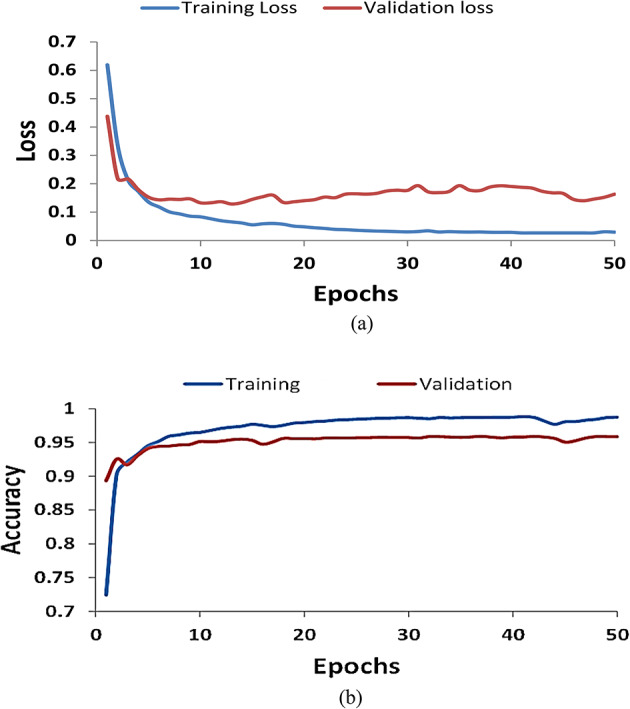
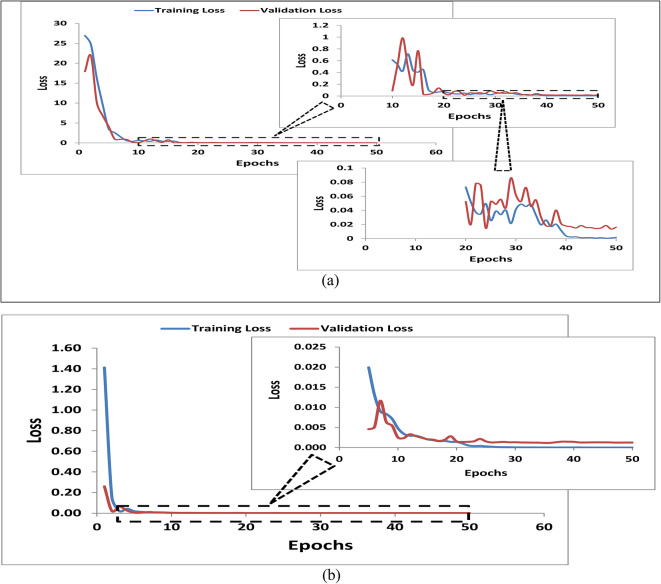
Efficient cooling systems are critical for maximizing the electrical efficiency of Photovoltaic (PV) solar panels. However, conventional temperature probes often fail to capture the spatial variability in thermal patterns across panels, impeding accurate assessment of cooling system performance. Existing methods for quantifying cooling efficiency lack precision, hindering the optimization of PV system maintenance and renewable energy output. This research introduces a novel approach utilizing deep learning techniques to address these limitations. A U-Net architecture is employed to segment solar panels from background elements in thermal imaging videos, facilitating a comprehensive analysis of cooling system efficiency. Two predictive models-a 3-layer Feedforward Neural Network (FNN) and a proposed Convolutional Neural Network (CNN)-are developed and compared for estimating cooling percentages from individual images. The study aims to enhance the precision and reliability of heat mapping capabilities for non-invasive, vision-based monitoring of photovoltaic cooling dynamics. By leveraging deep regression techniques, the proposed CNN model demonstrates superior predictive capability compared to traditional methods, enabling accurate estimation of cooling efficiencies across diverse scenarios. Experimental evaluation illustrates the supremacy of the CNN model in predictive capability, yielding a mean square error (MSE) of just 0.001171821, as opposed to the FNN's MSE of 0.016. Furthermore, the CNN demonstrates remarkable improvements in mean absolute error (MAE) and R-square, registering values of 1.2% and 0.95, respectively, whereas the FNN posts comparatively inferior numbers of 3.5% and 0.85. This research introduces labeled thermal imaging datasets and tailored deep learning architectures, accelerating advancements in renewable energy technology solutions. Moreover, the study provides insights into the practical implementation and cost-effectiveness of the proposed cooling efficiency monitoring system, highlighting hardware requirements, integration with existing infrastructure, and sensitivity analysis. The economic viability and scalability of the system are assessed through comprehensive cost-benefit analysis and scalability assessment, demonstrating significant potential for cost savings and revenue increases in large-scale PV installations. Furthermore, strategies for addressing limitations, enhancing predictive accuracy, and scaling to larger datasets are discussed, laying the groundwork for future research and industry collaboration in the field of photovoltaic thermal management optimization.

摘要

高效的冷却系统对于最大化光伏(PV)太阳能板的电效率至关重要。然而,传统的温度探头常常无法捕捉面板上热模式的空间变化,这阻碍了对冷却系统性能的准确评估。现有的量化冷却效率的方法缺乏精度,妨碍了光伏系统维护和可再生能源输出的优化。本研究引入了一种利用深度学习技术来解决这些局限性的新方法。采用U-Net架构从热成像视频中的背景元素中分割出太阳能板,便于对冷却系统效率进行全面分析。开发并比较了两种预测模型——一个3层前馈神经网络(FNN)和一个提出的卷积神经网络(CNN),用于从单个图像估计冷却百分比。该研究旨在提高用于光伏冷却动态的非侵入式、基于视觉监测的热成像能力的精度和可靠性。通过利用深度回归技术,所提出的CNN模型与传统方法相比显示出卓越的预测能力,能够在各种场景下准确估计冷却效率。实验评估表明CNN模型在预测能力方面具有优越性,均方误差(MSE)仅为0.001171821,而FNN的MSE为0.016。此外,CNN在平均绝对误差(MAE)和决定系数(R平方)方面有显著改善,分别为1.2%和0.95,而FNN的相应数值分别为3.5%和0.85,相对较差。本研究引入了标记的热成像数据集和定制的深度学习架构,加速了可再生能源技术解决方案的进步。此外,该研究还提供了对所提出的冷却效率监测系统的实际实施和成本效益的见解,突出了硬件要求、与现有基础设施的集成以及敏感性分析。通过全面的成本效益分析和可扩展性评估来评估该系统的经济可行性和可扩展性,表明在大规模光伏装置中具有显著的成本节约和收入增加潜力。此外,还讨论了解决局限性、提高预测准确性以及扩展到更大数据集的策略,为光伏热管理优化领域未来的研究和行业合作奠定了基础。
https://cdn.ncbi.nlm.nih.gov/pmc/blobs/e268/11666595/e6e7ea0cc460/41598_2024_81101_Fig7_HTML.jpg
https://cdn.ncbi.nlm.nih.gov/pmc/blobs/e268/11666595/70130b0cb693/41598_2024_81101_Figa_HTML.jpg
https://cdn.ncbi.nlm.nih.gov/pmc/blobs/e268/11666595/401fbffbed8c/41598_2024_81101_Fig4_HTML.jpg
https://cdn.ncbi.nlm.nih.gov/pmc/blobs/e268/11666595/d8c4944fe07d/41598_2024_81101_Fig6_HTML.jpg
https://cdn.ncbi.nlm.nih.gov/pmc/blobs/e268/11666595/e6e7ea0cc460/41598_2024_81101_Fig7_HTML.jpg
https://cdn.ncbi.nlm.nih.gov/pmc/blobs/e268/11666595/70130b0cb693/41598_2024_81101_Figa_HTML.jpg
https://cdn.ncbi.nlm.nih.gov/pmc/blobs/e268/11666595/401fbffbed8c/41598_2024_81101_Fig4_HTML.jpg
https://cdn.ncbi.nlm.nih.gov/pmc/blobs/e268/11666595/d8c4944fe07d/41598_2024_81101_Fig6_HTML.jpg
https://cdn.ncbi.nlm.nih.gov/pmc/blobs/e268/11666595/e6e7ea0cc460/41598_2024_81101_Fig7_HTML.jpg

相似文献

1
Deep regression analysis for enhanced thermal control in photovoltaic energy systems.用于光伏能源系统中增强热控制的深度回归分析。
Sci Rep. 2024 Dec 23;14(1):30600. doi: 10.1038/s41598-024-81101-x.
2
Brain tumor segmentation and detection in MRI using convolutional neural networks and VGG16.使用卷积神经网络和VGG16在磁共振成像(MRI)中进行脑肿瘤分割与检测
Cancer Biomark. 2025 Mar;42(3):18758592241311184. doi: 10.1177/18758592241311184. Epub 2025 Apr 4.
3
A comprehensive review of technologies used to improve the performance of PV systems in a view of cooling mediums, reflectors design, spectrum splitting, and economic analysis.一种全面的综述,涉及到用于提高光伏系统性能的技术,包括冷却介质、反射器设计、光谱分光以及经济分析。
Environ Sci Pollut Res Int. 2021 Feb;28(7):7955-7980. doi: 10.1007/s11356-020-11008-3. Epub 2020 Oct 12.
4
Detection and analysis of deteriorated areas in solar PV modules using unsupervised sensing algorithms and 3D augmented reality.使用无监督传感算法和三维增强现实技术检测与分析太阳能光伏组件中的老化区域
Heliyon. 2024 Mar 16;10(6):e27973. doi: 10.1016/j.heliyon.2024.e27973. eCollection 2024 Mar 30.
5
Effective integrated thermal management using hygroscopic hydrogel for photovoltaic-thermoelectric applications.用于光伏 - 热电应用的基于吸湿水凝胶的高效集成热管理
J Colloid Interface Sci. 2025 Apr;683(Pt 2):81-91. doi: 10.1016/j.jcis.2024.12.127. Epub 2024 Dec 20.
6
Review of Recent Efforts in Cooling Photovoltaic Panels (PVs) for Enhanced Performance and Better Impact on the Environment.近期冷却光伏板以提高性能及改善环境影响的研究进展综述
Nanomaterials (Basel). 2022 May 13;12(10):1664. doi: 10.3390/nano12101664.
7
Performance enhancement of the photovoltaic system with different cooling methods.采用不同冷却方法提高光伏系统性能。
Environ Sci Pollut Res Int. 2022 Jun;29(30):45107-45130. doi: 10.1007/s11356-022-20330-x. Epub 2022 Apr 27.
8
Machine learning-based energy management and power forecasting in grid-connected microgrids with multiple distributed energy sources.基于机器学习的含多个分布式能源的并网微电网能量管理与功率预测
Sci Rep. 2024 Aug 19;14(1):19207. doi: 10.1038/s41598-024-70336-3.
9
MABAL: a Novel Deep-Learning Architecture for Machine-Assisted Bone Age Labeling.MABAL:一种用于机器辅助骨龄标注的新型深度学习架构。
J Digit Imaging. 2018 Aug;31(4):513-519. doi: 10.1007/s10278-018-0053-3.
10
Deep Learning-Based Recognition and Classification of Soiled Photovoltaic Modules Using HALCON Software for Solar Cleaning Robots.基于深度学习的使用HALCON软件对太阳能清洁机器人脏污光伏组件的识别与分类
Sensors (Basel). 2025 Feb 20;25(5):1295. doi: 10.3390/s25051295.

引用本文的文献

1
Comparative analysis of drying kinetics, diffusivity, and thermodynamic properties of hybrid solar and oven dryers for Egyptian sweet marjoram.埃及甜墨角兰混合太阳能干燥器和烘箱干燥器的干燥动力学、扩散系数及热力学性质的对比分析
Sci Rep. 2025 Aug 19;15(1):30368. doi: 10.1038/s41598-025-14663-z.
2
Influence of physical shape and salting on tomato drying performance using mixed mode solar and open-air methods in semi-cloudy weather.在半多云天气下,采用混合模式太阳能和露天方法时,物理形状和加盐处理对番茄干燥性能的影响。
Sci Rep. 2025 Jul 20;15(1):26340. doi: 10.1038/s41598-025-11194-5.
3
Comparative analysis of drying kinetics, thermodynamic properties, and mathematical modeling of pomegranate peel (Punica granatum L.) in a hybrid solar dryer and an oven dryer.

本文引用的文献

1
Semantic segmentation of microbial alterations based on SegFormer.基于SegFormer的微生物变化语义分割
Front Plant Sci. 2024 Jun 13;15:1352935. doi: 10.3389/fpls.2024.1352935. eCollection 2024.
2
PV Defects Identification through a Synergistic Set of Non-Destructive Testing (NDT) Techniques.通过一组协同的非破坏性测试(NDT)技术进行光伏缺陷识别。
Sensors (Basel). 2023 Mar 10;23(6):3016. doi: 10.3390/s23063016.
3
Deep-Learning-Based Automatic Detection of Photovoltaic Cell Defects in Electroluminescence Images.基于深度学习的电致发光图像中光伏电池缺陷的自动检测。
石榴皮(Punica granatum L.)在混合太阳能干燥器和烘箱干燥器中的干燥动力学、热力学性质及数学建模的比较分析
Sci Rep. 2025 Jul 19;15(1):26288. doi: 10.1038/s41598-025-11016-8.
4
CFD, energy, and exergy analysis and sustainability indicators of tilapia fish strips drying using an evacuated tubes indirect solar dryer.使用真空管间接太阳能干燥机对罗非鱼鱼条进行干燥的计算流体动力学、能量和㶲分析以及可持续性指标
Sci Rep. 2025 Jul 17;15(1):25893. doi: 10.1038/s41598-025-11230-4.
5
Mathematical modeling, drying kinetics, and economic analysis of a hybrid photovoltaic thermal solar dryer for henna leaves.指甲花叶混合光伏-光热太阳能干燥器的数学建模、干燥动力学及经济分析
Sci Rep. 2025 Jul 1;15(1):21392. doi: 10.1038/s41598-025-03460-3.
6
Automated vacuum drying kinetics, thermodynamics, and economic analysis of sage leaves.鼠尾草叶的自动真空干燥动力学、热力学及经济分析
Sci Rep. 2025 May 29;15(1):18779. doi: 10.1038/s41598-025-03367-z.
Sensors (Basel). 2022 Dec 27;23(1):297. doi: 10.3390/s23010297.
4
Deep Learning Based Infrared Thermal Image Analysis of Complex Pavement Defect Conditions Considering Seasonal Effect.基于深度学习的考虑季节效应的复杂路面缺陷状况红外热图像分析。
Sensors (Basel). 2022 Dec 1;22(23):9365. doi: 10.3390/s22239365.
5
A Review on Machine Learning Applications for Solar Plants.机器学习在太阳能电站中的应用综述。
Sensors (Basel). 2022 Nov 22;22(23):9060. doi: 10.3390/s22239060.
6
Dual-Shell Photothermoelectric Textile Based on a PPy Photothermal Layer for Solar Thermal Energy Harvesting.基于聚吡咯光热层的双壳层光热电织物用于太阳能热能收集。
ACS Appl Mater Interfaces. 2020 Dec 9;12(49):55072-55082. doi: 10.1021/acsami.0c16401. Epub 2020 Nov 30.
7
Deep Q-network to produce polarization-independent perfect solar absorbers: a statistical report.用于制造偏振无关完美太阳能吸收器的深度Q网络:一份统计报告。
Nano Converg. 2020 Aug 3;7(1):26. doi: 10.1186/s40580-020-00233-8.
8
Structured graphene metamaterial selective absorbers for high efficiency and omnidirectional solar thermal energy conversion.用于高效全向太阳能热转换的结构化石墨烯超材料选择性吸收器。
Nat Commun. 2020 Mar 13;11(1):1389. doi: 10.1038/s41467-020-15116-z.
9
The optical duality of tellurium nanoparticles for broadband solar energy harvesting and efficient photothermal conversion.碲纳米颗粒用于宽带太阳能收集和高效光热转换的光学二元性。
Sci Adv. 2018 Aug 10;4(8):eaas9894. doi: 10.1126/sciadv.aas9894. eCollection 2018 Aug.