Iglesias Inmaculada, Marinich Jorge A, Anechina Lucía Regadera, Cortés Marc, Pérez Domínguez Ana
Medical Affairs Department, AstraZeneca Farmacéutica Spain, C. del Puerto de Somport 21-23, Fuencarral-El Pardo, 28050, Madrid, Spain.
Signature Management Consultants, Barcelona, Spain.
Pharmaceut Med. 2025 Jan;39(1):39-50. doi: 10.1007/s40290-024-00542-x. Epub 2024 Dec 23.
The rapidly evolving healthcare landscape has prompted Medical Affairs (MA) departments within pharmaceutical companies to transition from their traditional role as information providers to becoming strategic partners in the healthcare ecosystem. Responding to the increasing complexity of patient needs and stakeholder dynamics within Spain's national health system, this shift emphasizes the importance of aligning MA functions with broader healthcare goals. Effective transformation requires in-depth assessments of stakeholder trends and expectations. The objectives of this study were to identify key stakeholders in the Spanish healthcare ecosystem, analyze their trends in detail, and evaluate ways in which our MA department should adapt to address them.
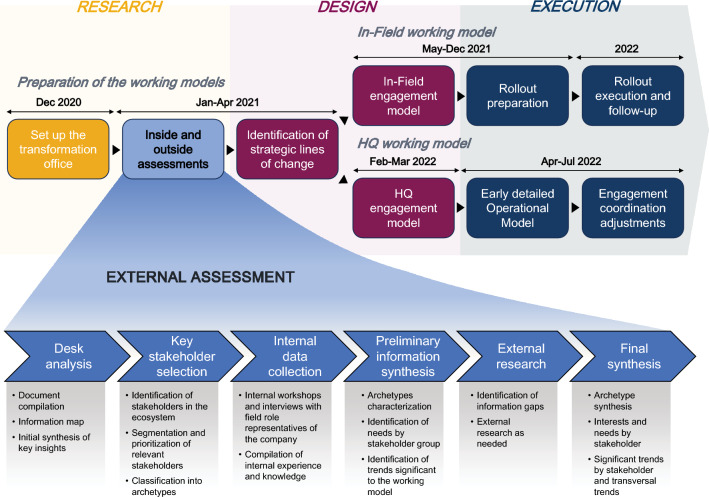
To support this strategic transformation, we conducted a dual assessment focusing on the Spanish healthcare ecosystem. Using a combination of desk analysis and stakeholder research, we examined external and internal dynamics affecting the MA department's role. This approach identified the perspectives and needs of key stakeholders across three main communities: patients, healthcare professionals, and institutional bodies, offering insights into stakeholder-specific expectations and broader industry macrotrends.
The identification of 16 pivotal stakeholders in Spain's healthcare ecosystem underscores the complex array of needs and expectations that shape MA's evolving role. For the patient community, key trends include the demand for accessible information, emotional support resources, and tools to enhance treatment adherence and chronic disease management. Among clinicians and key external experts, there is an increasing need for current medical resources, digital integration in care processes, and collaborative research opportunities. Institutional stakeholders emphasize sustainable integration of therapeutic innovations, budget predictability, and public-private collaboration to enhance healthcare quality and access. Beyond these specific needs, transversal trends affecting all stakeholders were identified, including the acceleration of medical innovation, demand for value-added services, and the expansion of digital tools and data-driven decision making. Macrotrends within the pharmaceutical industry - such as patient-centric approaches, the growth of digital health, and data-focused business models - further shape the industry's response to evolving healthcare challenges. A unified organizational vision, reflected in shared objectives and priorities, is crucial for cohesive strategy implementation.
This research underscores the essential role of MA departments in redefining their influence within healthcare systems. By aligning MA activities with stakeholder trends, pharmaceutical companies can reposition MA as a central pillar within the healthcare ecosystem. Our assessment of the Spanish health system provides a strategic framework that can be easily implemented by other MA departments in the industry to adapt to evolving stakeholder dynamics worldwide.
快速演变的医疗保健格局促使制药公司内部的医学事务(MA)部门从传统的信息提供者角色转变为医疗保健生态系统中的战略合作伙伴。为应对西班牙国家卫生系统中患者需求和利益相关者动态日益增加的复杂性,这一转变强调了使医学事务职能与更广泛的医疗保健目标保持一致的重要性。有效的转型需要对利益相关者的趋势和期望进行深入评估。本研究的目的是确定西班牙医疗保健生态系统中的关键利益相关者,详细分析他们的趋势,并评估我们的医学事务部门应如何适应以应对这些趋势。
为支持这一战略转型,我们对西班牙医疗保健生态系统进行了双重评估。通过桌面分析和利益相关者研究相结合的方式,我们考察了影响医学事务部门角色的外部和内部动态。这种方法确定了三个主要群体(患者、医疗保健专业人员和机构团体)中关键利益相关者的观点和需求,深入了解了特定利益相关者的期望和更广泛的行业宏观趋势。
在西班牙医疗保健生态系统中确定的16个关键利益相关者突显了塑造医学事务不断演变角色的复杂需求和期望。对于患者群体而言,关键趋势包括对可获取信息、情感支持资源以及增强治疗依从性和慢性病管理工具的需求。在临床医生和关键外部专家中,对当前医学资源、护理过程中的数字整合以及合作研究机会的需求日益增加。机构利益相关者强调治疗创新的可持续整合、预算可预测性以及公私合作以提高医疗质量和可及性。除了这些特定需求外,还确定了影响所有利益相关者的横向趋势,包括医学创新的加速、对增值服务的需求以及数字工具和数据驱动决策的扩展。制药行业的宏观趋势,如以患者为中心的方法、数字健康的增长以及以数据为重点的商业模式,进一步塑造了该行业对不断演变的医疗保健挑战的应对方式。反映在共同目标和优先事项中的统一组织愿景对于连贯的战略实施至关重要。
本研究强调了医学事务部门在重新定义其在医疗保健系统中的影响力方面的重要作用。通过使医学事务活动与利益相关者趋势保持一致,制药公司可以将医学事务重新定位为医疗保健生态系统的核心支柱。我们对西班牙卫生系统的评估提供了一个战略框架,该行业的其他医学事务部门可以轻松实施该框架,以适应全球不断变化的利益相关者动态。
