Zhang Ming, Wang Tao, Meng Fancheng, Jiang Mengyang, Wu Shengxi, Xu Hui
Department of Neurobiology and Collaborative Innovation Center for Brain Science, School of Basic Medicine, The Fourth Military Medical University, Xi'an 710032, China.
Department of Basic Medical Laboratory, The General Hospital of Western Theater Command, Chengdu 610083, China.
iScience. 2024 Nov 22;27(12):111409. doi: 10.1016/j.isci.2024.111409. eCollection 2024 Dec 20.
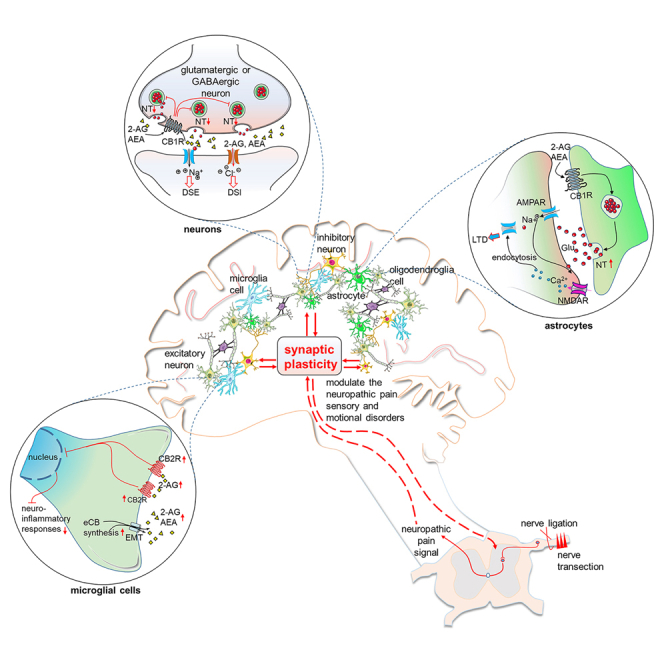
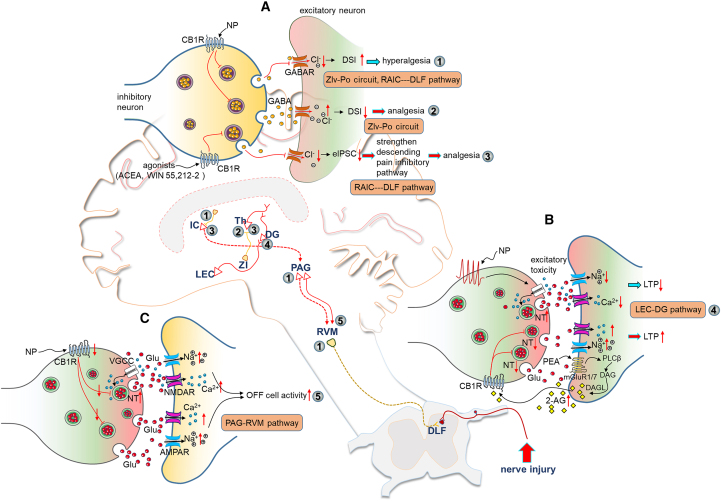
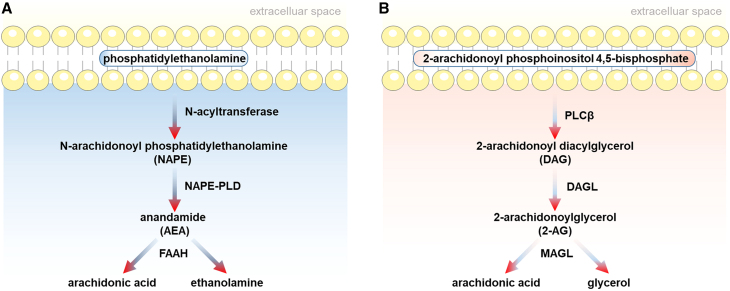
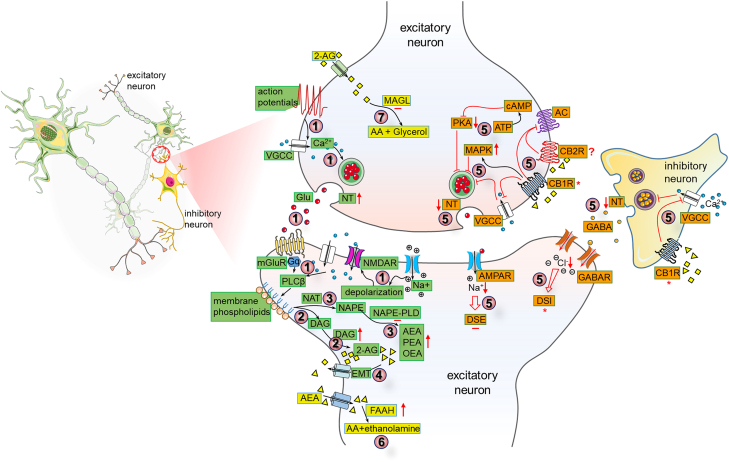
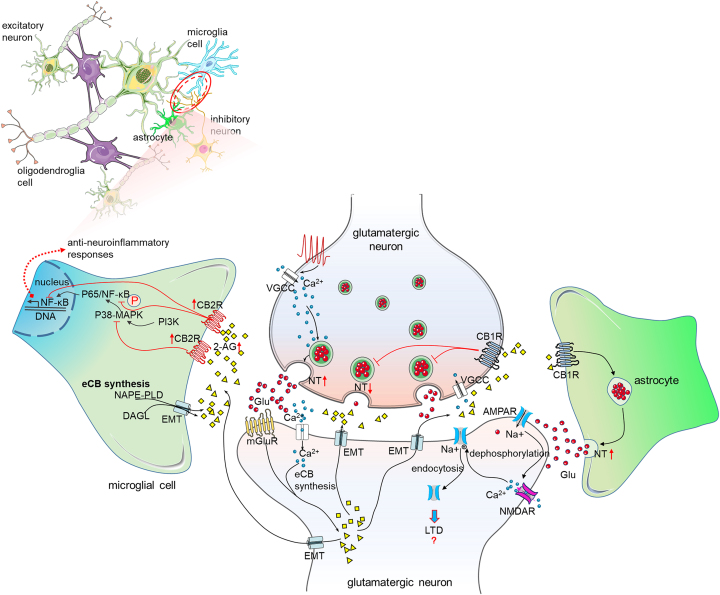
The endocannabinoid system (ECS), which is composed of endocannabinoids (eCBs), cannabinoid receptors (CBRs), and associated signaling molecules, has been identified within the brain. In neuropathic pain animal models and patients, long-lasting alterations in the ECS have been observed. These changes of neurons and glial cells in the ECS contribute to the modulation of neuropathic pain. Intervention strategies such as the activation of CBRs, the enhancement of hydrolytic enzyme function, and the inhibition of synthetizing enzymes typically alleviate neuropathic pain through CBR-dependent mechanisms. Additionally, emotions such as fear, anxiety, and depression are frequently experienced with neuropathic pain. Exogenous cannabinoids can mitigate these mood disorders via CBR signaling pathways. Therefore, the targeting of long-lasting ECS alterations represents a potential therapeutic approach for both neuropathic pain and emotional disorders. In this review, the long-lasting variations in neurons and glial cells in the ECS related to neuropathic pain and the accompanying emotional comorbidities are elucidated. Furthermore, the cellular and molecular mechanisms underlying synaptic plasticity and neural circuit activities in the brain are reviewed.
内源性大麻素系统(ECS)由内源性大麻素(eCBs)、大麻素受体(CBRs)和相关信号分子组成,已在大脑中被发现。在神经性疼痛动物模型和患者中,已观察到ECS的长期改变。ECS中神经元和神经胶质细胞的这些变化有助于神经性疼痛的调节。诸如激活CBRs、增强水解酶功能和抑制合成酶等干预策略通常通过CBR依赖性机制减轻神经性疼痛。此外,神经性疼痛常伴有恐惧、焦虑和抑郁等情绪。外源性大麻素可通过CBR信号通路减轻这些情绪障碍。因此,针对ECS的长期改变是治疗神经性疼痛和情绪障碍的一种潜在方法。在这篇综述中,阐述了ECS中与神经性疼痛及伴随的情绪共病相关的神经元和神经胶质细胞的长期变化。此外,还综述了大脑中突触可塑性和神经回路活动的细胞和分子机制。