Zhou Zhiyi, Yang Xiuhua
Department of Obstetrics, The First Hospital of China Medical University, Shenyang, China.
Front Endocrinol (Lausanne). 2024 Dec 9;15:1415173. doi: 10.3389/fendo.2024.1415173. eCollection 2024.
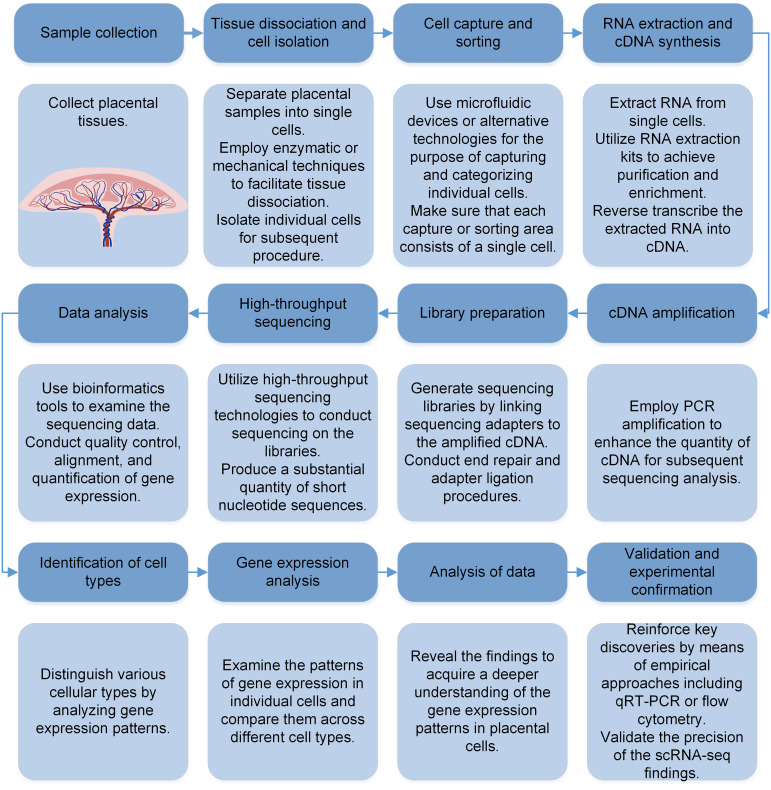
Reproductive success hinges on the presence of a robust and functional placenta. Examining the placenta provides insight about the progression of pregnancy and valuable information about the normal developmental trajectory of the fetus. The current limitations of using bulk RNA-sequencing (RNA-seq) analysis stem from the diverse composition of the placenta, hindering a comprehensive description of how distinct trophoblast cell expression patterns contribute to the establishment and sustenance of a successful pregnancy. At present, the transcriptional landscape of intricate tissues increasingly relies on single-cell RNA sequencing (scRNA-seq). A few investigations have utilized scRNA-seq technology to examine the codes governing transcriptome regulation in cells at the maternal-fetal interface. In this review, we explore the fundamental principles of scRNA-seq technology, offering the latest overview of human placental studies utilizing this method across various gestational weeks in both normal pregnancies and pregnancy-related diseases, including recurrent pregnancy loss (RPL), preeclampsia (PE), preterm birth, and gestational diabetes mellitus (GDM). Furthermore, we discuss the limitations and future perspectives of scRNA-seq technology within the realm of reproduction. It seems that scRNA-seq stands out as one of the crucial tools for studying the etiology of pregnancy complications. The future direction of scRNA-seq applications may involve devolving into functional biology, with a primary focus on understanding variations in transcriptional activity among highly specific cell populations. Our goal is to provide obstetricians with an updated understanding of scRNA-seq technology related to pregnancy complications, providing comprehensive understandings to aid in the diagnosis and treatment of these conditions, ultimately improving maternal and fetal prognosis.
生殖成功取决于健康且功能正常的胎盘。检查胎盘有助于了解妊娠进展,并为胎儿的正常发育轨迹提供有价值的信息。目前,使用批量RNA测序(RNA-seq)分析存在局限性,原因在于胎盘的成分多样,这阻碍了对不同滋养层细胞表达模式如何促进成功妊娠的建立和维持进行全面描述。目前,复杂组织的转录图谱越来越依赖于单细胞RNA测序(scRNA-seq)。一些研究已利用scRNA-seq技术来研究母胎界面细胞中转录组调控的规律。在本综述中,我们探讨了scRNA-seq技术的基本原理,提供了利用该方法对正常妊娠和妊娠相关疾病(包括复发性流产(RPL)、子痫前期(PE)、早产和妊娠期糖尿病(GDM))在不同孕周进行的人类胎盘研究的最新概述。此外,我们还讨论了scRNA-seq技术在生殖领域的局限性和未来前景。看来scRNA-seq是研究妊娠并发症病因的关键工具之一。scRNA-seq应用的未来方向可能涉及向功能生物学发展,主要侧重于了解高度特异性细胞群体中转录活性的差异。我们的目标是让产科医生对与妊娠并发症相关的scRNA-seq技术有最新的了解,提供全面的认识以帮助诊断和治疗这些病症,最终改善母婴预后。