Zhigao Li, Jiabo Qin, Lei Zheng, Tong Qiao
Department of Vascular Surgery, Nanjing Drum Tower Hospital Clinical College of Nanjing Medical University, Nanjing, China.
Department of General Surgery, Nanjing Drum Tower Hospital Clinical College of Nanjing Medical University, Nanjing, China.
Front Cardiovasc Med. 2024 Dec 9;11:1484273. doi: 10.3389/fcvm.2024.1484273. eCollection 2024.
To develop and validate a new prediction model based on the Lass-logistic regression with inflammatory serologic markers for the assessment of carotid plaque stability, providing clinicians with a reliable tool for risk stratification and decision-making in the management of carotid artery disease.
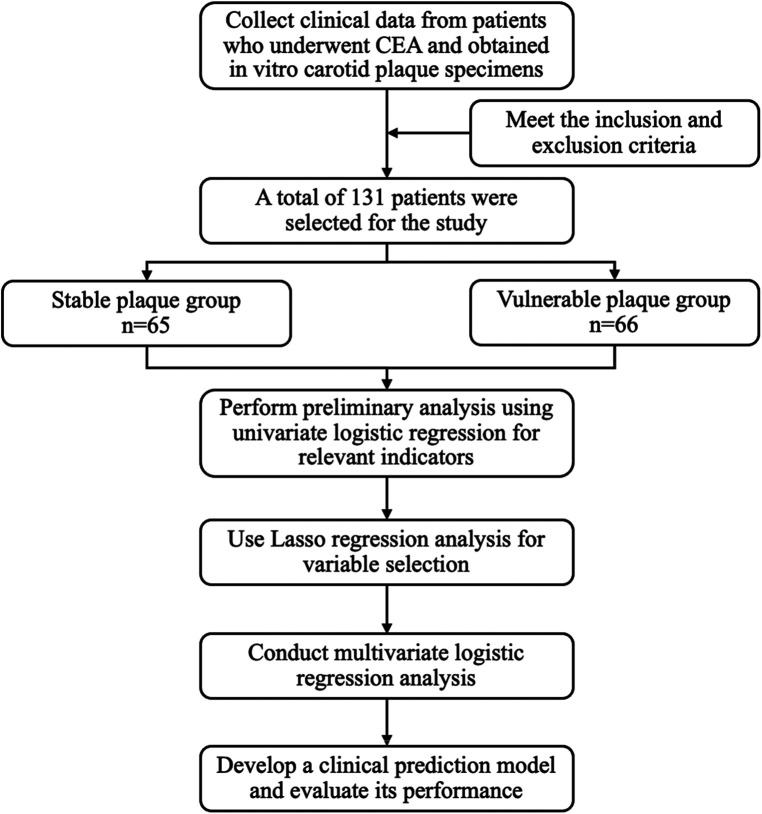
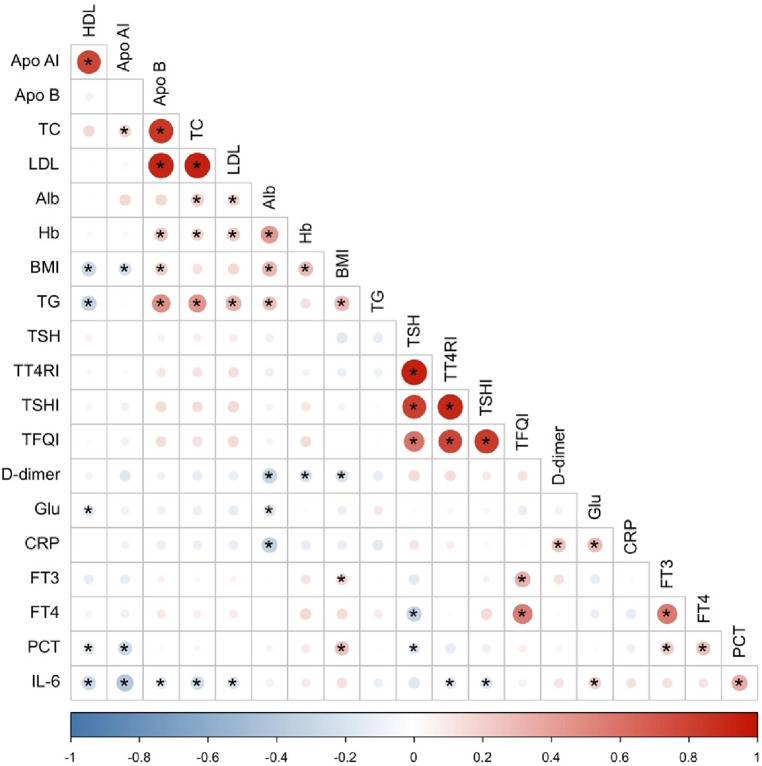
In this study, we retrospectively collected the data of the patients who underwent carotid endarterectomy (CEA) from 2019 to 2023 in Nanjing Drum Tower Hospital. Demographic characteristics, vascular risk factors, and the results of preoperative serum biochemistry were measured and collected. The risk factors for vulnerable carotid plaque were analyzed. A Lasso-logistic regression prediction model was developed and compared with traditional logistic regression models. The Akaike information criterion (AIC) and Bayesian information criterion (BIC) were used to evaluate the performance of three models.
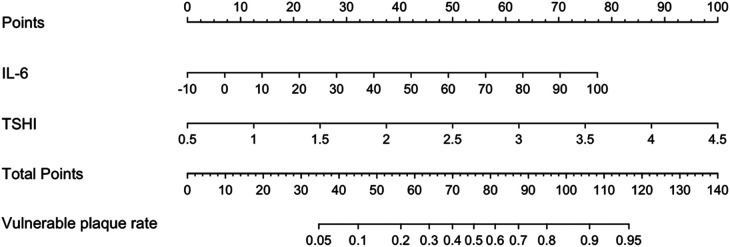
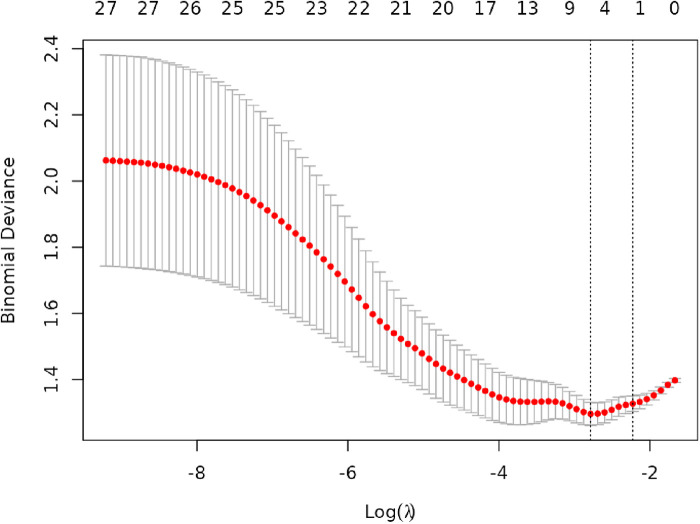
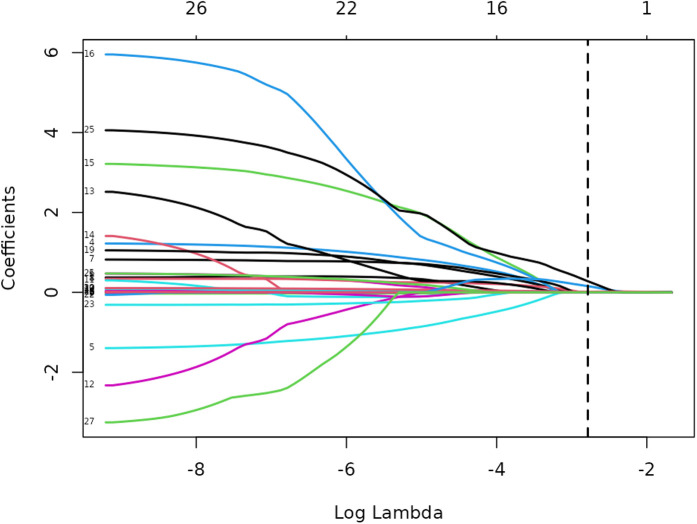
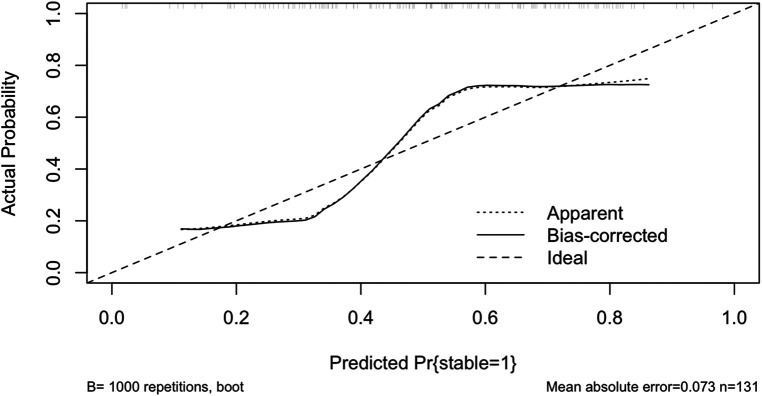
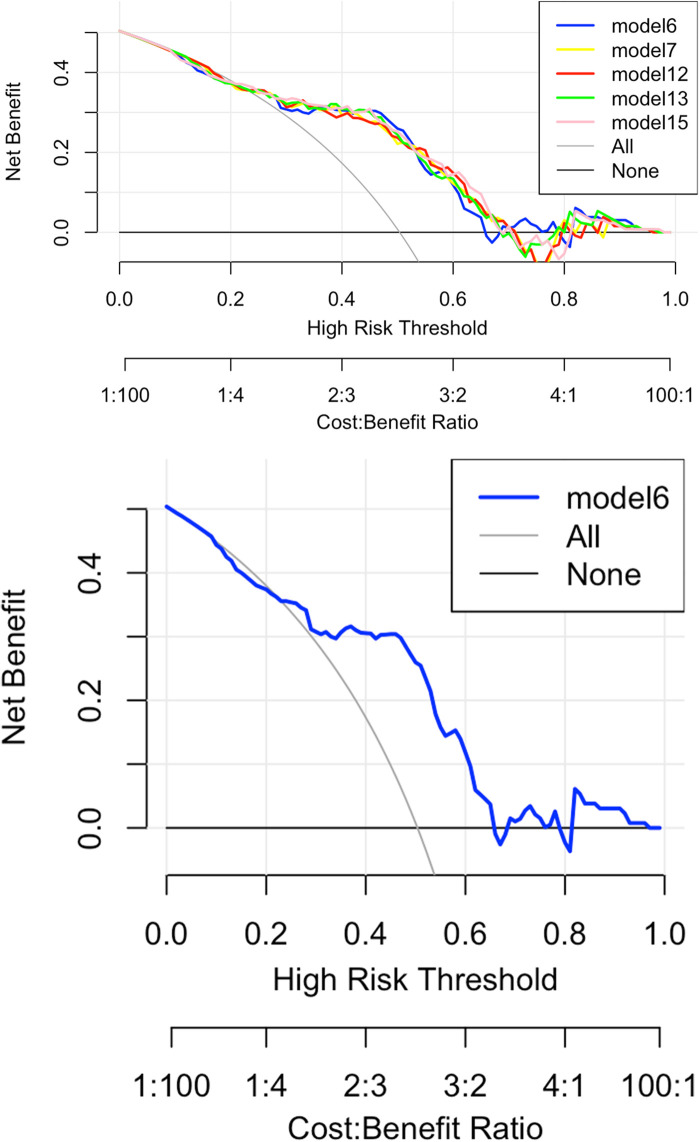
A total of 131 patients were collected in this study, including 66 (50.4%) in the vulnerable plaque group and 65 (49.6%) in the stable plaque group. The final Lasso-logistic regression model included 4 features:IL-6, TSH, TSHI, and TT4RI; AIC = 161.6376, BIC = 176.0136, both lower than the all-variable logistic regression model (AIC = 181.0881, BIC = 261.5936), and the BIC was smaller than the stepwise logistic regression model (AIC = 154.024, BIC = 179.9007). Finally, the prediction model was constructed based on the variables screened by the Lasso regression, and the model had favorable discrimination and calibration.
The noninvasive prediction model based on IL-6 and TSHI is a quantitative tool for predicting vulnerable carotid plaques. It has high diagnostic efficacy and is worth popularizing and applying.
开发并验证一种基于Lass-逻辑回归与炎症血清学标志物的新型预测模型,用于评估颈动脉斑块稳定性,为临床医生在颈动脉疾病管理中进行风险分层和决策提供可靠工具。
在本研究中,我们回顾性收集了2019年至2023年在南京鼓楼医院接受颈动脉内膜切除术(CEA)的患者数据。测量并收集人口统计学特征、血管危险因素及术前血清生化结果。分析易损颈动脉斑块的危险因素。开发了Lasso-逻辑回归预测模型,并与传统逻辑回归模型进行比较。使用赤池信息准则(AIC)和贝叶斯信息准则(BIC)评估三种模型的性能。
本研究共纳入131例患者,其中易损斑块组66例(50.4%),稳定斑块组65例(49.6%)。最终的Lasso-逻辑回归模型包含4个特征:白细胞介素-6(IL-6)、促甲状腺激素(TSH)、促甲状腺激素指数(TSHI)和总甲状腺素抵抗指数(TT4RI);AIC = 161.6376,BIC = 176.0136,均低于全变量逻辑回归模型(AIC = 181.0881,BIC = 261.5936),且BIC小于逐步逻辑回归模型(AIC = 154.024,BIC = 179.9007)。最后,基于Lasso回归筛选出的变量构建预测模型,该模型具有良好的区分度和校准度。
基于IL-6和TSHI的无创预测模型是预测易损颈动脉斑块的定量工具。它具有较高的诊断效能,值得推广应用。