Jiang Zhangyu, Yan Mingjuan, Qin Yanmi, Liu Zhenglin, Duan Yilin, Wang Yingju, Zhang Ruisen, Lin Wenjia, Li Yanwu, Xie Tian, Ke Junyu
International Institute for Translational Chinese Medicine, Guangzhou University of Chinese Medicine, Guangzhou, China.
Department of Pharmacy, Guangzhou University of Chinese Medicine, Guangzhou, China.
Front Pharmacol. 2024 Dec 9;15:1485255. doi: 10.3389/fphar.2024.1485255. eCollection 2024.
Ulcerative colitis (UC) is a chronic inflammatory condition of the intestinal tract in which mucosal healing is a crucial measure of therapeutic efficacy. Quercetin, a flavonoid prevalent in various foods and traditional Chinese medicines, exhibits notable pharmacological properties, including antioxidant and anti-inflammatory activities. Consequently, it warrants investigation to determine its potential therapeutic effects on UC. The objective of this study was to investigate the effects and underlying mechanisms of quercetin in a murine model of UC.
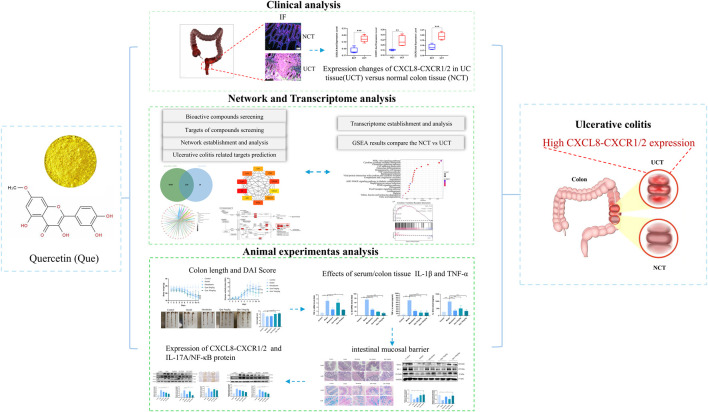
A comprehensive approach integrating network predictions with transcriptomic analyses was employed to identify the potential targets and enriched pathways associated with quercetin in UC. Subsequently, the effects of quercetin on pathological morphology, inflammatory mediators, and mucosal barrier-associated proteins, as well as the identified potential targets and enriched pathways, were systematically investigated in a murine model of dextran sulfate sodium (DSS)-induced UC.
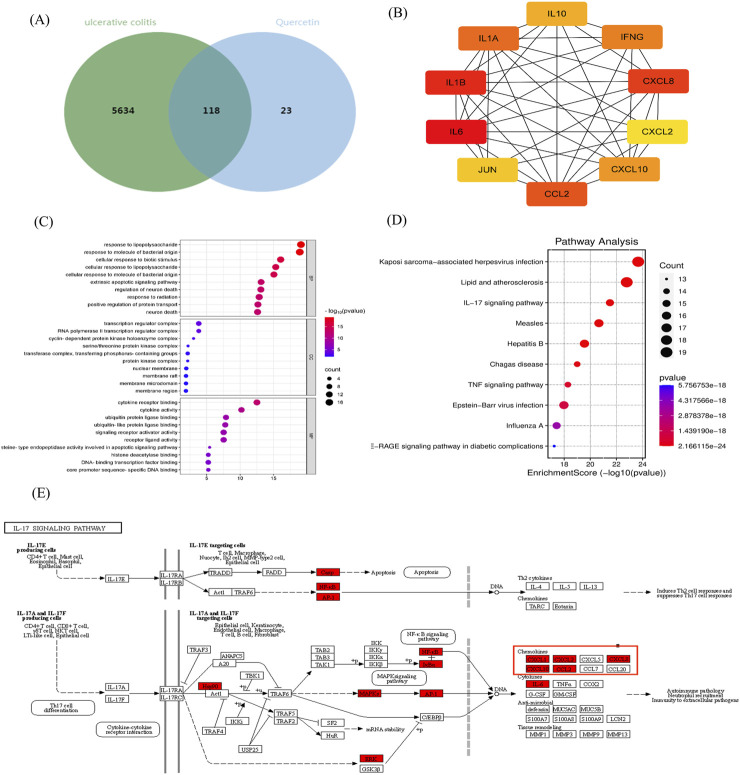
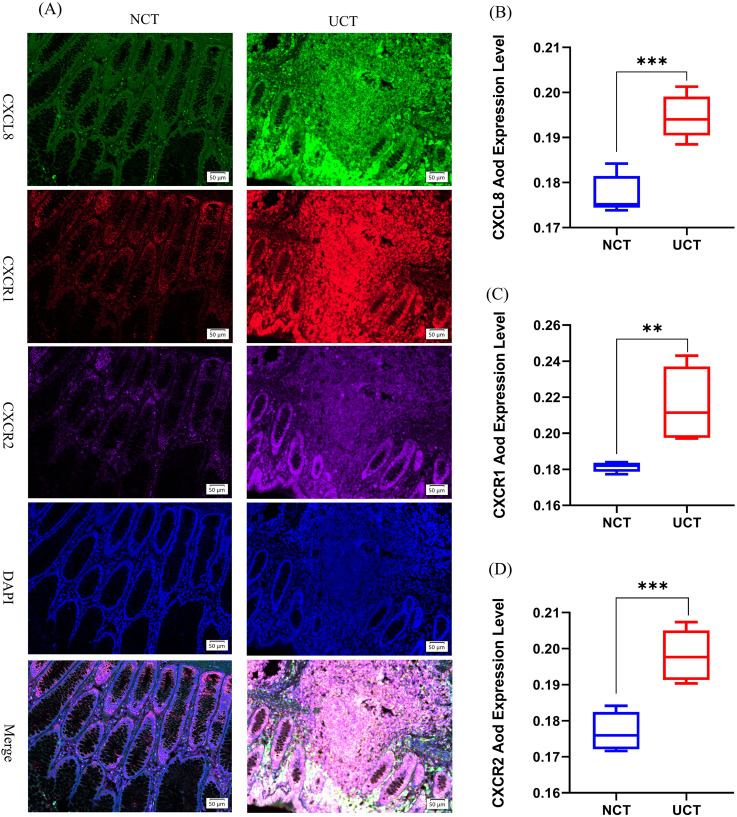
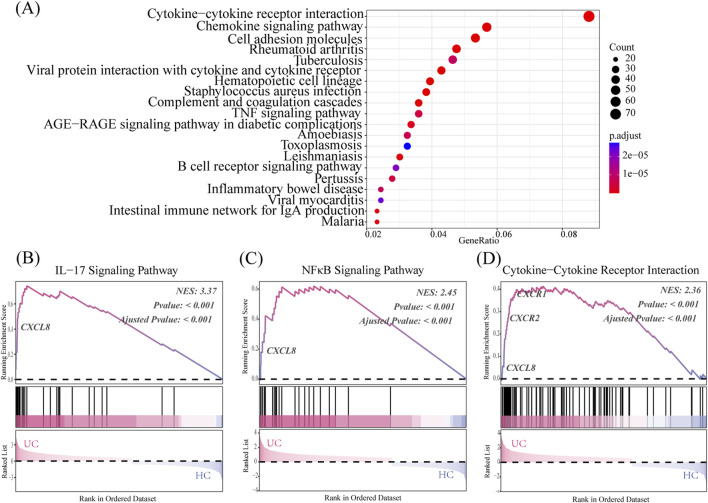
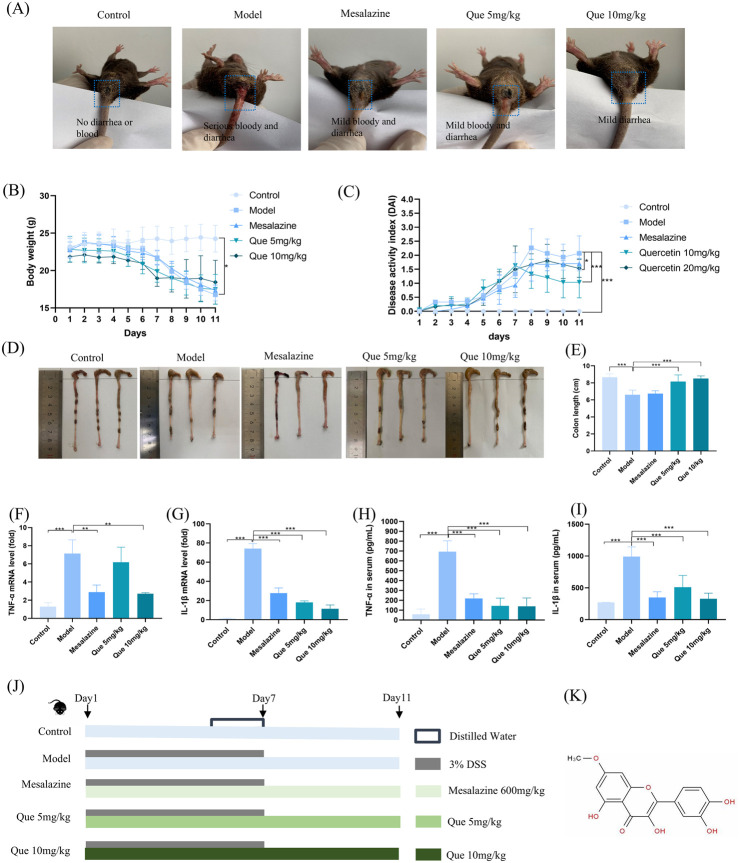
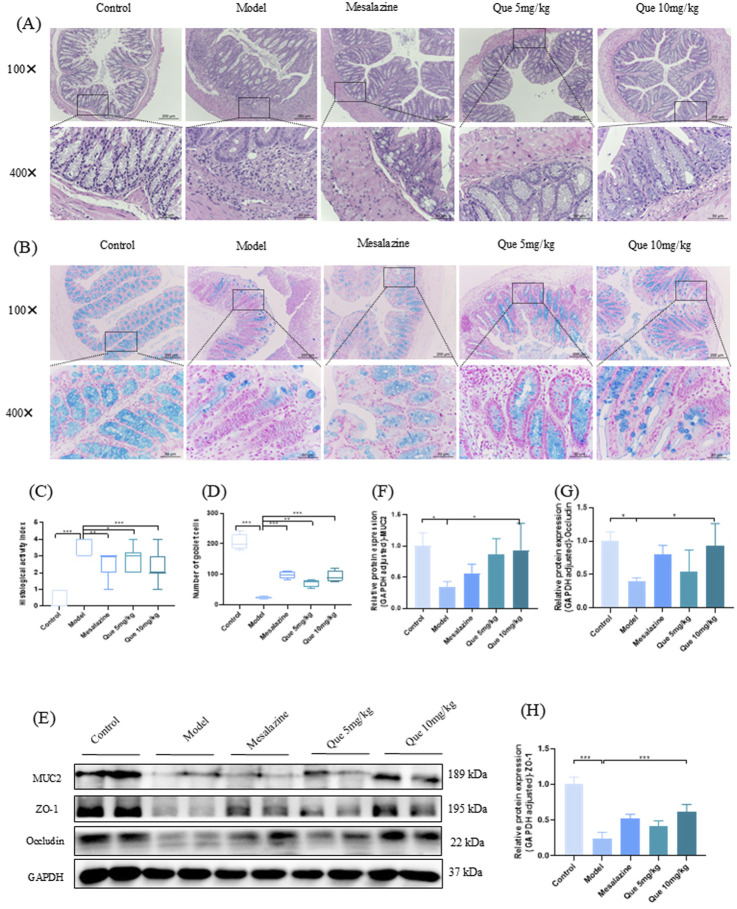
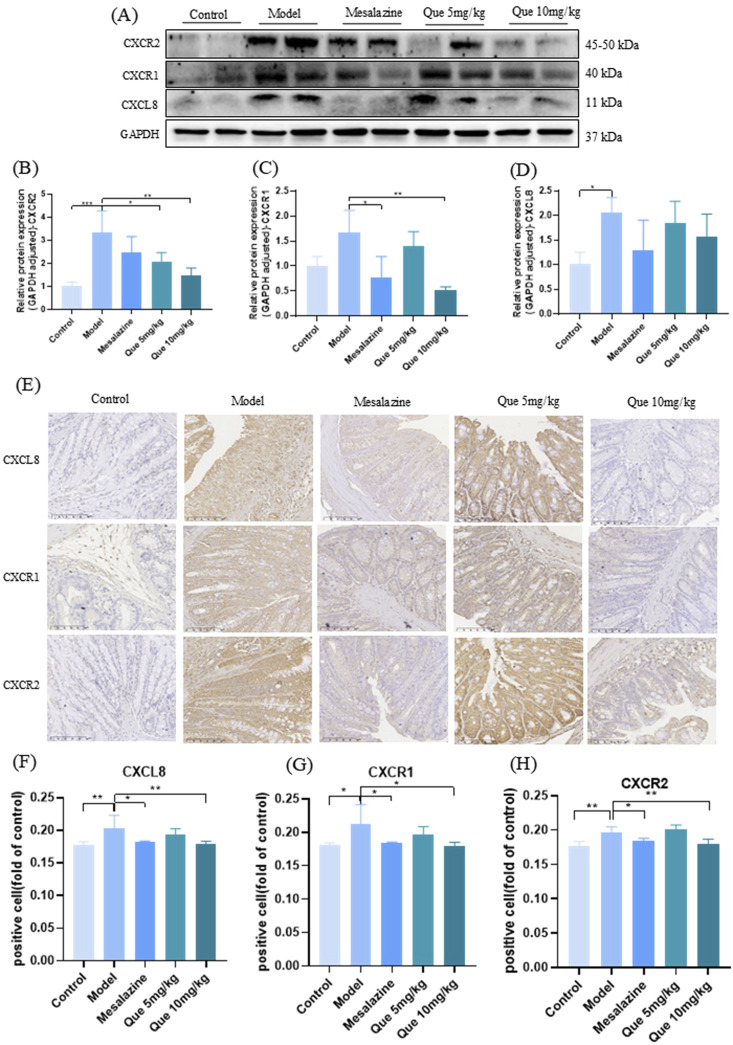
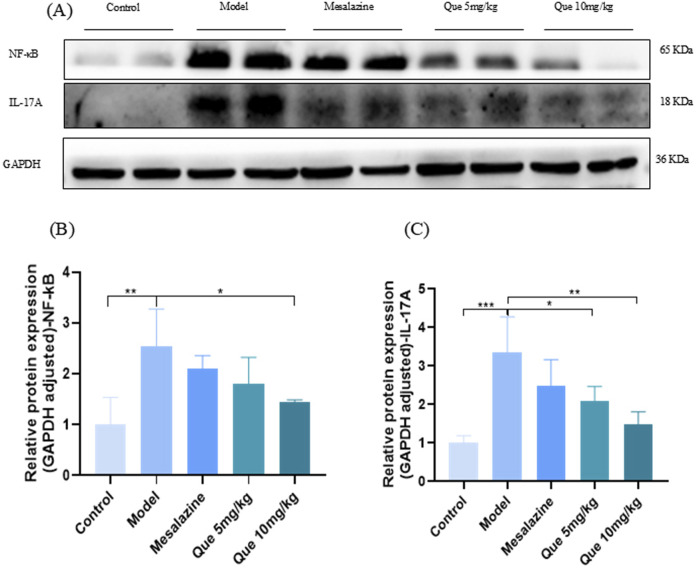
Network analyses identified CXCL8 and its receptors, CXCR1 and CXCR2, as primary target genes for therapeutic intervention in UC. Further validation through transcriptomic analysis and immunofluorescence staining demonstrated significant upregulation of the CXCL8-CXCR1/2 axis in the intestinal tissues of patients with UC. Experimental investigations in animal models have shown that quercetin markedly alleviates DSS-induced symptoms in mice. This effect includes the restoration of colonic crypt architecture, normalization of goblet cell structure and density, reduction of inflammatory cell infiltration, and decreased concentrations of inflammatory mediators. Quercetin enhanced the expression of tight junction (TJ) proteins, including ZO-1, MUC2 (Mucin 2), and occludin, thereby preserving the integrity of the intestinal mucosal barrier. Additionally, it significantly diminished the levels of IL-17A, NF-κB, CXCL8, CXCR1, and CXCR2 in the colonic tissues of mice with UC.
The ameliorative effects of quercetin on colon tissue damage in DSS-induced UC mice were significant, possibly due to its ability to inhibit the CXCL8-CXCR1/2 signaling axis. These findings provide a solid foundation for the clinical application and pharmaceutical advancement of quercetin.
溃疡性结肠炎(UC)是一种肠道慢性炎症性疾病,其中黏膜愈合是治疗效果的关键指标。槲皮素是一种在各种食物和传统中药中普遍存在的黄酮类化合物,具有显著的药理特性,包括抗氧化和抗炎活性。因此,有必要对其治疗UC的潜在效果进行研究。本研究的目的是探讨槲皮素在UC小鼠模型中的作用及其潜在机制。
采用网络预测与转录组分析相结合的综合方法,确定与UC中槲皮素相关的潜在靶点和富集通路。随后,在葡聚糖硫酸钠(DSS)诱导的UC小鼠模型中,系统地研究了槲皮素对病理形态、炎症介质和黏膜屏障相关蛋白的影响,以及确定的潜在靶点和富集通路。
网络分析确定CXCL8及其受体CXCR1和CXCR2是UC治疗干预的主要靶基因。通过转录组分析和免疫荧光染色进一步验证表明,UC患者肠道组织中CXCL8-CXCR1/2轴显著上调。动物模型实验研究表明,槲皮素能显著减轻DSS诱导的小鼠症状。这种作用包括结肠隐窝结构的恢复、杯状细胞结构和密度的正常化、炎症细胞浸润的减少以及炎症介质浓度的降低。槲皮素增强了紧密连接(TJ)蛋白的表达,包括ZO-1、MUC2(粘蛋白2)和闭合蛋白,从而维持肠道黏膜屏障的完整性。此外,它还显著降低了UC小鼠结肠组织中IL-17A、NF-κB、CXCL8、CXCR1和CXCR2的水平。
槲皮素对DSS诱导的UC小鼠结肠组织损伤具有显著的改善作用,可能是由于其抑制CXCL8-CXCR1/2信号轴的能力。这些发现为槲皮素的临床应用和药物研发提供了坚实的基础。