Pu Yufan, Wang Ying, Wang Huihuang, Liu Hong, Dou Xingxing, Xu Jiang, Li Xuejing
The Affiliated Huai'an Hospital of Xuzhou Medical University, Huai'an, Jiangsu, China.
Front Neurol. 2024 Dec 9;15:1438575. doi: 10.3389/fneur.2024.1438575. eCollection 2024.
Although there is a strong correlation between stroke and sarcopenia, there has been a lack of research into the potential risks associated with post-stroke sarcopenia. Predictors of sarcopenia are yet to be identified. We aimed at developing a nomogram able to predict sarcopenia in patients with stroke.
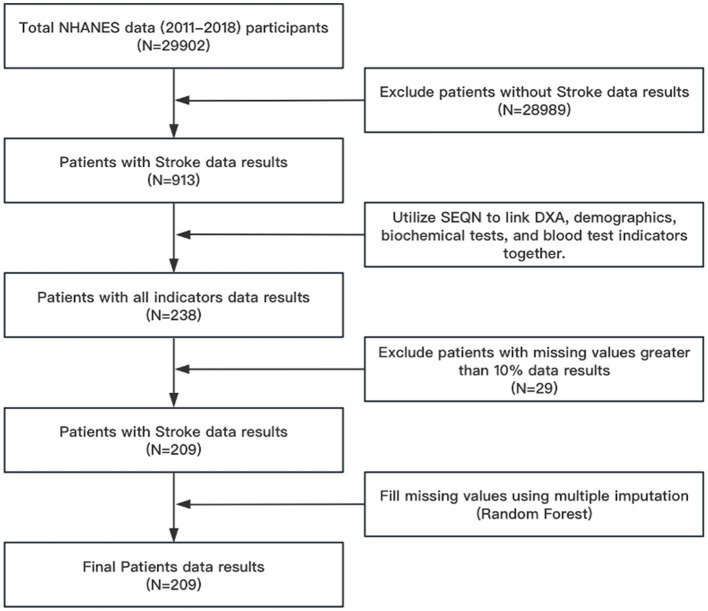
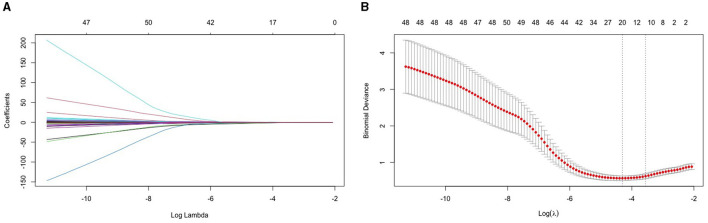
The National Health and Nutrition Examination Survey (NHANES) cycle year of 2011 to 2018 was divided into two groups of 209 participants-one receiving training and the other validation-in a random manner. The Lasso regression analysis was used to identify the risk factors of sarcopenia, and a nomogram model was created to forecast sarcopenia in the stroke population. The model was assessed based on its discrimination area under the receiver operating characteristic curve, calibration curves, and clinical utility decision curve analysis curves.
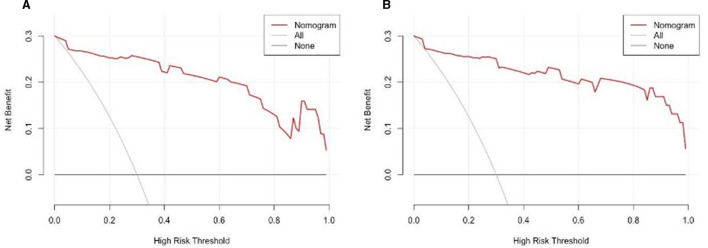
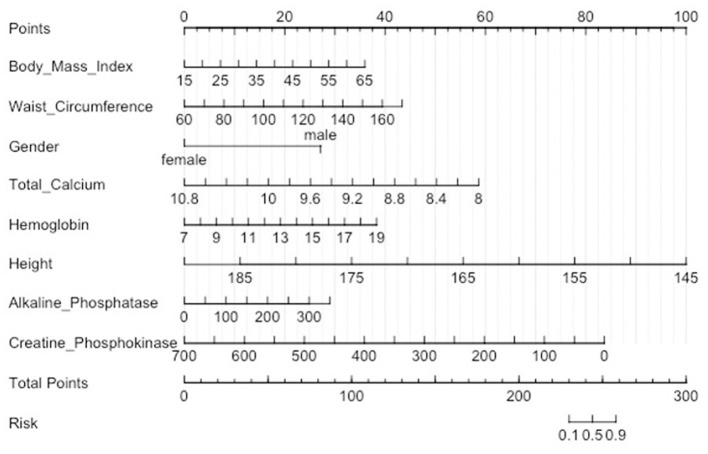
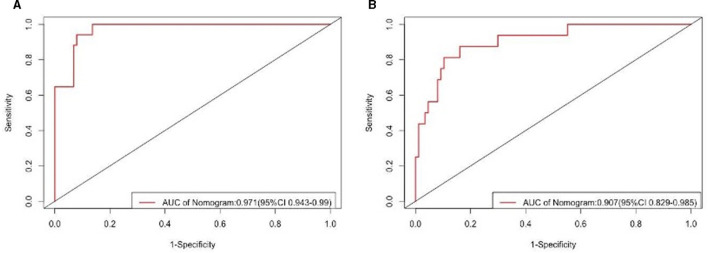
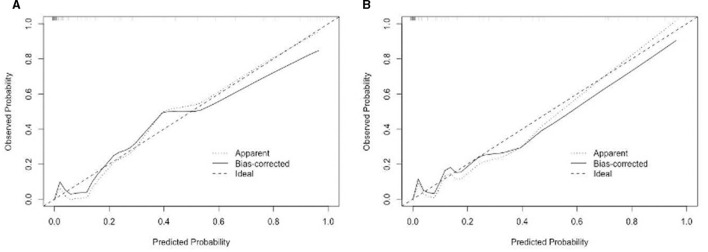
In this study, we identified several predictive factors for sarcopenia: Gender, Body Mass Index (kg/m), Standing Height (cm), Alkaline Phosphatase (ALP) (IU/L), Total Calcium (mg/dL), Creatine Phosphokinase (CPK) (IU/L), Hemoglobin (g/dL), and Waist Circumference (cm). Notably, female patients with stroke exhibited a higher risk of sarcopenia. The variables positively associated with increasing risk included Alkaline Phosphatase, Body Mass Index, Waist Circumference, and Hemoglobin, while those negatively associated with risk included Height, Total Calcium, and Creatine Phosphokinase. The nomogram model demonstrated remarkable accuracy in distinguishing between training and validation sets, with areas under the curve of 0.97 and 0.90, respectively. The calibration curve showcased outstanding calibration, and the analysis of the decision curve revealed a broad spectrum of beneficial clinical outcomes.
This study creates a new nomogram which can be used to predict pre-sarcopenia in stroke. The new screening device is accurate, precise, and cost-effective, enabling medical personnel to identify patients at an early stage and take action to prevent and treat illnesses.
尽管中风与肌肉减少症之间存在密切关联,但对于中风后肌肉减少症相关潜在风险的研究仍较为缺乏。肌肉减少症的预测因素尚未明确。我们旨在开发一种能够预测中风患者肌肉减少症的列线图。
将2011年至2018年国家健康与营养检查调查(NHANES)周期的209名参与者随机分为两组,一组用于训练,另一组用于验证。采用套索回归分析确定肌肉减少症的危险因素,并创建列线图模型以预测中风人群中的肌肉减少症。基于受试者操作特征曲线下的鉴别面积、校准曲线和临床效用决策曲线分析曲线对该模型进行评估。
在本研究中,我们确定了肌肉减少症的几个预测因素:性别、体重指数(kg/m)、身高(cm)、碱性磷酸酶(ALP)(IU/L)、总钙(mg/dL)、肌酸磷酸激酶(CPK)(IU/L)、血红蛋白(g/dL)和腰围(cm)。值得注意的是,中风女性患者出现肌肉减少症的风险更高。与风险增加呈正相关的变量包括碱性磷酸酶、体重指数、腰围和血红蛋白,而与风险呈负相关的变量包括身高、总钙和肌酸磷酸激酶。列线图模型在区分训练集和验证集方面表现出显著的准确性,曲线下面积分别为0.97和0.90。校准曲线显示出出色的校准效果,决策曲线分析揭示了广泛的有益临床结果。
本研究创建了一种新的列线图,可用于预测中风前的肌肉减少症。这种新的筛查工具准确、精确且具有成本效益,使医务人员能够早期识别患者并采取预防和治疗疾病的措施。