Marquardt Sandra G, Joyce P James, Rigarlsford Giles, Dötsch-Klerk Mariska, van Elk Kathelijn, Doelman Jonathan, Daioglou Vassilis, Huijbregts Mark A J, Sim Sarah
Department of Environmental Science, Radboud Institute for Biological and Environmental Sciences Radboud University Nijmegen Nijmegen The Netherlands.
Safety and Environmental Assurance Center, Unilever Sharnbrook UK.
J Ind Ecol. 2024 Dec;28(6):1598-1611. doi: 10.1111/jiec.13549. Epub 2024 Aug 16.
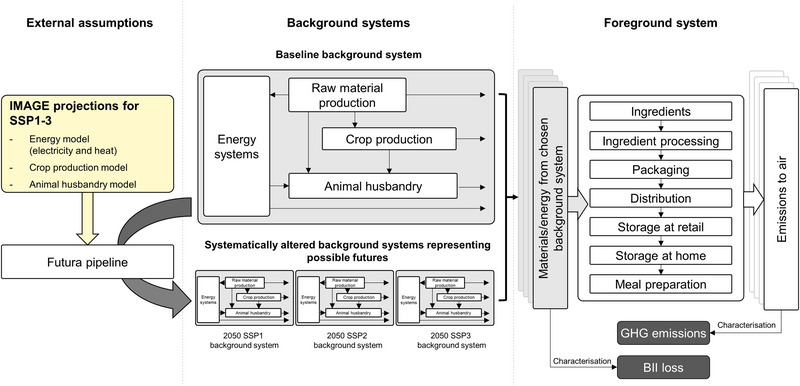
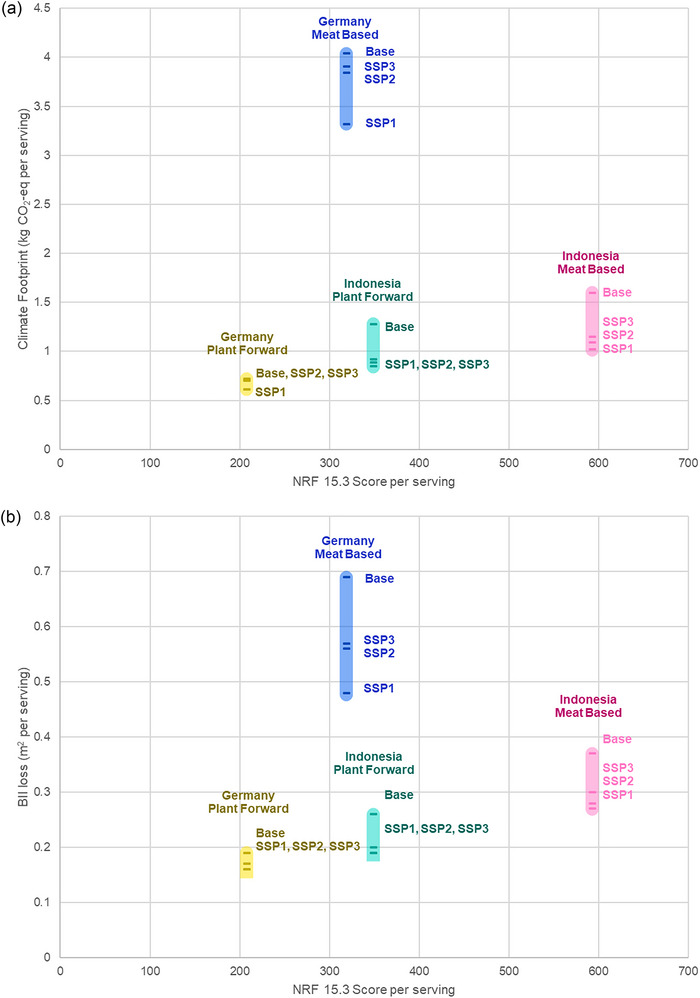
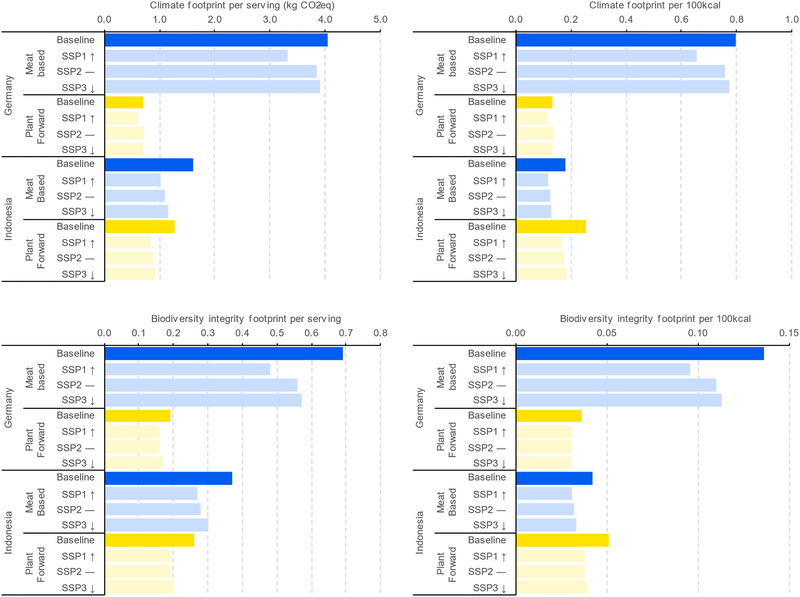
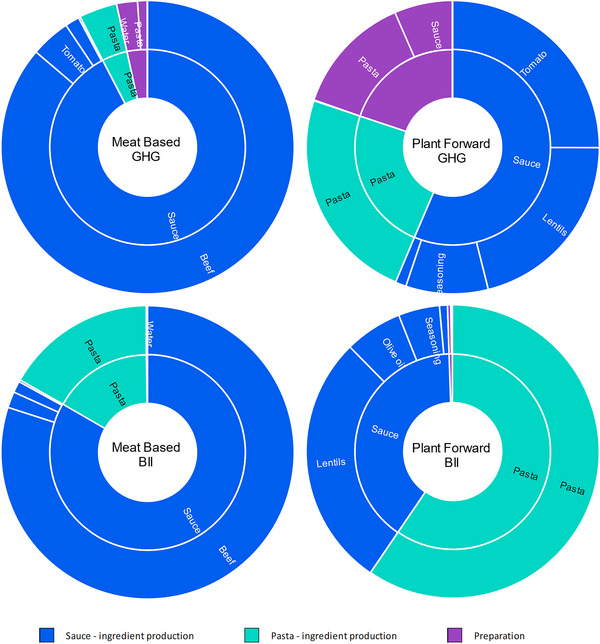
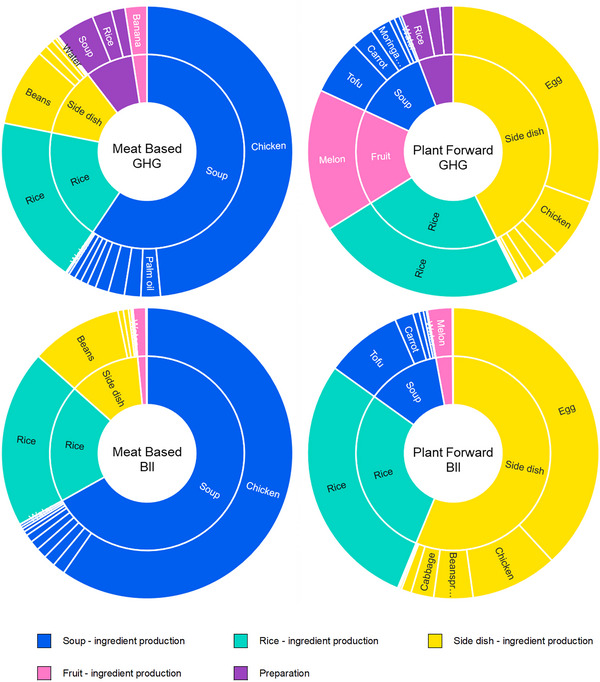
The emerging field of prospective life cycle assessment (pLCA) offers opportunities for evaluating the environmental impacts of possible future consumption shifts. One such shift involves a transition from meat-based to plant-forward diets, acknowledged to mitigate environmental impacts of the food system under present day conditions. Current diets are often meat intensive ("meat-based"), whilst "plant-forward" diets include mainly plant-based foods, encompassing flexitarian, vegetarian, and vegan diets. Here we illustrate the application of pLCA in a case study of meal options, implementing shared socio-economic pathway scenarios in the LCA background system to represent future production conditions. We assess the climate footprints and land-based biodiversity footprints of a typical meat-based meal in Germany and Indonesia compared to a plant-forward meal in both countries (i.e., four meals), now and in 2050. Our findings show that the plant-forward alternative maintains a lower impact per serving in all future scenarios. At the same time, the reduction in impact for the meat-based meals is more pronounced in future scenarios due to shifts in the agricultural system. Our findings highlight the importance of supply-side measures to produce lower-impact ingredients, complementing demand-side interventions to reshape food consumption. Results are further evaluated in cultural and nutritional contexts, highlighting the practical decision-making constraints faced by consumers. We find potential "leakage" effects in calories and nutrition when choosing a lower-impact, plant-forward meal. These leakage effects should be considered in future studies seeking to evaluate the environmental implications of meal substitutions in the context of broader dietary requirements.
新兴的前瞻性生命周期评估(pLCA)领域为评估未来可能的消费转变对环境的影响提供了机会。其中一种转变是从以肉类为主的饮食向以植物为主的饮食过渡,人们认为这种转变在当前条件下可以减轻食品系统对环境的影响。当前的饮食通常肉类含量高(“以肉类为主”),而“以植物为主”的饮食主要包括植物性食物,涵盖弹性素食、素食和纯素饮食。在此,我们通过一个膳食选择案例研究来说明pLCA的应用,在生命周期评估背景系统中实施共享社会经济路径情景,以代表未来的生产条件。我们评估了德国和印度尼西亚一份典型的以肉类为主的膳食与两国的一份以植物为主的膳食(即四餐)在当前和2050年的气候足迹和基于土地的生物多样性足迹。我们的研究结果表明,在所有未来情景中,以植物为主的替代方案每份的影响较低。同时,由于农业系统的转变,以肉类为主的膳食在未来情景中的影响减少更为显著。我们的研究结果强调了生产低影响成分的供应侧措施的重要性,以补充需求侧干预措施来重塑食品消费。研究结果还在文化和营养背景下进行了进一步评估,突出了消费者面临的实际决策限制。我们发现,选择低影响、以植物为主的膳食时,热量和营养方面存在潜在的“泄漏”效应。在未来旨在评估更广泛饮食需求背景下膳食替代对环境影响的研究中,应考虑这些泄漏效应。