Rajamani J Bino, Reshmi Y S, Pricilla Ruby A, Prasad Jasmin H, Baskar Mona
Department of Family Medicine, Christian Medical College, Vellore, Tamil Nadu, India.
Department of Child Health, Christian Medical College, Vellore, Tamil Nadu, India.
J Family Med Prim Care. 2024 Nov;13(11):4831-4836. doi: 10.4103/jfmpc.jfmpc_420_24. Epub 2024 Nov 18.
Adolescent substance abuse is a growing public health concern. Adolescence is the starting point for adult substance misuse. The likelihood of acquiring dependence in adulthood is significantly decreased when substance use is not initiated during adolescence. The purpose of this study was to estimate the prevalence of substance use among teenagers, as well as to determine the age of initiation and identify the factors that are linked to substance use.
A community-based cross-sectional study was conducted in an urban community in Vellore by a tertiary care teaching hospital. A structured questionnaire was administered by the principal investigator to all adolescent boys aged between 10 and 19 years residing in that area for the past year who gave informed consent/assent to assess the prevalence of substance use among teenagers.
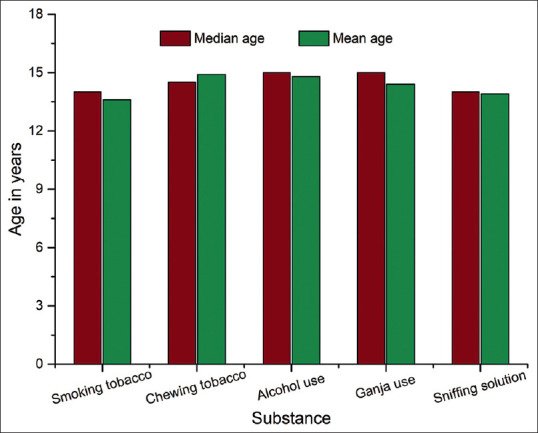
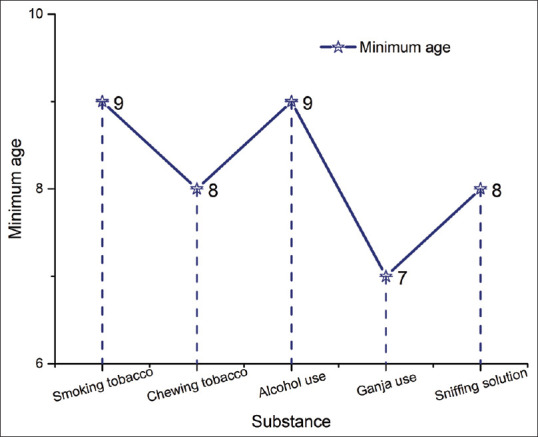
The total number of adolescent boys enrolled in the study was 266. The mean (standard deviation [SD]) age of the participants was 16.14 (2.2) years, with a median age of 16 years. Out of the 266 adolescent boys, 33.8% are currently using substances and 15% were past users. The common substance used was smoking tobacco (30%), followed by alcohol consumption (29%). The minimum age of initiation of smoking tobacco and ganja use was 9 and 7 years, respectively. Significant predictors of substance usage included the participant's educational background and the substance use of their parents.
According to this community-based study's findings, smoking tobacco was the most frequently used substance by teenagers, with a higher prevalence of current substance use. Substance misuse in the family was substantially associated with increased drug usage among teenagers. Notwithstanding having an adequate comprehension of the negative results of substance utilisation, teenagers develop this habit, which they might carry into adulthood. It is therefore necessary to establish comprehensive prevention and control programs in schools and the community that target teenagers and their parents.
青少年药物滥用是一个日益严重的公共卫生问题。青春期是成人药物滥用的起始阶段。如果在青春期不开始使用药物,成年后产生依赖的可能性会显著降低。本研究的目的是估计青少年药物使用的患病率,确定开始使用的年龄,并识别与药物使用相关的因素。
一家三级护理教学医院在韦洛尔的一个城市社区开展了一项基于社区的横断面研究。主要研究者向过去一年居住在该地区、年龄在10至19岁之间且已签署知情同意书/表示同意的所有青少年男孩发放了一份结构化问卷,以评估青少年药物使用的患病率。
参与该研究的青少年男孩总数为266人。参与者的平均(标准差[SD])年龄为16.14(2.2)岁,中位数年龄为16岁。在这266名青少年男孩中,33.8%目前正在使用药物,15%为曾经使用者。最常使用的药物是烟草(30%),其次是饮酒(29%)。开始吸烟和使用大麻的最小年龄分别为9岁和7岁。药物使用的显著预测因素包括参与者的教育背景及其父母的药物使用情况。
根据这项基于社区的研究结果,烟草是青少年最常使用的药物,当前药物使用的患病率较高。家庭中的药物滥用与青少年药物使用增加密切相关。尽管青少年充分了解药物使用的负面后果,但仍养成了这种习惯,可能会持续到成年。因此,有必要在学校和社区建立针对青少年及其父母的全面预防和控制项目。