Oommen Prasad T, Kallinich Tilmann, Rech Juergen, Blank Norbert, Weber-Arden Julia, Kuemmerle-Deschner Jasmin B
Division of Paediatric Rheumatology, Department of Paediatric Oncology, Haematology and Clinical Immunology, Medical Faculty, Heinrich-Heine-University Duesseldorf, Duesseldorf, Germany.
Department of Paediatric Respiratory Medicine, Immunology and Critical Care Medicine, Charité Universitätsmedizin, Berlin, Germany.
Rheumatol Ther. 2025 Feb;12(1):137-155. doi: 10.1007/s40744-024-00733-7. Epub 2024 Dec 26.
Interim analysis of the long-term safety and effectiveness of canakinumab, at a patient level, in the mevalonate kinase deficiency/hyperimmunoglobulin-D syndrome (MKD/HIDS) cohort of the RELIANCE registry.
From June 2018, the RELIANCE registry enrolled paediatric (aged ≥ 2 years) and adult patients (aged ≥ 18 years) with MKD/HIDS who were receiving canakinumab as part of their routine medical care. Safety, physician- and patient-reported measures of disease activity and dosing patterns were evaluated at baseline and every 6 months until end-of-study visit.
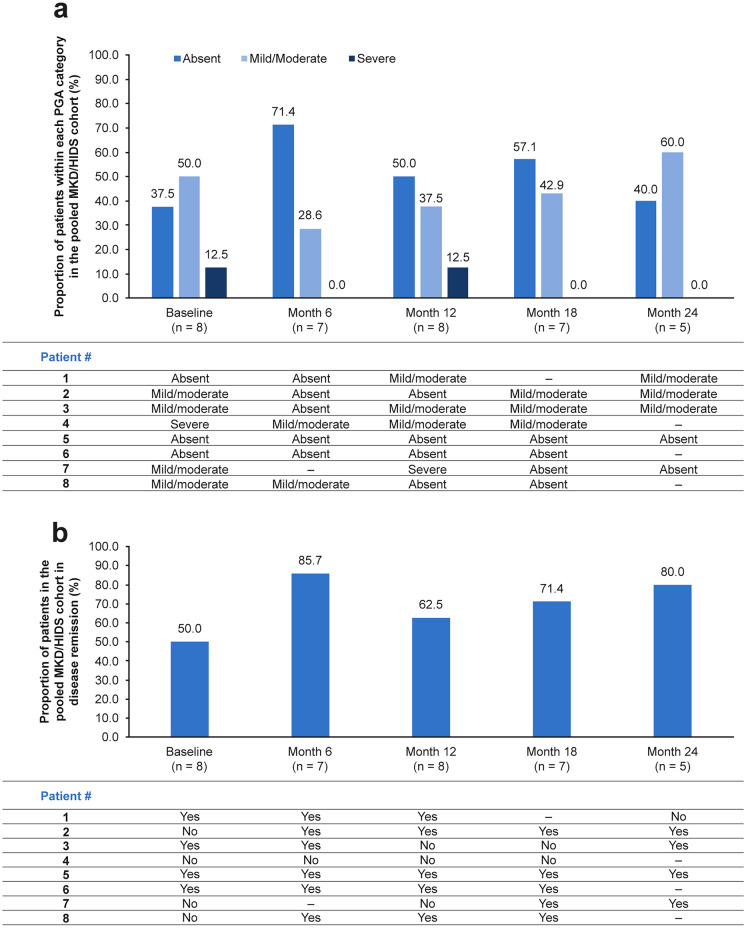
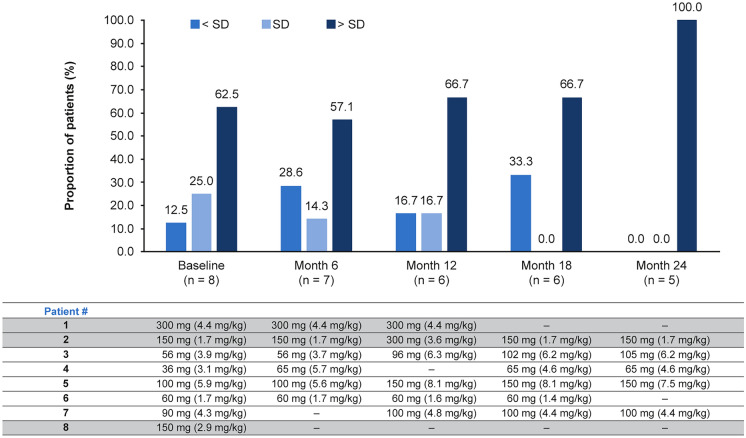
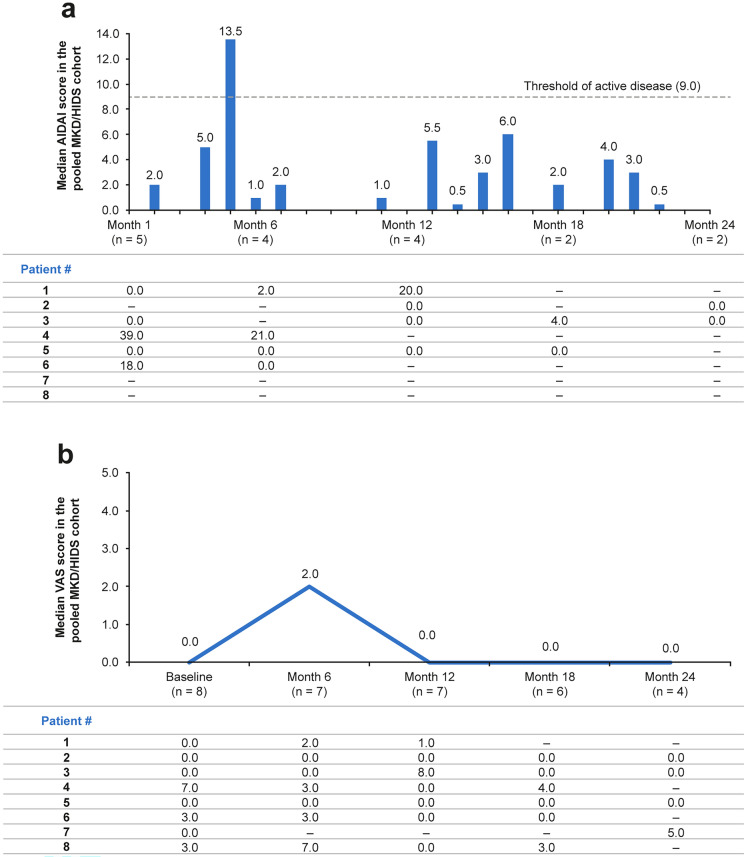
At the analysis cut-off date of December 2022, eight patients with MKD/HIDS were enrolled. Five (62.5%) were children (< 18 years) and five (62.5%) were female. The median patient age was 8.0 (range 2.0-39.0) years, and all patients were pre-treated with canakinumab prior to enrolment (median duration of canakinumab treatment: 3.8 years). Canakinumab was well tolerated, with seven (87.5%) patients reporting 48 adverse events (incidence rate/100 patient years: 218.1). No serious adverse drug reactions were reported. Patients continued to receive vaccinations during long-term treatment with canakinumab. Disease activity, evaluated by physician-reported (physician's global assessment, disease remission, C-reactive protein, serum amyloid A, erythrocyte sedimentation rate) and patient-reported (autoinflammatory disease activity index diary, disease activity, fatigue, impact on social life) measures, was generally well controlled throughout the study. Over 50.0% of patients maintained disease remission from baseline to month 24, and medians of all inflammatory markers remained within normal limits throughout the study. Most patients received higher than the recommended starting dose of canakinumab throughout the study.
Data from this interim analysis of a unique registry of patients with a rare disease support the long-term safety and effectiveness of the IL-1-blocking agent canakinumab for the treatment of MKD/HIDS.
在RELIANCE注册研究的甲羟戊酸激酶缺乏/高免疫球蛋白D综合征(MKD/HIDS)队列中,对卡那单抗的长期安全性和有效性进行患者层面的中期分析。
自2018年6月起,RELIANCE注册研究纳入了接受卡那单抗作为常规医疗护理一部分的MKD/HIDS儿科患者(年龄≥2岁)和成年患者(年龄≥18岁)。在基线时以及每6个月直至研究结束访视时,评估安全性、医生和患者报告的疾病活动度指标以及给药模式。
在2022年12月的分析截止日期,纳入了8例MKD/HIDS患者。5例(62.5%)为儿童(<18岁),5例(62.5%)为女性。患者中位年龄为8.0岁(范围2.0 - 39.0岁),所有患者在入组前均接受过卡那单抗治疗(卡那单抗治疗的中位持续时间:3.8年)。卡那单抗耐受性良好,7例(87.5%)患者报告了48例不良事件(发生率/100患者年:218.1)。未报告严重药物不良反应。患者在接受卡那单抗长期治疗期间继续接种疫苗。通过医生报告的指标(医生整体评估、疾病缓解情况、C反应蛋白、血清淀粉样蛋白A、红细胞沉降率)和患者报告的指标(自身炎症性疾病活动指数日记、疾病活动度、疲劳、对社会生活的影响)评估的疾病活动度在整个研究过程中总体得到良好控制。超过50.0%的患者从基线至第24个月维持疾病缓解,并且在整个研究过程中所有炎症标志物的中位数均保持在正常范围内。在整个研究过程中,大多数患者接受的卡那单抗剂量高于推荐起始剂量。
来自这个罕见病独特注册研究的中期分析数据支持白细胞介素-1阻断剂卡那单抗治疗MKD/HIDS的长期安全性和有效性。