Cheng Qiuping, Zhou Ying, Zhu Hongying, Wang Qunlong, Peng Wei
Insititute of Modern Services, Zhejiang Shuren University, Hangzhou, China.
Mental Health Education and Counseling Center, Jinhua University of Vocational Technology, Jinhua, China.
Front Psychol. 2024 Dec 12;15:1490338. doi: 10.3389/fpsyg.2024.1490338. eCollection 2024.
The theoretical model of smartphone addiction highlights the role of emotional factors in fostering addictive behaviors. However, most research has focused on long-term emotional states and pathologies, often overlooking the immediate effects of daily emotional fluctuations on smartphone usage and their mechanisms.
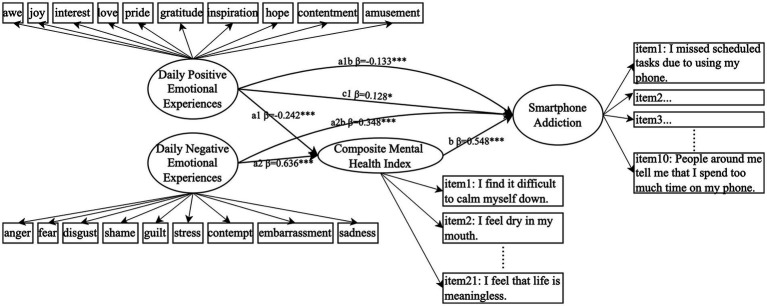
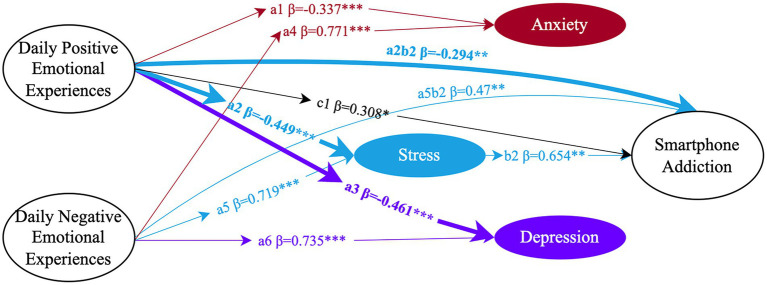
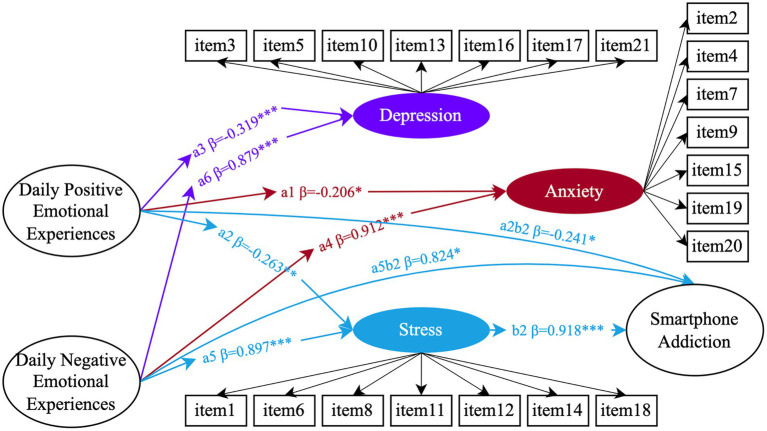
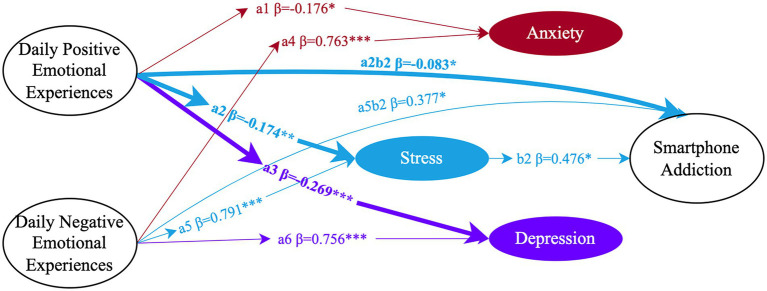
Our study employed an online survey and a moderated parallel mediation model to explore how daily emotional experiences influence smartphone addiction among college students. We analyzed the mediating roles of anxiety, stress, and depression, and the moderating effect of gender.
Our findings indicate that daily negative emotional experiences were positively correlated with smartphone addiction, with stress serving as a significant mediator in the relationship between both positive and negative emotional experiences and addiction. Interestingly, positive emotional experiences directly increased smartphone addiction risk among female students, but they also significantly reduced stress and depression, especially pronounced in women. Further analysis indicated that positive emotions primarily mitigate addiction through reducing stress, a pathway especially significant in females.
The study not only confirms the substantial impact of emotional experiences on addiction but also deepens our understanding of their mechanisms, underlining the importance of considering the nature of emotional experiences and gender-specific effects in devising prevention and intervention strategies.
智能手机成瘾的理论模型强调了情感因素在助长成瘾行为中的作用。然而,大多数研究都集中在长期的情绪状态和病理方面,常常忽视日常情绪波动对智能手机使用的即时影响及其机制。
我们的研究采用在线调查和调节平行中介模型,以探讨日常情绪体验如何影响大学生的智能手机成瘾。我们分析了焦虑、压力和抑郁的中介作用,以及性别的调节作用。
我们的研究结果表明,日常负面情绪体验与智能手机成瘾呈正相关,压力在积极和消极情绪体验与成瘾之间的关系中起显著中介作用。有趣的是,积极情绪体验直接增加了女学生的智能手机成瘾风险,但它们也显著降低了压力和抑郁,在女性中尤为明显。进一步分析表明,积极情绪主要通过减轻压力来缓解成瘾,这一途径在女性中尤为重要。
该研究不仅证实了情绪体验对成瘾的重大影响,还加深了我们对其机制的理解,强调了在制定预防和干预策略时考虑情绪体验的性质和性别特异性影响的重要性。