Wang Songdi, Wang Hong, Chen Xuemei, Li Min, Xu Danyang
Department of Anesthesiology, Affiliated Hospital of Chifeng University, Chifeng, 024000, People's Republic of China.
J Pain Res. 2024 Dec 21;17:4471-4481. doi: 10.2147/JPR.S484092. eCollection 2024.
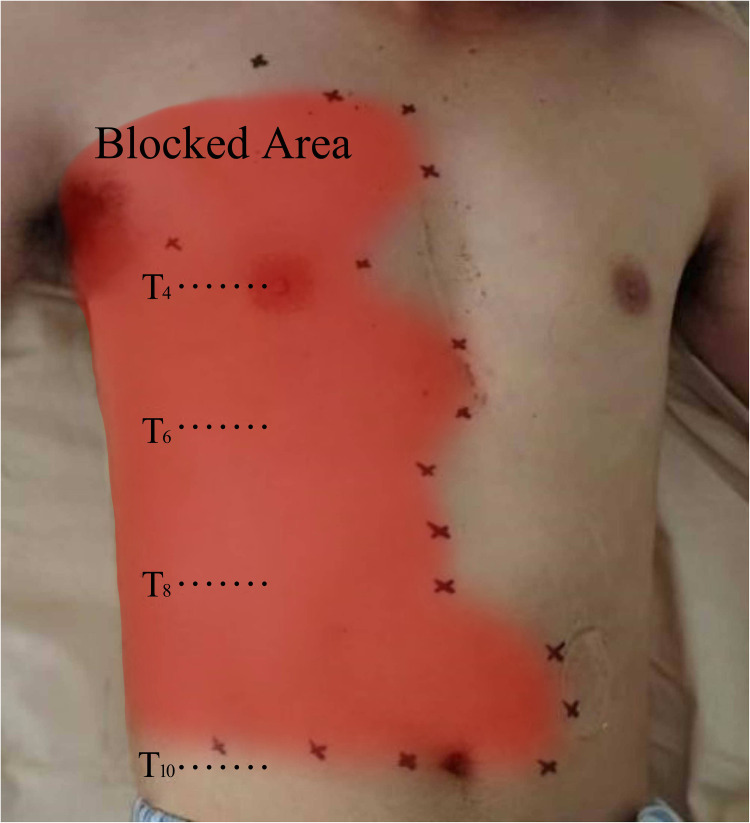
Thoracic surgery is among the most painful surgeries, postoperative pain can lead to a poor prognosis. This study aimed to explore the analgesic effect of ultrasound-guided continuous rhomboid intercostal and sub-serratus (RISS) plane block Comparison of thoracoscopic intercostal nerve block (ICNB) on postoperative pain management and recovery in patients who underwent Video-Assisted Thoracic Surgery (VATS) Lobectomy.
This prospective randomized controlled study enrolled patients after VATS Lobectomy who received ultrasound-guided continuous RISS plane block (RISS group) or ICNB (Control group) for postoperative pain. The primary outcome was the visual analogue scale (VAS) score. The secondary outcomes included non-invasive blood pressure (NIBP), heart rate (HR), the time to ambulation after surgery, the timing of drain removal, and the duration of postoperative hospitalization.
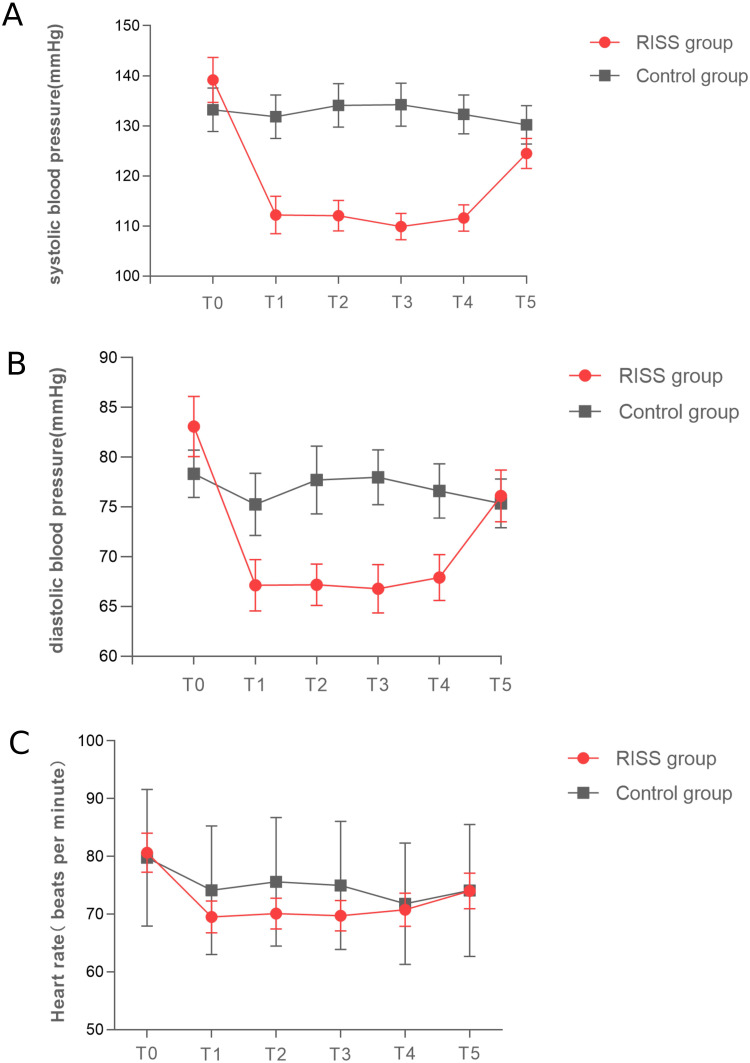
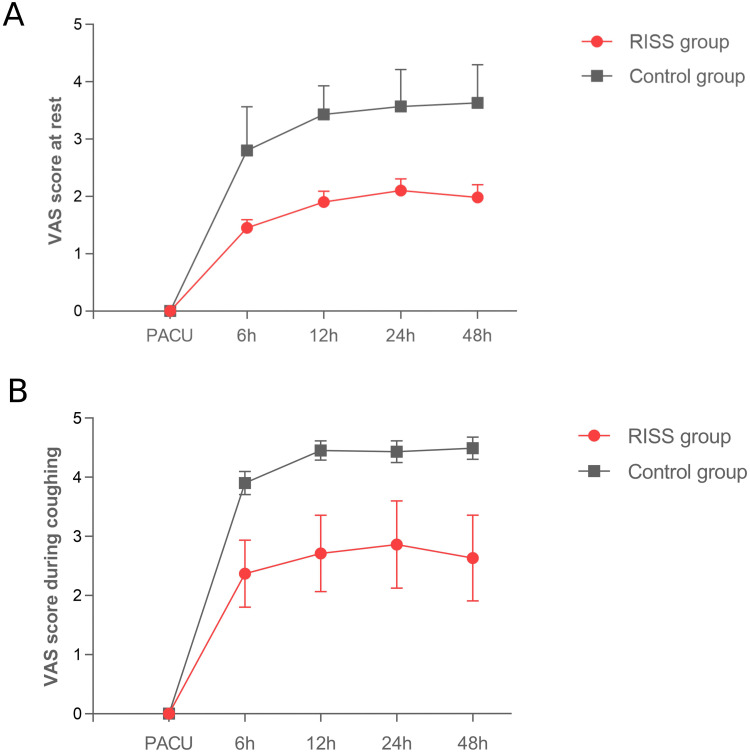
A total of 98 participants were collected (53.08 ± 13.63; 43 (43.88%) males); each group included 49 patients. The RISS group displayed significantly lower visual analogue scale (VAS) scores during rest and when coughing at postoperative 12, 24, and 48h compared to the Control group (P < 0.001). The total consumption of sufentanil and remifentanil was smaller in the RISS group than in the control group. The NIBP,HR in the RISS group were significantly lower than in the Control group at immediately after skin incision (T1), upon entering the thoracic cavity (T2), 5 min after entering the thoracic cavity (T3) (P < 0.001). The patients in the RISS group were more likely to exhibit a shorter time to the first postoperative ambulation compared to the Control group (8.84 ± 2.87,15.43 ± 4.50, P < 0.001).
Continuous RISS may be a safe and effective strategy for postoperative pain management after thoracoscopic surgery.
胸外科手术是最疼痛的手术之一,术后疼痛可导致预后不良。本研究旨在探讨超声引导下连续菱形肌间和锯肌下(RISS)平面阻滞与胸腔镜肋间神经阻滞(ICNB)对接受电视辅助胸腔镜手术(VATS)肺叶切除术患者术后疼痛管理及恢复情况的镇痛效果比较。
本前瞻性随机对照研究纳入了接受VATS肺叶切除术后接受超声引导下连续RISS平面阻滞(RISS组)或ICNB(对照组)进行术后镇痛的患者。主要结局指标为视觉模拟评分(VAS)。次要结局指标包括无创血压(NIBP)、心率(HR)、术后首次下床活动时间、拔管时间及术后住院时间。
共纳入98名参与者(年龄53.08±13.63岁;43名(43.88%)男性);每组49例患者。与对照组相比,RISS组在术后12、24和48小时休息及咳嗽时的视觉模拟评分(VAS)显著更低(P<0.001)。RISS组舒芬太尼和瑞芬太尼的总消耗量低于对照组。在皮肤切开即刻(T1)、进入胸腔时(T2)、进入胸腔5分钟后(T3),RISS组的NIBP、HR显著低于对照组(P<0.001)。与对照组相比,RISS组患者术后首次下床活动时间更短(8.84±2.87,15.43±4.50,P<0.001)。
连续RISS平面阻滞可能是胸腔镜手术后一种安全有效的术后疼痛管理策略。