Ang Lynn, Gunaratnam Sejal, Huang Yiyuan, Dillon Brendan R, Martin Catherine L, Burant Aaron, Reiss Jacob, Blakely Pennelope, Vasbinder Alexi, Zhao Lili, Mizokami-Stout Kara, Tang Yaling, Feldman Eva L, Doria Alessandro, Spino Cathie, Banerjee Mousumi, Hayek Salim S, Pop-Busui Rodica
Department of Internal Medicine, Division of Metabolism, Endocrinology, and Diabetes University of Michigan Ann Arbor MI USA.
Life Science Informatics University of Michigan Ann Arbor MI USA.
J Am Heart Assoc. 2025 Jan 7;14(1):e036787. doi: 10.1161/JAHA.124.036787. Epub 2024 Dec 27.
Cardiovascular autonomic neuropathy (CAN) and inflammation predict more severe outcomes in type 1 diabetes (T1D). However, the link between CAN and inflammation in T1D remains unclear. We examined associations between CAN measures and inflammatory biomarkers in individuals with T1D.
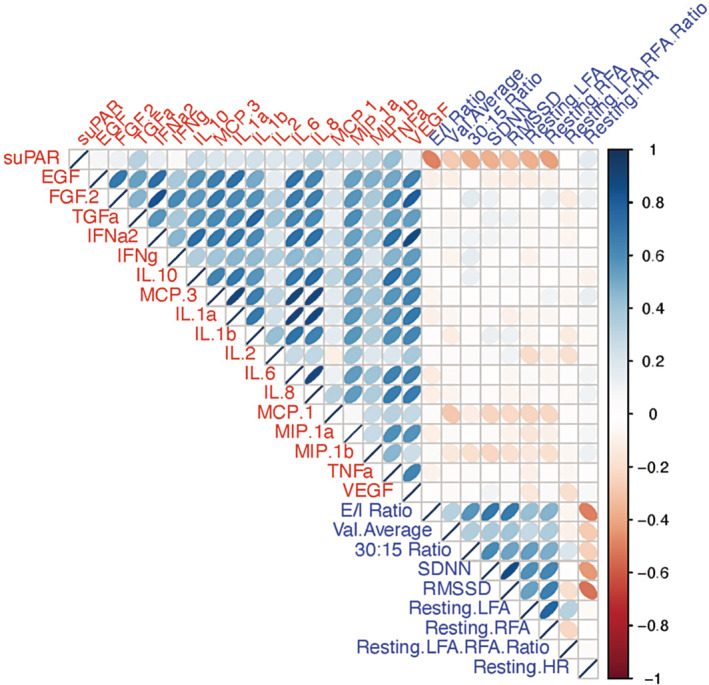
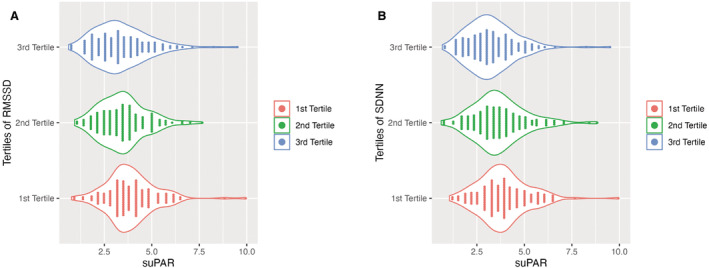
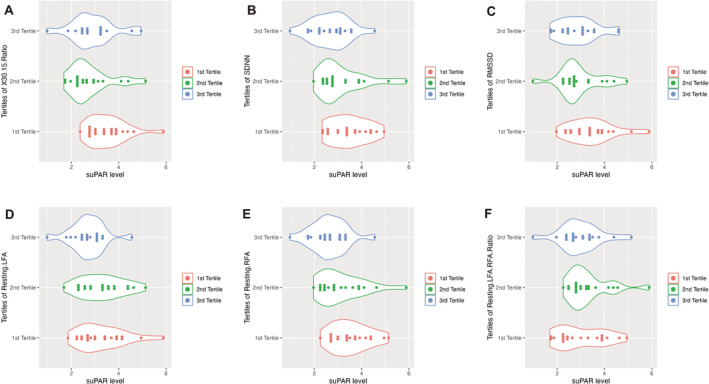
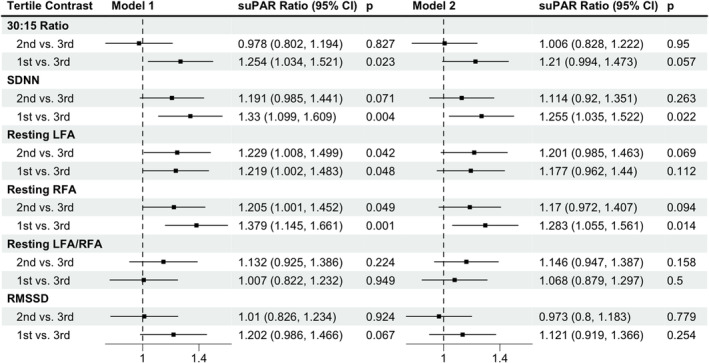
In a cross-sectional study, we measured cardiovascular autonomic reflex tests and heart rate variability (established CAN measures) and a panel of 39 inflammatory biomarkers, including soluble urokinase plasminogen activator receptor (suPAR), in T1D participants of the TINSAL-T1DN (Targeting Inflammation with Salsalate in Individuals with T1D Neuropathy) trial (n=57, discovery), and the PERL (Preventing Early Renal Loss in Diabetes) trial (n=468, validation). Amongst 39 inflammatory biomarkers measured in TINSAL-T1DN, suPAR levels had the strongest negative correlations with CAN measures: expiration/inspiration (=-0.48), Valsalva (=-0.28), 30:15 (=-0.37), SD of the normal RR interval (=-0.37), and root mean square of differences of successive RR intervals (=-0.31) (all <0.05). Findings were validated in PERL. In unadjusted analyses, median suPAR levels significantly differed between the lowest and highest SD of the normal RR interval tertiles (3.79 versus 3.12 ng/mL, <0.001) and root mean square of differences of successive RR intervals (3.76 versus 3.17 ng/mL, <0.001). After adjusting for covariates (age, sex, hemoglobin A1c, and estimated glomerular filtration rate), median suPAR values remained significantly elevated in the lowest tertiles of SD of the normal RR interval (=0.004) and root mean square of differences of successive RR intervals (=0.006).
Amongst several inflammatory biomarkers, suPAR, an immune-mediated glycoprotein, has a singular association with CAN measures. The potential of targeting suPAR as a disease-modifying approach for CAN in T1D warrants further exploration.
URL: https://www.clinicaltrials.gov; Unique identifiers: NCT02936843, NCT02017171.
心血管自主神经病变(CAN)和炎症预示着1型糖尿病(T1D)会出现更严重的后果。然而,T1D中CAN与炎症之间的联系仍不清楚。我们研究了T1D患者中CAN指标与炎症生物标志物之间的关联。
在一项横断面研究中,我们在TINSAL-T1DN(用双水杨酯治疗T1D神经病变个体的炎症)试验(n = 57,探索性研究)和PERL(预防糖尿病早期肾脏损伤)试验(n = 468,验证性研究)的T1D参与者中测量了心血管自主反射测试和心率变异性(既定的CAN指标),以及一组39种炎症生物标志物,包括可溶性尿激酶型纤溶酶原激活物受体(suPAR)。在TINSAL-T1DN中测量的39种炎症生物标志物中,suPAR水平与CAN指标的负相关性最强:呼气/吸气(r = -0.48)、乏氏动作(r = -0.28)、30:15(r = -0.37)、正常RR间期标准差(r = -0.37)和连续RR间期差值的均方根(r = -0.31)(均P < 0.05)。这些发现在PERL试验中得到了验证。在未校正的分析中,正常RR间期标准差三分位数的最低组和最高组之间的suPAR水平中位数有显著差异(3.79对3.12 ng/mL,P < 0.001),连续RR间期差值的均方根三分位数的最低组和最高组之间也有显著差异(3.76对3.17 ng/mL,P < 0.001)。在调整协变量(年龄、性别、糖化血红蛋白和估计肾小球滤过率)后,正常RR间期标准差三分位数的最低组(P = 0.004)和连续RR间期差值的均方根三分位数的最低组(P = 0.006)的suPAR中位数仍显著升高。
在几种炎症生物标志物中,suPAR这种免疫介导的糖蛋白与CAN指标有独特的关联。将suPAR作为T1D中CAN的疾病改善方法的潜力值得进一步探索。
网址:https://www.clinicaltrials.gov;唯一标识符:NCT02936843,NCT02017171。