Caliskan-Aydogan Oznur, Zaborney Kline Chloe, Alocilja Evangelyn C
Department of Biosystems and Agricultural Engineering, Michigan State University, East Lansing, MI 48824, USA.
Global Alliance for Rapid Diagnostics (GARD), Michigan State University, East Lansing, MI 48824, USA.
Nanomaterials (Basel). 2024 Dec 14;14(24):2010. doi: 10.3390/nano14242010.
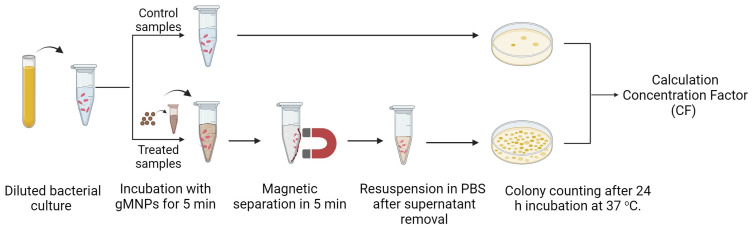
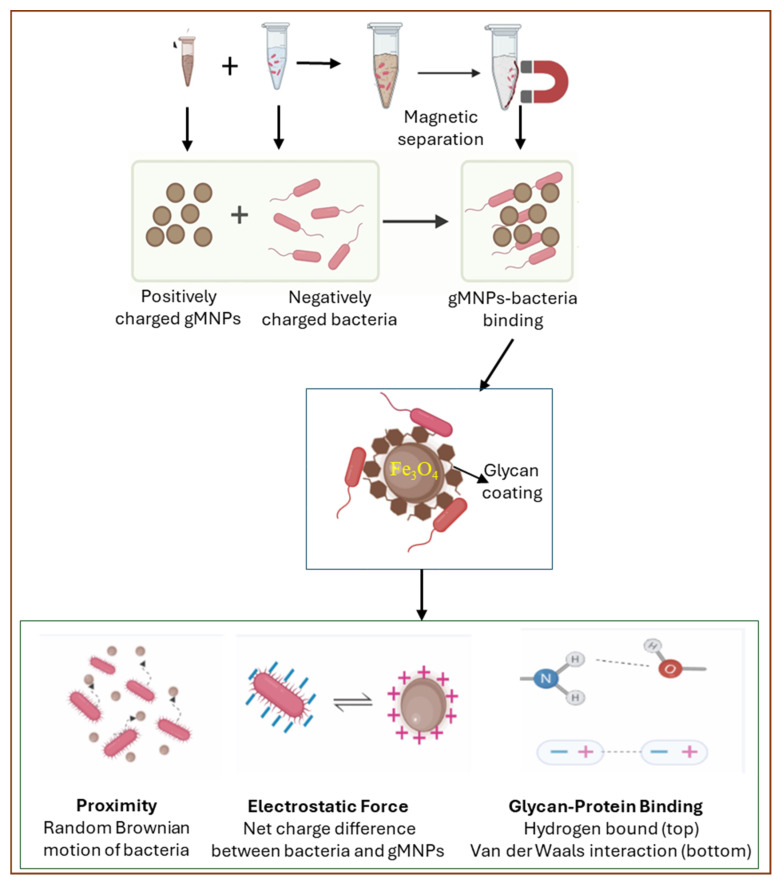
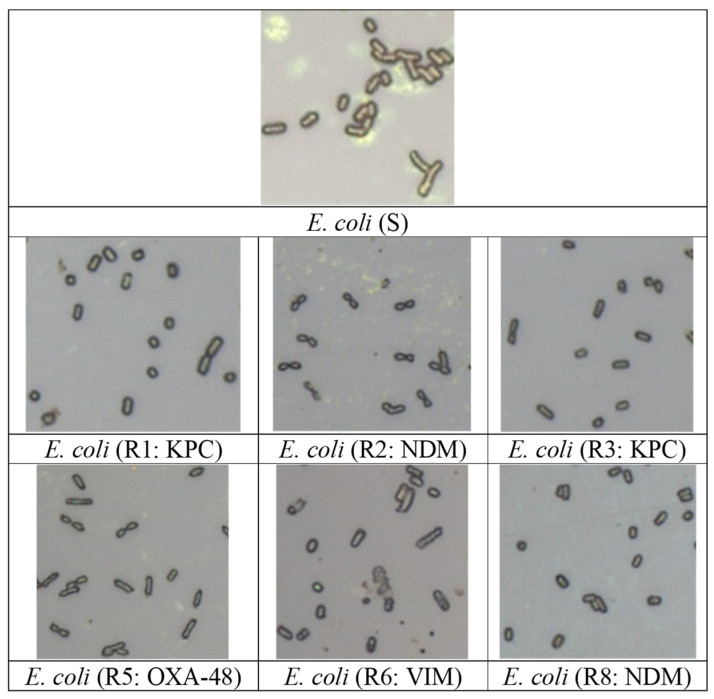
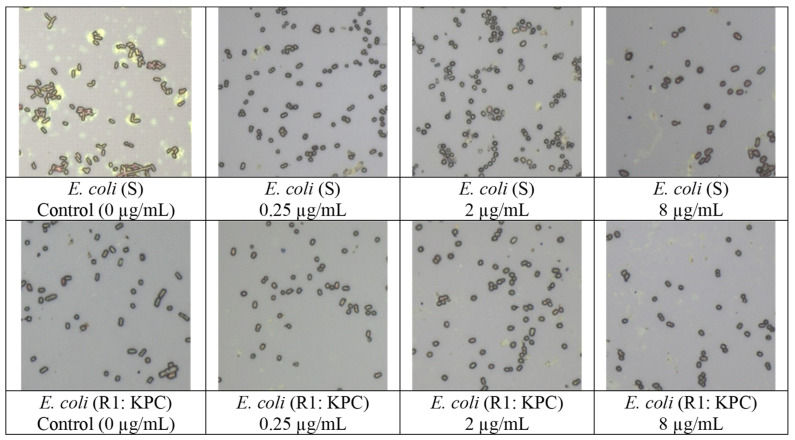
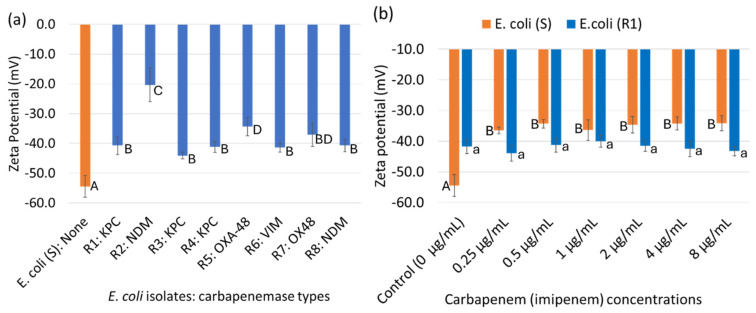
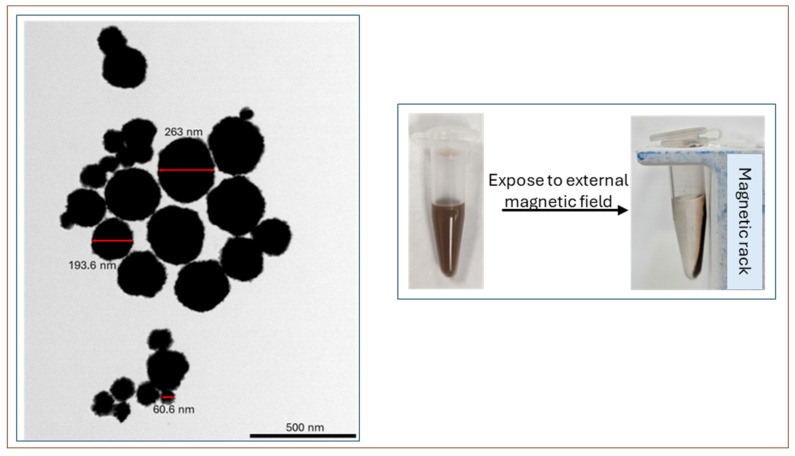
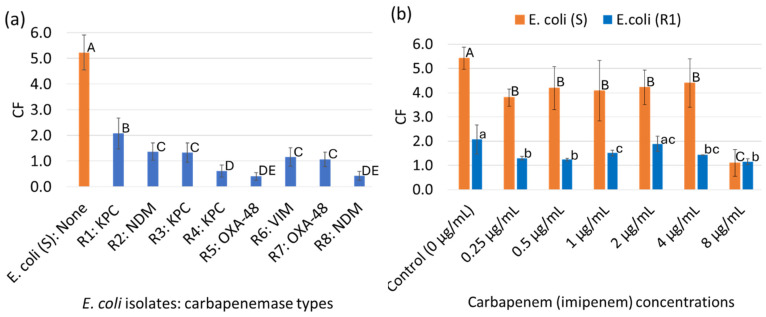
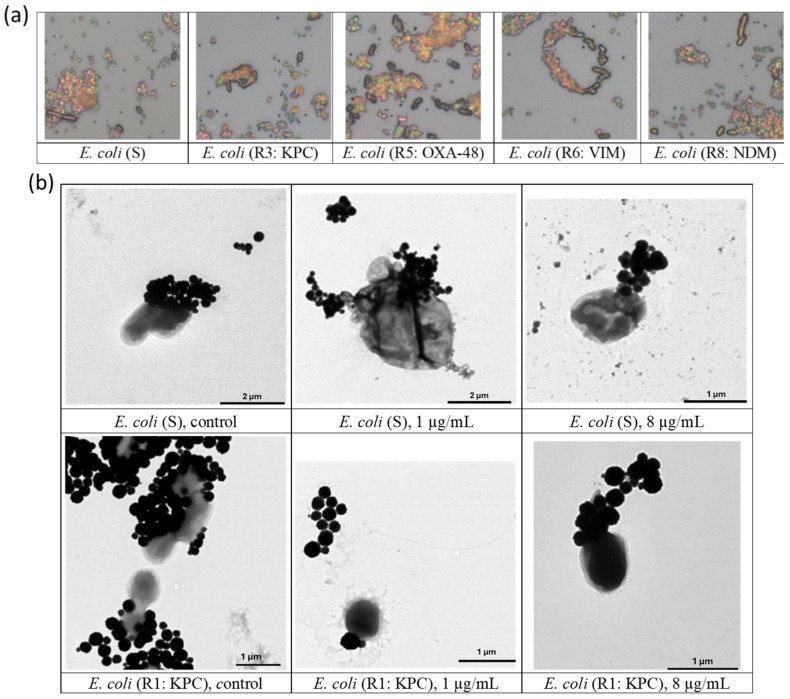
Carbapenem-resistant (CRE) is an emerging global concern. Specifically, carbapenemase-producing (CP) strains in CRE have recently been found in clinical, environmental, and food samples worldwide, causing many hospitalizations and deaths. Their rapid identification and characterization are paramount in control, management options, and treatment choices. Thus, this study aimed to characterize the cell surface properties of carbapenem-resistant (R) isolates and their interaction with glycan-coated magnetic nanoparticles (gMNPs) compared with carbapenem-susceptible (S) . This study used two groups of bacteria: The first group included (R) isolates harboring carbapenemases and had no antibiotic exposure. Their initial gMNP-cell binding capacity, with cell surface characteristics, was assessed. In the second group, one of the (R) isolates and (S) had long-term serial antibiotic exposure, which we used to observe their cell surface characteristics and gMNP interactions. Initially, cell surface characteristics (cell morphology and cell surface charge) of the isolates were evaluated using confocal laser scanning microscope (LSCM) and a Zetasizer, respectively. The interaction of gMNPs with the isolates was assessed through LSCM and transmission electron microscope (TEM). Further, the gMNP-cell attachment was quantified as a concentration factor (CF) through the standard plating method. The results showed that the CF values of all (R) were significantly different from those of (S), which could be due to the differences in cell characteristics. The (R) isolates displayed heterogeneous cell shapes (rod and round cells) and lower negative zeta potential (cell surface charge) values compared to (S). Further, this research identified the differences in the cell surface characteristics of (S) under carbapenem exposure, compared to unexposed (S) that impact their attachment capacity. The gMNPs captured more (S) cells compared to carbapenem-exposed (S) and all (R) isolates. This study clearly found that differences in cell surface characteristics impact their interaction with magnetic nanoparticles. The gained insights aid in further understanding adhesion mechanisms to develop or improve bacterial isolation techniques and diagnostic and treatment methods for CRE.
耐碳青霉烯类(CRE)是一个新出现的全球关注问题。具体而言,最近在全球范围内的临床、环境和食品样本中发现了产碳青霉烯酶(CP)的CRE菌株,导致许多人住院和死亡。对它们进行快速鉴定和特征分析对于控制、管理方案和治疗选择至关重要。因此,本研究旨在表征耐碳青霉烯类(R)分离株的细胞表面特性以及它们与聚糖包被磁性纳米颗粒(gMNPs)的相互作用,并与碳青霉烯类敏感(S)分离株进行比较。本研究使用了两组细菌:第一组包括携带碳青霉烯酶且未接触过抗生素的R分离株。评估了它们最初的gMNP-细胞结合能力以及细胞表面特征。在第二组中,其中一株R分离株和一株S分离株长期连续接触抗生素,我们用其观察它们的细胞表面特征和gMNP相互作用。最初,分别使用共聚焦激光扫描显微镜(LSCM)和Zetasizer评估分离株的细胞表面特征(细胞形态和细胞表面电荷)。通过LSCM和透射电子显微镜(TEM)评估gMNPs与分离株的相互作用。此外,通过标准平板计数法将gMNP-细胞附着定量为浓度因子(CF)。结果表明,所有R分离株的CF值与S分离株的CF值显著不同,这可能是由于细胞特征的差异。与S分离株相比,R分离株呈现出异质的细胞形状(杆状和圆形细胞)且负zeta电位(细胞表面电荷)值较低。此外,本研究确定了与未接触碳青霉烯类的S分离株相比,接触碳青霉烯类的S分离株的细胞表面特征差异会影响它们的附着能力。与接触碳青霉烯类的S分离株和所有R分离株相比,gMNPs捕获了更多未接触碳青霉烯类的S分离株细胞。本研究明确发现细胞表面特征的差异会影响它们与磁性纳米颗粒的相互作用。所获得的见解有助于进一步理解黏附机制,以开发或改进细菌分离技术以及针对CRE的诊断和治疗方法。