Rogers Rachael E, Fowler Kate A, Pask Andrew J, Mattiske Deidre M
School of BioSciences, The University of Melbourne, Melbourne, 3010, Australia.
Sci Rep. 2024 Dec 28;14(1):30819. doi: 10.1038/s41598-024-81093-8.
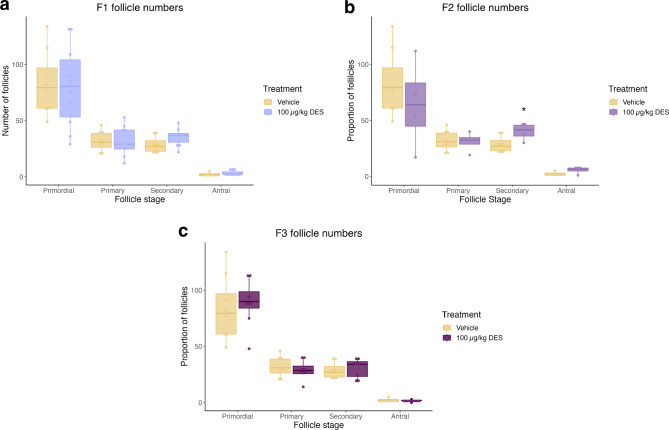
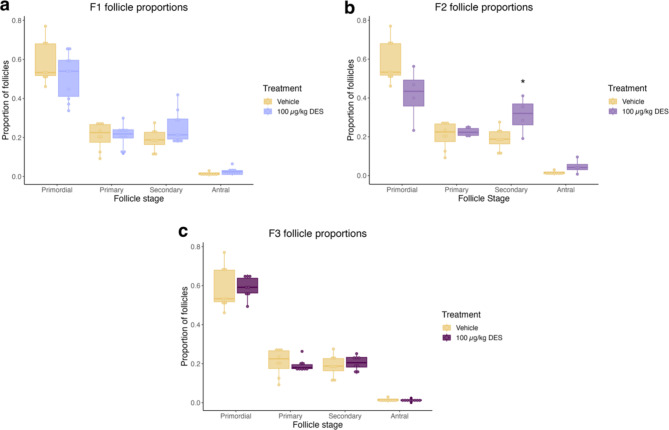
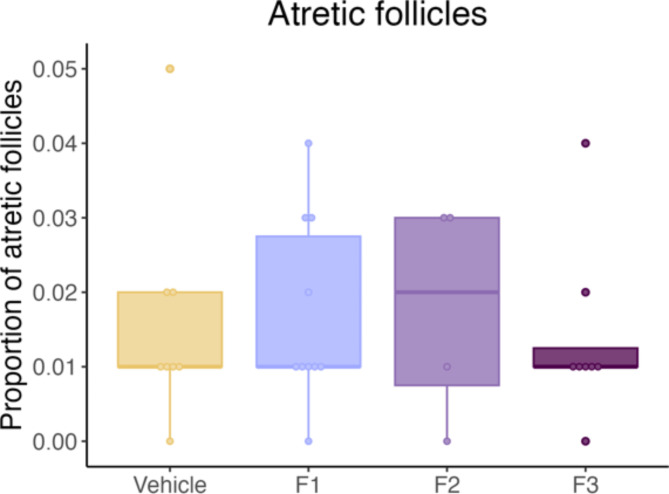
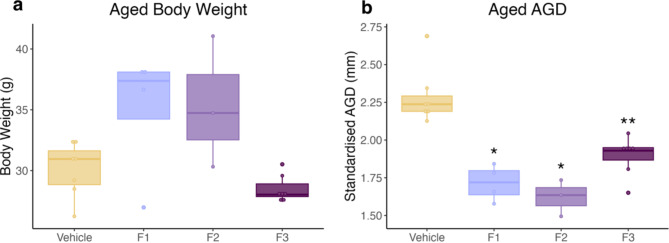
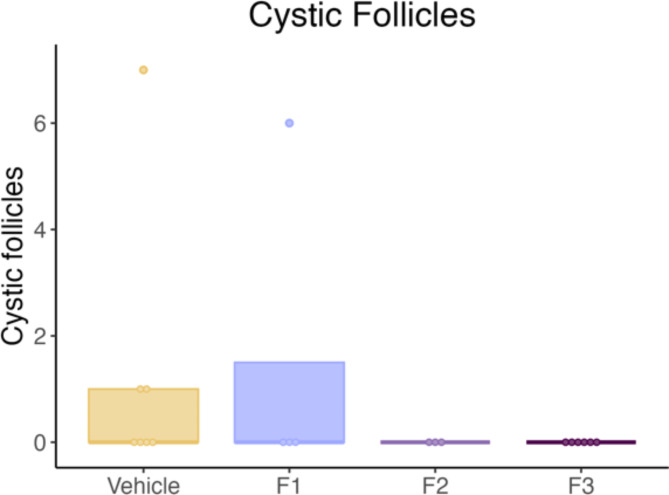
Diethylstilbestrol (DES) is an estrogenic endocrine disrupting chemical (EDC) that was prescribed to millions of pregnant women worldwide, leading to increased rates of infertility in the exposed offspring. We have previously demonstrated that this reduced fertility persists for multiple generations in the mouse. However, how altered ovarian function contributes to this infertility is unknown. Therefore, this study sought to determine if DES exposure promotes two common ovarian disorders, primary ovarian insufficiency (POI) and polycystic ovary syndrome, contributing to the reduced fertility in DES offspring. Moreover, we investigated if these impacts are transgenerational. Gestating mice were exposed to 100 µg/kg DES, and ovarian morphology was observed in F1-F3 female descendants. F1 females trended towards fewer primordial and more secondary follicles and similarly, F2 females had fewer primordial and significantly more secondary follicles compared to controls. No differences in follicle proportions were observed in the F3. Moreover, DES exposure did not increase follicular cysts. These results show that DES accelerates folliculogenesis, indicative of a POI phenotype and that this is likely contributing to the reduced fertility observed in DES descendants. Moreover, this study highlights the ability of estrogenic EDCs to disrupt folliculogenesis, which may exacerbate the onset of POI in women already at risk.
己烯雌酚(DES)是一种具有雌激素活性的内分泌干扰化学物质(EDC),曾被全球数百万孕妇使用,导致其后代不孕率上升。我们之前已经证明,这种生育能力下降在小鼠中会持续多代。然而,卵巢功能改变如何导致这种不孕尚不清楚。因此,本研究旨在确定DES暴露是否会引发两种常见的卵巢疾病,即原发性卵巢功能不全(POI)和多囊卵巢综合征,从而导致DES后代生育能力下降。此外,我们还研究了这些影响是否具有跨代性。妊娠小鼠暴露于100μg/kg的DES中,并观察F1 - F3代雌性后代的卵巢形态。F1代雌性小鼠的原始卵泡数量有减少趋势,次级卵泡数量增多,同样,与对照组相比,F2代雌性小鼠的原始卵泡数量更少,次级卵泡数量显著更多。F3代未观察到卵泡比例的差异。此外,DES暴露并未增加卵泡囊肿。这些结果表明,DES会加速卵泡生成,这是POI表型的表现,并且这可能是DES后代生育能力下降的原因。此外,本研究强调了雌激素类EDC干扰卵泡生成的能力,这可能会加剧已有风险的女性中POI的发病。