Luo Shihua, Zhang Junlai, Heffernan Mark
Jiangxi University of Finance and Economics, School of Statistics and Data Science, Nanchang, China.
Heidelberg University, Faculty of Medicine and University Hospital, Heidelberg Institute of Global Health(HIGH), Heidelberg, Germany.
BMC Health Serv Res. 2024 Dec 27;24(1):1655. doi: 10.1186/s12913-024-12113-6.
China is currently at a turning point as its total population has started to decline, and therefore faces issues related to caring for an ageing population, which will require an increase in Total Health Expenditure (THE). Therefore, the ability to forecast China's future THE is essential.
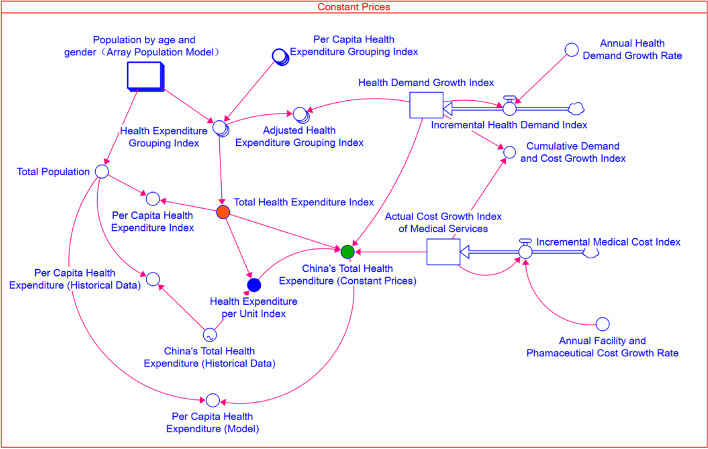
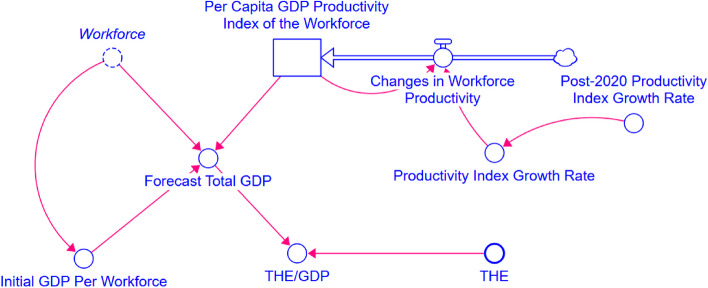
We developed two THE System Dynamics (SD) models using Stella Architect 3.4 to simulate China's THE from 2000 to 2060. The constant prices THE SD model estimates THE under low, medium, and high Total Fertility Rate (TFR) scenarios. The current prices THE SD model serves as a robust calibration check. In addition, we developed a new total Gross Domestic Production (GDP) forecast model to estimate THE/GDP over the same period.
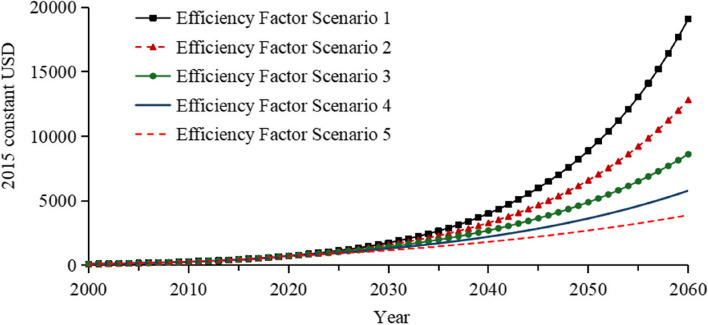
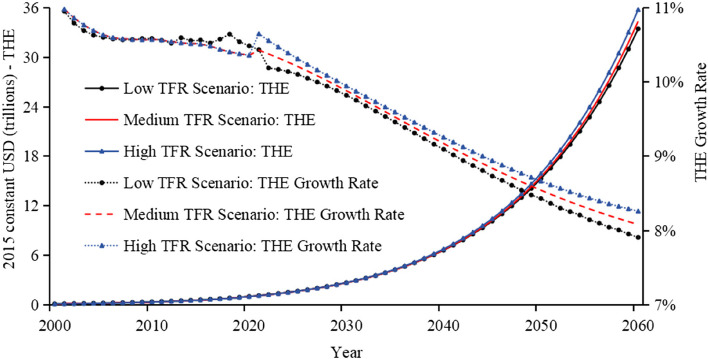
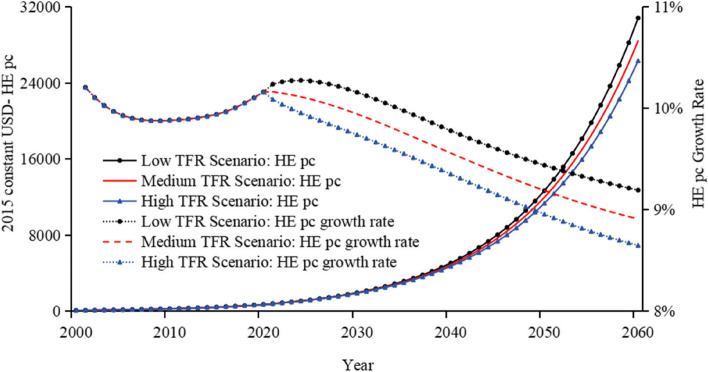
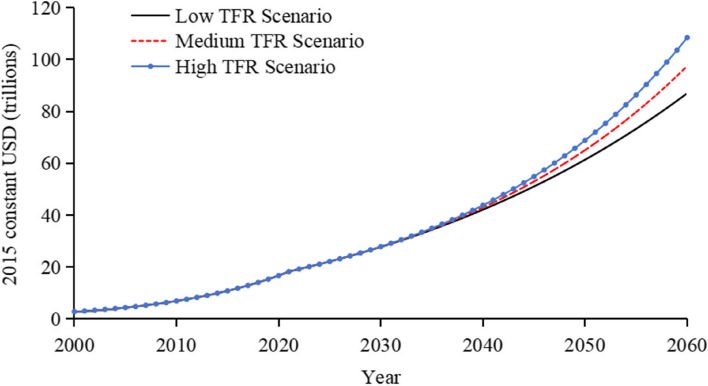
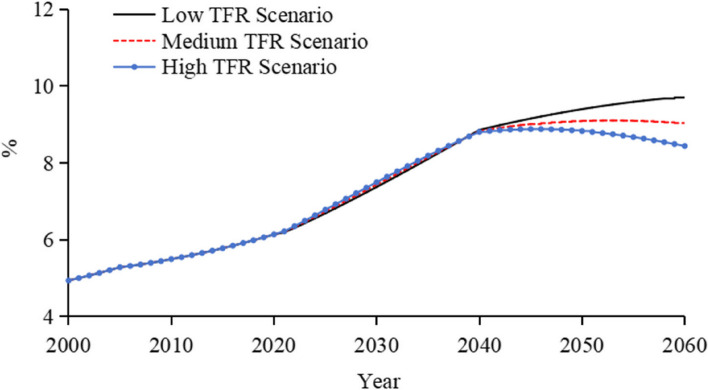
Our simulation results reveal a significant upward trend in China's THE from 2000 to 2060. Specifically, under the low TFR scenario, THE is projected to reach approximately $33.4 trillion in 2015 constant USD by 2060. However, with the introduction of efficiency impact factors, THE is expected to fall to around $8.6 trillion by 2060. Additionally, the per capita Health Expenditure is anticipated to rise from $102 in 2000 to roughly $30,800 by 2060, though it could see a decrease to nearly $7,900 with efficiency improvements. Our GDP forecast for 2060 is nearly $87 trillion, with THE to GDP ratio expected to be about 9.7%. In our scenario analysis, as TFR increases, the growing new births and decreased ageing rate are expected to lead to a rise in THE and a decrease in per capita Health Expenditure.
The efficiency of THE utilization needs to be improved. Increasing TFR can help alleviate population decline and ageing to some extent. Enhancing workforce productivity and sustained economic growth is needed to counteract the challenges posed by an ageing population.
中国目前正处于一个转折点,因为其总人口已开始下降,因此面临与照顾老年人口相关的问题,这将需要增加卫生总支出(THE)。因此,预测中国未来卫生总支出的能力至关重要。
我们使用Stella Architect 3.4开发了两个卫生总支出系统动力学(SD)模型,以模拟中国2000年至2060年的卫生总支出。不变价格卫生总支出SD模型估计了低、中、高总生育率(TFR)情景下的卫生总支出。当前价格卫生总支出SD模型用作稳健的校准检查。此外,我们开发了一个新的国内生产总值(GDP)预测模型,以估计同期的卫生总支出与GDP之比。
我们的模拟结果显示,2000年至2060年中国的卫生总支出呈显著上升趋势。具体而言,在低总生育率情景下,预计到2060年,按2015年不变美元计算,卫生总支出将达到约33.4万亿美元。然而,随着效率影响因素的引入,预计到2060年卫生总支出将降至约8.6万亿美元左右。此外,人均卫生支出预计将从2000年的102美元升至2060年的约30800美元,不过随着效率提高,可能会降至近7900美元。我们对2060年的GDP预测接近87万亿美元,卫生总支出与GDP之比预计约为9.7%。在我们的情景分析中,随着总生育率的提高,预计新出生人口增加和老龄化率下降将导致卫生总支出上升和人均卫生支出下降。
需要提高卫生总支出的利用效率。提高总生育率有助于在一定程度上缓解人口下降和老龄化问题。需要提高劳动力生产率和实现持续经济增长,以应对老龄化人口带来的挑战。