Ghammari Fawzieh, Khodayari-Zarnaq Rahim
Department of Health Policy and Management School of Management and medical informatics, Tabriz University of medical sciences, Tabriz, Iran.
Department of Health Policy and Management, School of Management and Medical Informatics, Tabriz University of Medical Sciences, Tabriz, Iran.
Harm Reduct J. 2024 Dec 28;21(1):228. doi: 10.1186/s12954-024-01146-z.
Despite Iran's prohibition politics regarding alcoholic beverages consumption, marketing, and trading, there is a flourishing black market. Often, alcohol producers on this black market do not adhere alcohol production standards, resulting in a lot of deaths and significant consequences each year. Accordingly, this study was carried out to identify facilitators for the growth of the black market for alcoholic beverages in Iran and provide solutions for harm reduction.
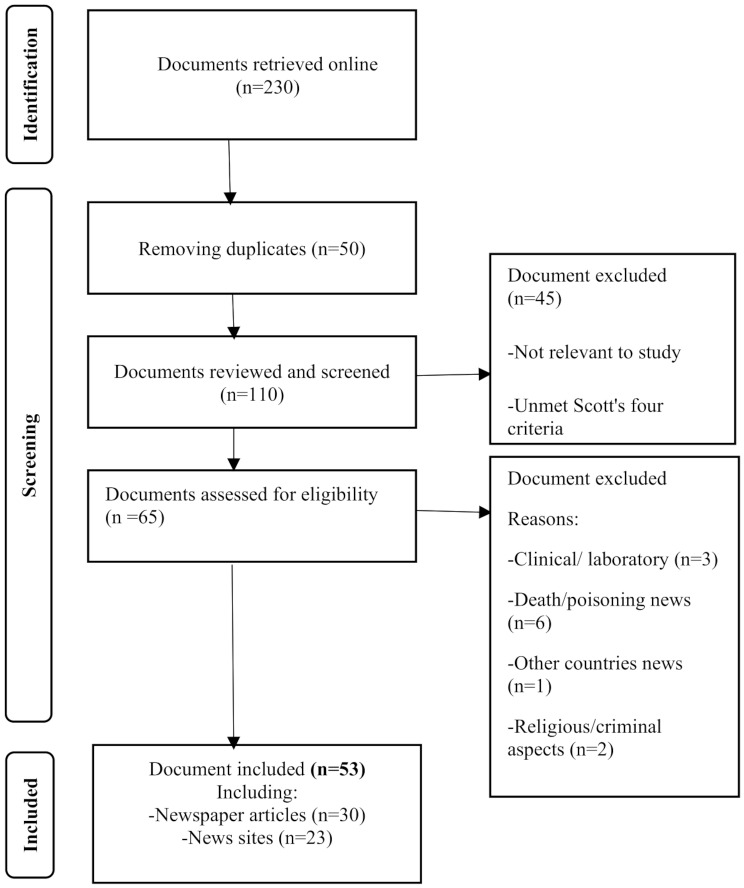
This study was a qualitative document publicly available analysis, in which online newspapers and Persian news websites about alcoholic beverages black market in Iran were reviewed. Documents were analyzed using thematic analysis.
After the completion of the analysis, 21 final codes, seven subthemes, and four themes were developed. Four themes are (1) political factors, including governance, regulatory rules and regulations, and awareness sub-themes (2) sociocultural factors, including culture change sub-theme (3) economic factors, including attractive market sub-theme, and (4) business factors, including manufacturing and marketing sub-themes.
As a result of alcohol prohibition politics in Iran and a socioeconomically supportive environment, black market has developed. Several policies can be implemented to reduce alcohol black market harm. It is possible to reduce the demand for homemade alcohol by educating the public about its risks. The government should enforce stricter policies on trading and advertising alcohol to reduce the availability of homemade alcohol and shrink alcohol black market. To implement these solutions, clerics should be convinced that the alcohol black market poses a serious public health threat.
尽管伊朗对酒精饮料的消费、营销和交易实施了禁酒政策,但黑市依然繁荣。通常,这个黑市上的酒精生产商并不遵守酒精生产标准,每年导致大量死亡和严重后果。因此,开展本研究以确定伊朗酒精饮料黑市增长的促进因素,并提供减少危害的解决方案。
本研究是一项定性的公开可用文献分析,其中对有关伊朗酒精饮料黑市的在线报纸和波斯语新闻网站进行了审查。使用主题分析法对文献进行分析。
分析完成后,形成了21个最终编码、7个子主题和4个主题。四个主题分别是:(1)政治因素,包括治理、监管规则和法规以及意识子主题;(2)社会文化因素,包括文化变化子主题;(3)经济因素,包括有吸引力的市场子主题;(4)商业因素,包括制造和营销子主题。
由于伊朗的禁酒政策以及社会经济支持的环境,黑市得以发展。可以实施多项政策来减少酒精黑市的危害。通过向公众宣传自制酒精的风险,可以减少对自制酒精的需求。政府应加强对酒精交易和广告的监管政策,以减少自制酒精的可得性并缩小酒精黑市。为了实施这些解决方案,应让神职人员相信酒精黑市对公众健康构成严重威胁。