Yin Ji, Xu Lin, Wang Shange, Zhang Linshuai, Zhang Yujie, Zhai Zhenwei, Zeng Pengfei, Grzegorzek Marcin, Jiang Tao
School of Intelligent Medicine, Chengdu University of Traditional Chinese Medicine, Chengdu, 611137, China.
The Acupuncture and Tuina School, Chengdu University of Traditional Chinese Medicine, Chengdu, China.
Sci Rep. 2024 Dec 28;14(1):31454. doi: 10.1038/s41598-024-83184-y.
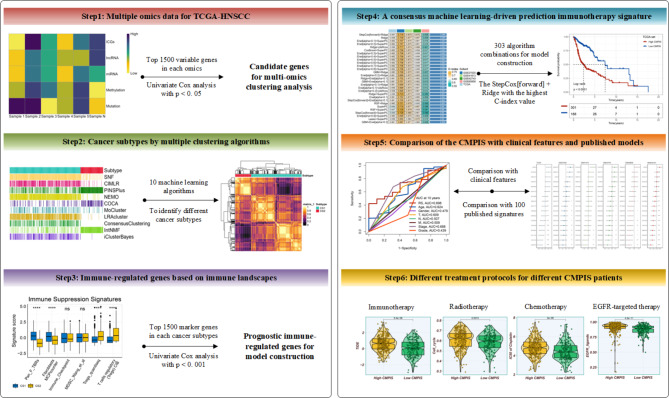
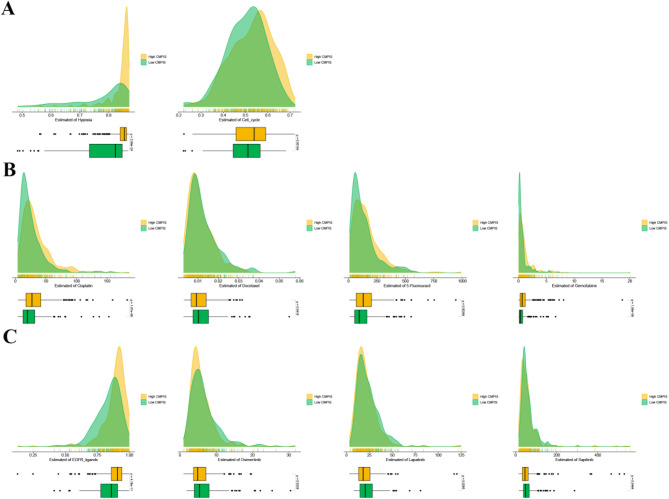
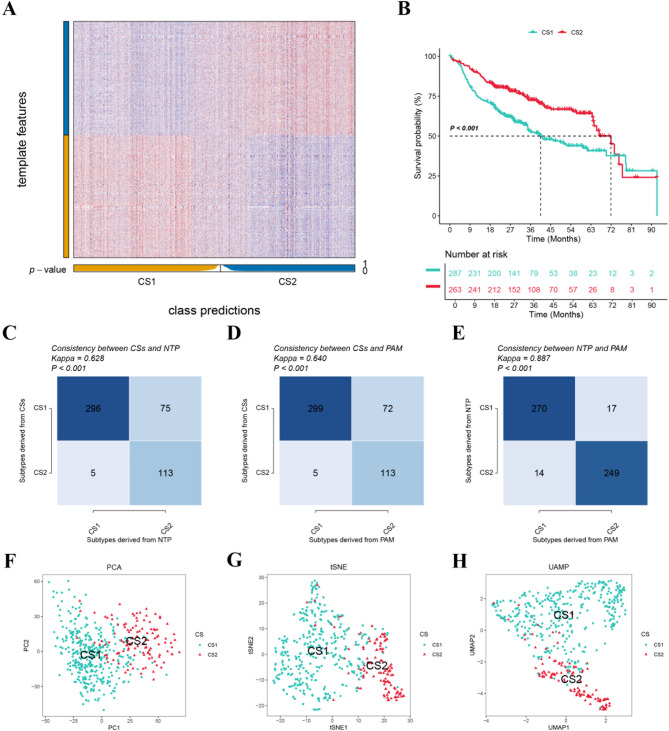
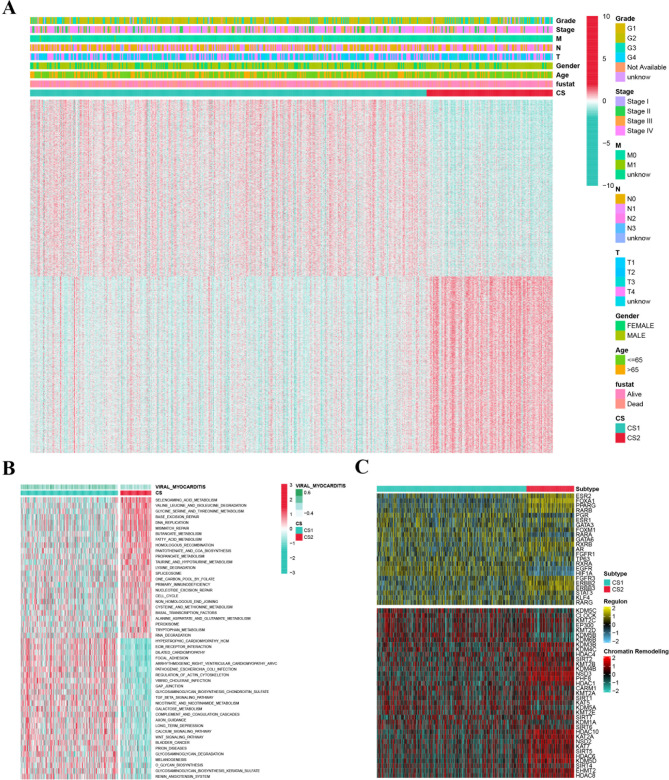
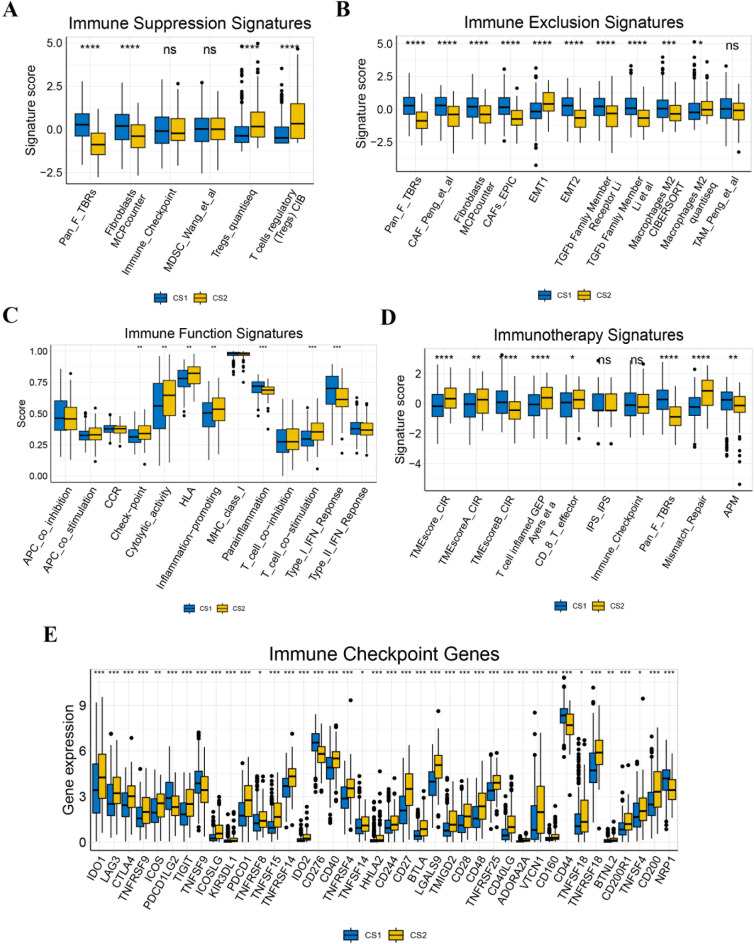
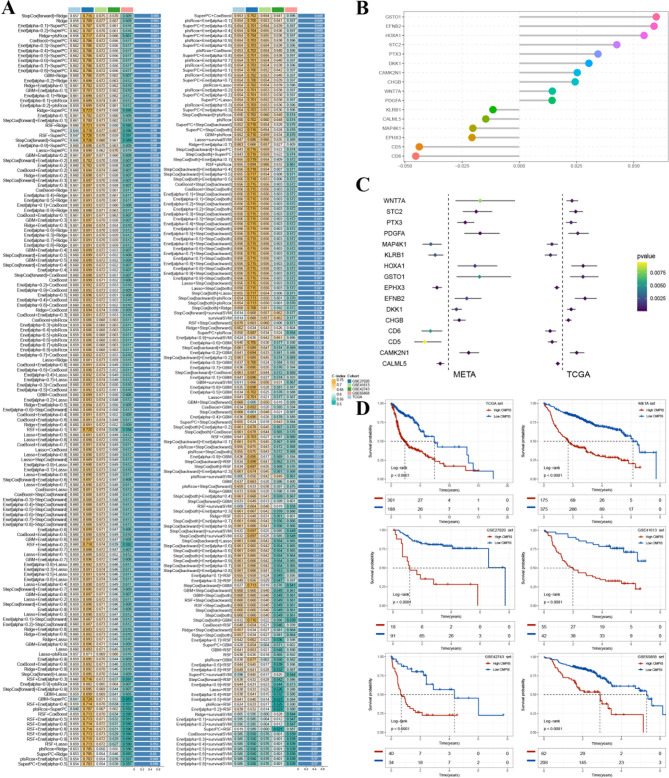
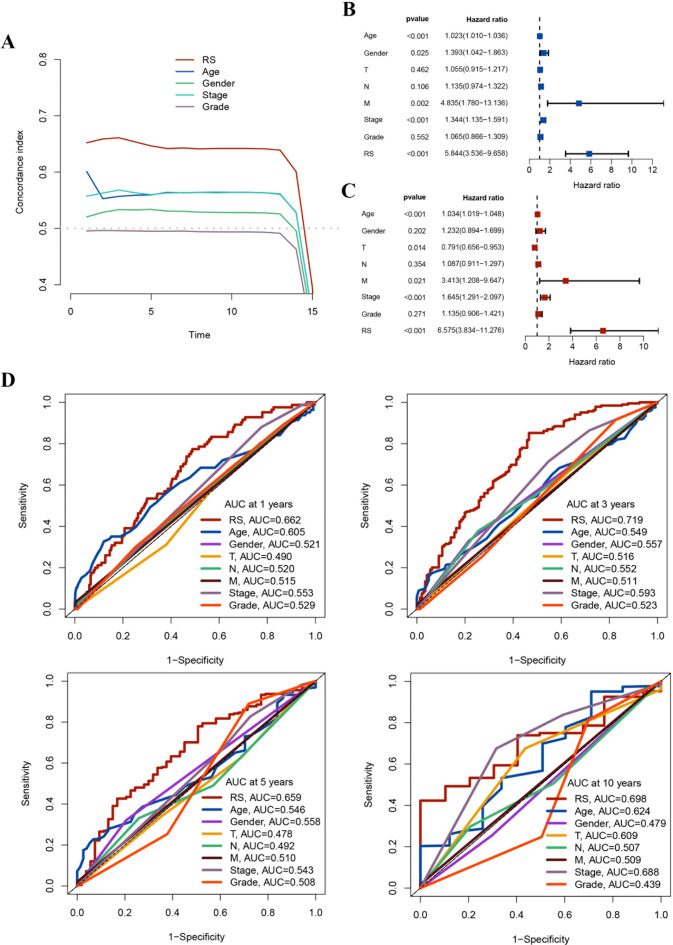
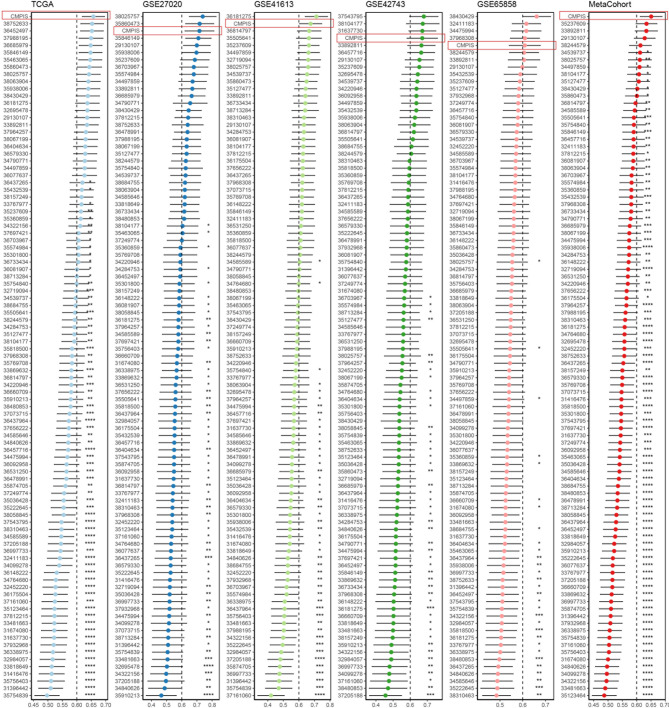
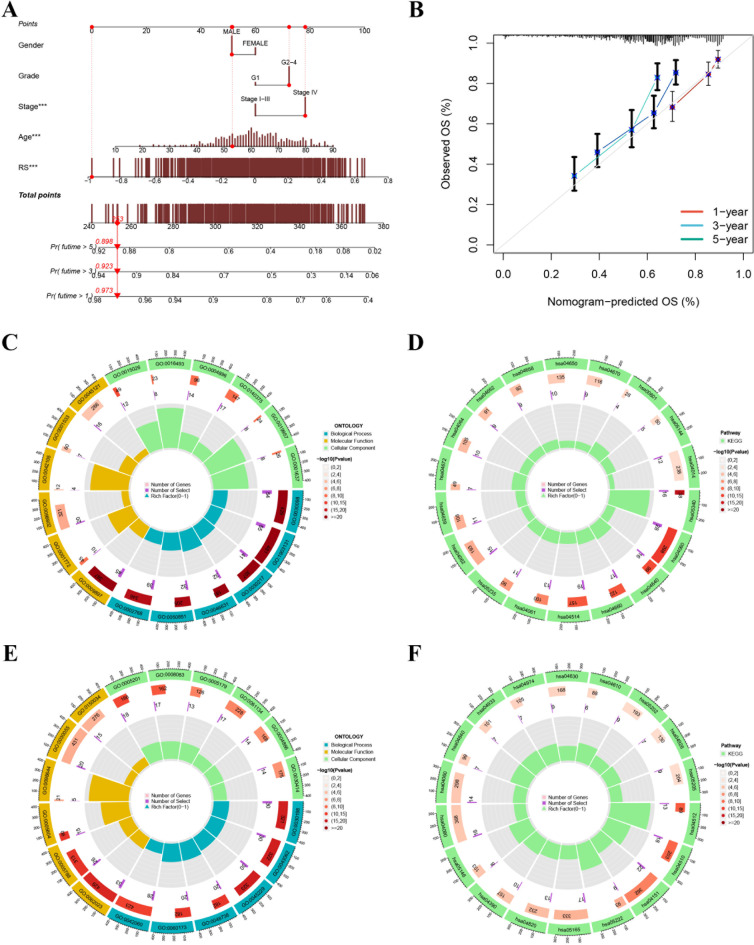
In recent years, immune checkpoint inhibitors (ICIs) has emerged as a fundamental component of the standard treatment regimen for patients with head and neck squamous cell carcinoma (HNSCC). However, accurately predicting the treatment effectiveness of ICIs for patients at the same TNM stage remains a challenge. In this study, we first combined multi-omics data (mRNA, lncRNA, miRNA, DNA methylation, and somatic mutations) and 10 clustering algorithms, successfully identifying two distinct cancer subtypes (CSs) (CS1 and CS2). Subsequently, immune-regulated genes (IRGs) and machine learning algorithms were utilized to construct a consensus machine learning-driven prediction immunotherapy signature (CMPIS). Further, the prognostic model was validated and compared across multiple datasets, including clinical characteristics, external datasets, and previously published models. Ultimately, the response of different CMPIS patients to immunotherapy, targeted therapy, radiotherapy and chemotherapy was also explored. First, Two distinct molecular subtypes were successfully identified by integrating immunomics data with machine learning techniques, and it was discovered that the CS1 subtype tended to be classified as "cold tumors" or "immunosuppressive tumors", whereas the CS2 subtype was more likely to represent "hot tumors" or "immune-activated tumors". Second, 303 different algorithms were employed to construct prognostic models and the average C-index value for each model was calculated across various cohorts. Ultimately, the StepCox [forward] + Ridge algorithm, which had the highest average C-index value of 0.666, was selected and this algorithm was used to construct the CMPIS predictive model comprising 16 key genes. Third, this predictive model was compared with patients' clinical features, such as age, gender, TNM stage, and grade stage. The findings indicated that this prognostic model exhibited the best performance in terms of C-index and AUC values. Additionally, it was compared with previously published models and it was found that the C-index of CMPIS ranked in the top 5 among 94 models across the TCGA, GSE27020, GSE41613, GSE42743, GSE65858, and META datasets. Lastly, the study revealed that patients with lower CMPIS were more sensitive to immunotherapy and chemotherapy, while those with higher CMPIS were more responsive to radiation therapy and EGFR-targeted treatments. In summary, our study identified two CSs (CS1 and CS2) of HNSCC using multi-omics data and predicted patient prognosis and treatment response by constructing the CMPIS model with IRGs and 303 machine learning algorithms, which underscores the importance of immunotherapy biomarkers in providing more targeted, precise, and personalized immunotherapy plans for HNSCC patients, significantly contributing to the optimization of clinical treatment outcomes.
近年来,免疫检查点抑制剂(ICIs)已成为头颈部鳞状细胞癌(HNSCC)患者标准治疗方案的基本组成部分。然而,准确预测处于相同TNM分期的患者对ICIs的治疗效果仍然是一项挑战。在本研究中,我们首先将多组学数据(mRNA、lncRNA、miRNA、DNA甲基化和体细胞突变)与10种聚类算法相结合,成功识别出两种不同的癌症亚型(CSs)(CS1和CS2)。随后,利用免疫调节基因(IRGs)和机器学习算法构建了一种基于共识的机器学习驱动的预测免疫治疗特征(CMPIS)。此外,在包括临床特征、外部数据集和先前发表的模型在内的多个数据集中对该预后模型进行了验证和比较。最终,还探索了不同CMPIS患者对免疫治疗、靶向治疗、放疗和化疗的反应。首先,通过将免疫组学数据与机器学习技术相结合,成功识别出两种不同的分子亚型,发现CS1亚型倾向于被归类为“冷肿瘤”或“免疫抑制性肿瘤”,而CS2亚型更可能代表“热肿瘤”或“免疫激活肿瘤”。其次,采用303种不同算法构建预后模型,并计算每个模型在各个队列中的平均C指数值。最终,选择平均C指数值最高为0.666的StepCox[向前] + 岭算法,并用该算法构建包含16个关键基因的CMPIS预测模型。第三,将该预测模型与患者的临床特征进行比较,如年龄、性别、TNM分期和分级分期。结果表明,该预后模型在C指数和AUC值方面表现最佳。此外,将其与先前发表的模型进行比较,发现在TCGA、GSE27020、GSE41613、GSE42743、GSE65858和META数据集中,CMPIS的C指数在94个模型中排名前5。最后,研究表明,CMPIS较低的患者对免疫治疗和化疗更敏感,而CMPIS较高的患者对放疗和EGFR靶向治疗反应更佳。总之,我们的研究利用多组学数据识别出HNSCC的两种CSs(CS1和CS2),并通过使用IRGs和303种机器学习算法构建CMPIS模型预测患者预后和治疗反应,这突出了免疫治疗生物标志物在为HNSCC患者提供更具针对性、精确和个性化免疫治疗方案方面的重要性,对优化临床治疗结果有显著贡献。