Villate Aitor, Olivares Maitane, Usobiaga Aresatz, Unzueta-Larrinaga Paula, Barrena-Barbadillo Rocío, Callado Luis Felipe, Etxebarria Nestor, Urigüen Leyre
Department of Analytical Chemistry, University of the Basque Country, UPV/EHU, Leioa, Bizkaia, Spain.
PiE-UPV/EHU. Plentzia Itsas Estazioa, Areatza Pasealekua, 48620, Plentzia , (Biscay), Basque Country, Spain.
Sci Rep. 2024 Dec 28;14(1):31492. doi: 10.1038/s41598-024-83288-5.
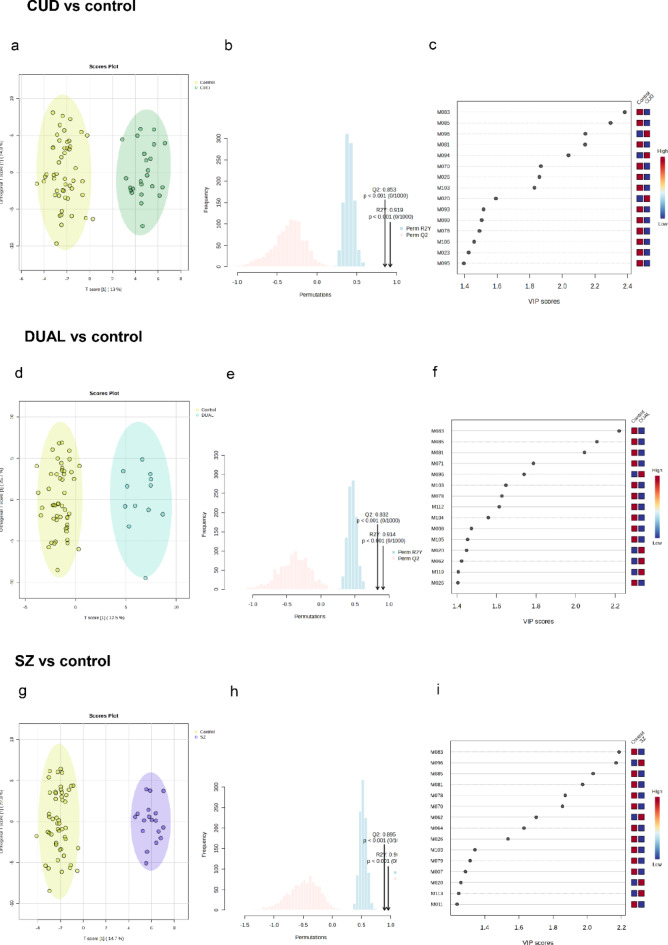
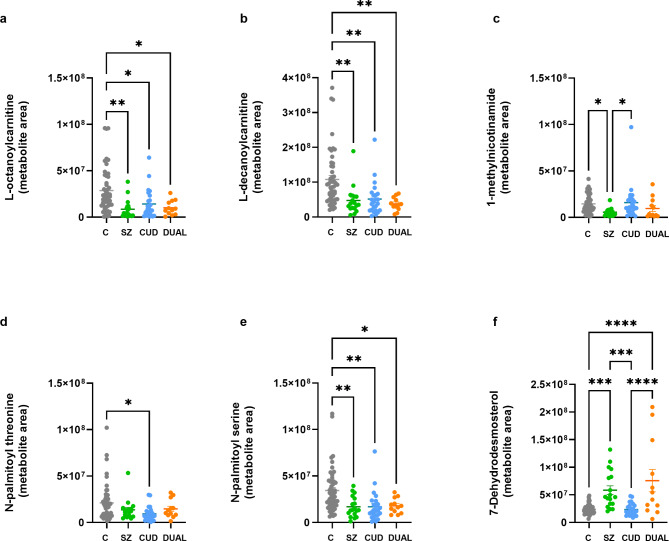
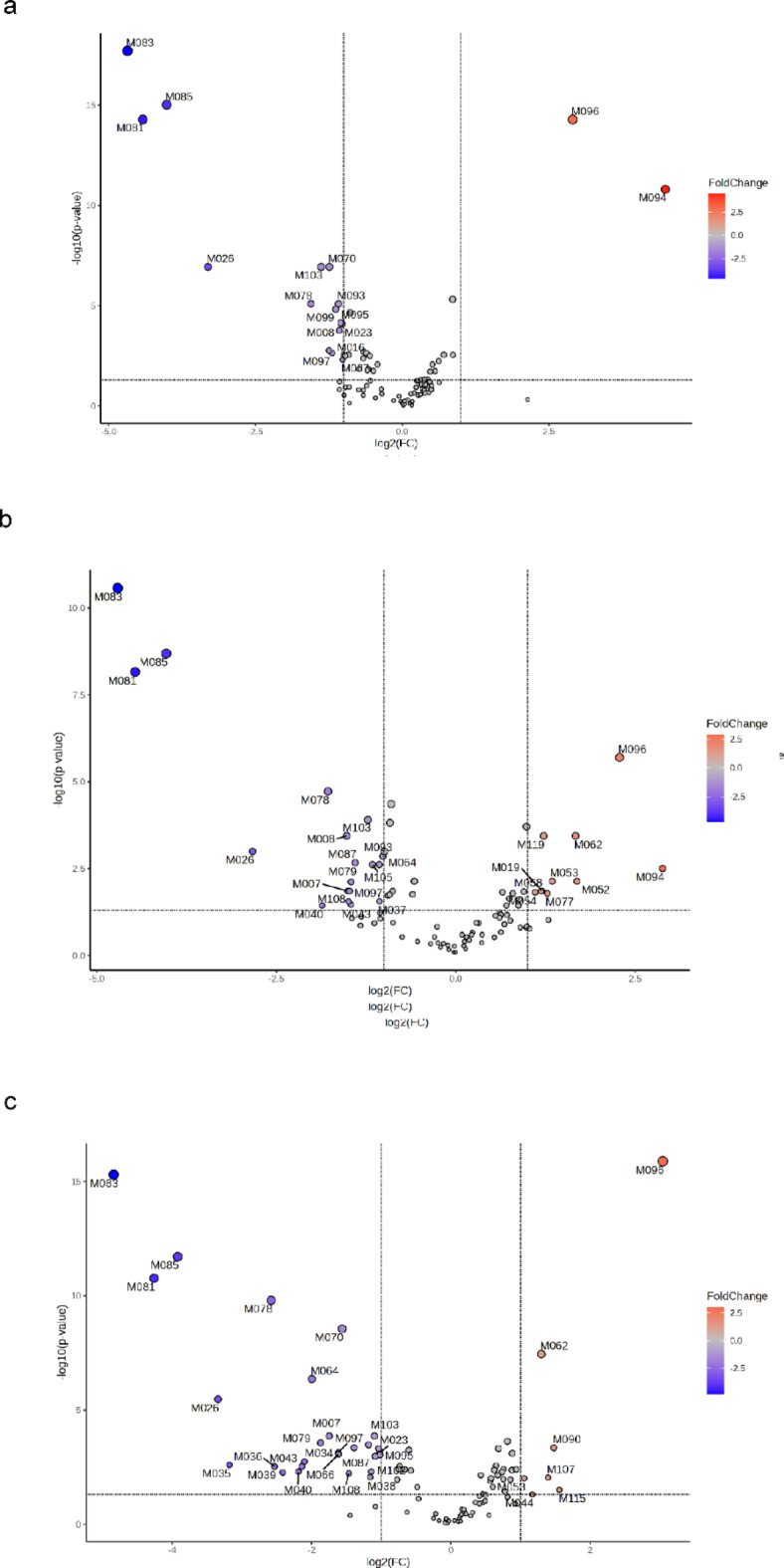
Cannabis use disorder affects up to 42% of individuals with schizophrenia, correlating with earlier onset, increased positive symptoms, and more frequent hospitalizations. This study employed an untargeted lipidomics approach to identify biomarkers in plasma samples from subjects with schizophrenia, cannabis use disorder, or both (dual diagnosis), aiming to elucidate the metabolic underpinnings of cannabis abuse and schizophrenia development. The use of liquid chromatography-high resolution mass spectrometry enabled the annotation of 119 metabolites, with the highest identification confidence level achieved for 16 compounds. Notably, a marked reduction in acylcarnitines, including octanoylcarnitine and decanoylcarnitine, was observed across all patient groups compared to controls. In cannabis use disorder patients, N-acyl amino acids (NAAAs), particularly N-palmitoyl threonine and N-palmitoyl serine, showed a strong downregulation, a pattern also seen in schizophrenia and dual diagnosis patients. Conversely, elevated levels of 7-dehydrodesmosterol were detected in schizophrenia and dual diagnosis patients relative to controls. These findings suggest a potential link between metabolic disruptions and the pathophysiology of both disorders. The untargeted lipidomics approach offers a powerful tool to identify novel biomarkers, enhancing our understanding of the biological relationship between cannabis abuse and schizophrenia, and paving the way for future therapeutic strategies targeting metabolic pathways in these conditions.
大麻使用障碍影响高达42%的精神分裂症患者,与发病较早、阳性症状增加和住院频率更高相关。本研究采用非靶向脂质组学方法,以识别来自精神分裂症患者、大麻使用障碍患者或两者兼有(双重诊断)的受试者血浆样本中的生物标志物,旨在阐明大麻滥用和精神分裂症发展的代谢基础。使用液相色谱-高分辨率质谱法能够注释119种代谢物,其中16种化合物的鉴定置信度最高。值得注意的是,与对照组相比,所有患者组中包括辛酰肉碱和癸酰肉碱在内的酰基肉碱均显著减少。在大麻使用障碍患者中,N-酰基氨基酸(NAAA),特别是N-棕榈酰苏氨酸和N-棕榈酰丝氨酸,表现出强烈的下调,这种模式在精神分裂症患者和双重诊断患者中也可见。相反,相对于对照组,在精神分裂症患者和双重诊断患者中检测到7-脱氢胆固醇水平升高。这些发现表明代谢紊乱与这两种疾病的病理生理学之间存在潜在联系。非靶向脂质组学方法提供了一种强大的工具来识别新的生物标志物,增强了我们对大麻滥用与精神分裂症之间生物学关系的理解,并为针对这些情况下代谢途径的未来治疗策略铺平了道路。