Talbot Benoit, Ludwig Antoinette, O'Brien Sheila F, Drews Steven J, Ogden Nicholas H, Kulkarni Manisha A
School of Epidemiology and Public Health, University of Ottawa, Ottawa, ON, Canada.
Public Health Risk Sciences Division, National Microbiology Laboratory, Infectious Disease Prevention and Control Branch, Public Health Agency of Canada, Guelph, ON and St-Hyacinthe, QC, Canada.
Sci Rep. 2024 Dec 28;14(1):31343. doi: 10.1038/s41598-024-82739-3.
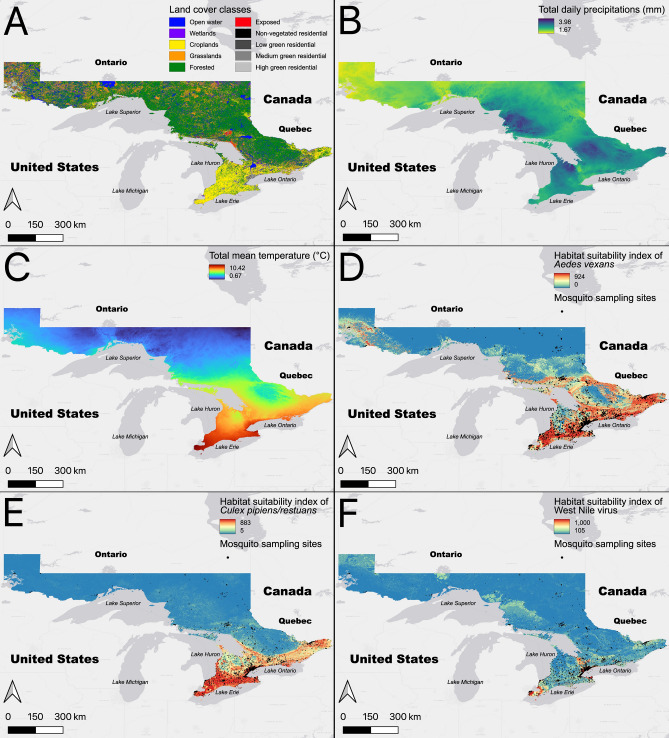
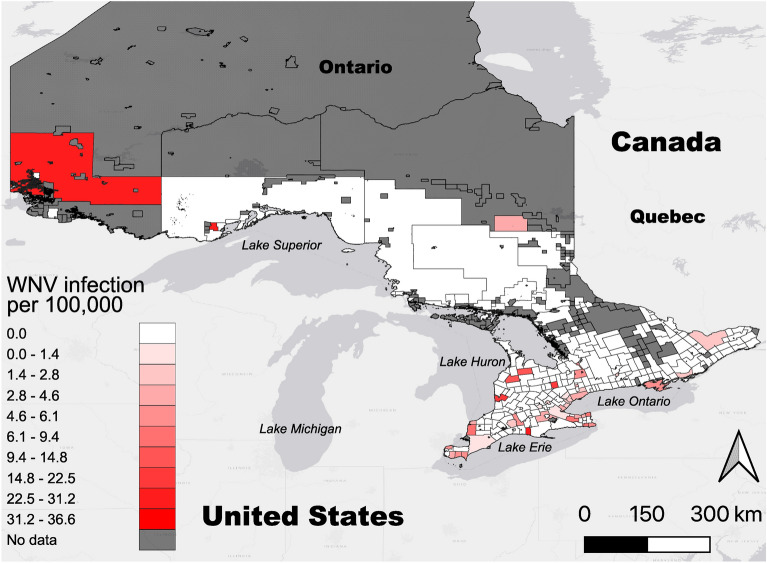
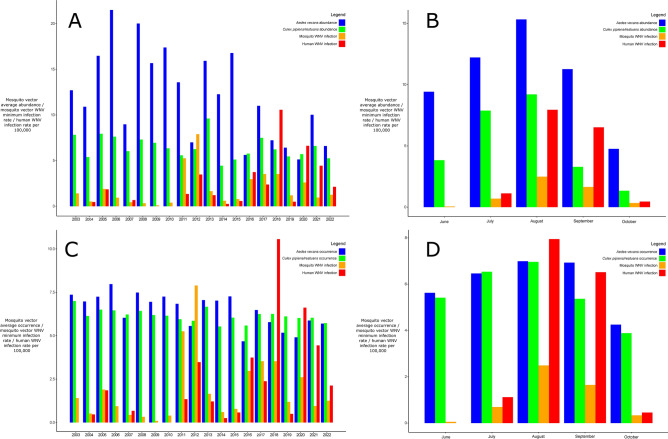
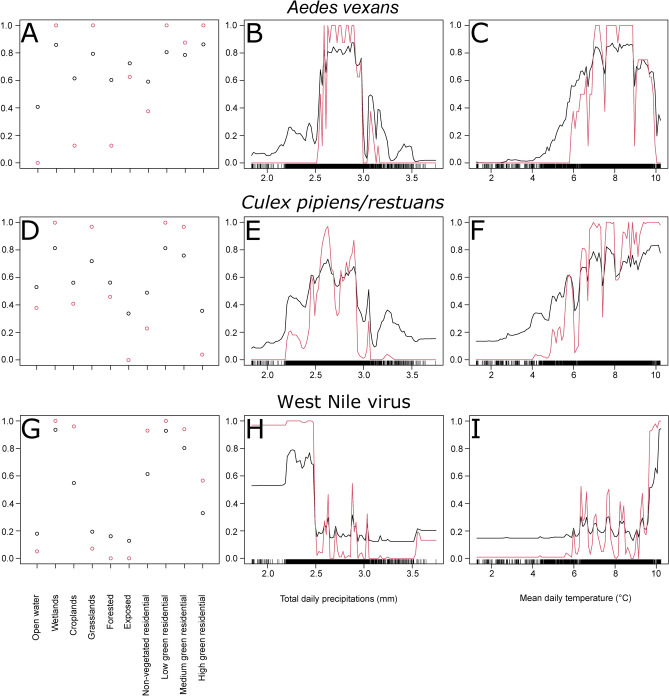
West Nile virus (WNV) is a mosquito-borne zoonotic flavivirus which often causes asymptomatic infection in humans but may develop into a deadly neuroinvasive disease. In this study, we aimed to investigate variables potentially associated with human WNV infection using human and mosquito WNV surveillance and monitoring datasets, established over 20 years, from 2003 to 2022, across the province of Ontario, Canada. We combined climatic and geographic data, mosquito surveillance data (n = 3010 sites), blood donation arboviral detection testing data in the human population, and demographic and socio-economic data from Canadian population censuses. We hypothesized that spatio-temporal indices related to mosquito vector habitat and phenology, in addition to human demographic and socio-economic factors, were associated with WNV infection in the human population. Our results show that high habitat suitability of the main WNV vector in southerly locations of this region, Cx. pipiens/restuans (IRR = 2.0), and variables related to lower income (IRR = 2.8), and shelter infrastructure spending (IRR = 0.7), were key risk factors associated with WNV infection among blood donors from 2003 to 2022 across Ontario (R = 0.67). These results may inform points of entry for practical intervention aimed at reducing risk of mosquito-borne pathogens in Canada.
西尼罗河病毒(WNV)是一种由蚊子传播的人畜共患黄病毒,在人类中通常引起无症状感染,但可能发展成致命的神经侵袭性疾病。在本研究中,我们旨在利用2003年至2022年在加拿大安大略省建立的、历时20多年的人类和蚊子西尼罗河病毒监测数据集,调查与人类西尼罗河病毒感染潜在相关的变量。我们整合了气候和地理数据、蚊子监测数据(n = 3010个地点)、人群中献血者虫媒病毒检测测试数据以及加拿大人口普查的人口统计和社会经济数据。我们假设,除了人类人口统计和社会经济因素外,与蚊子媒介栖息地和物候相关的时空指数与人群中的西尼罗河病毒感染有关。我们的结果表明,该地区南部主要西尼罗河病毒媒介尖音库蚊/致倦库蚊的高栖息地适宜性(IRR = 2.0),以及与低收入(IRR = 2.8)和避难所基础设施支出(IRR = 0.7)相关的变量,是2003年至2022年安大略省献血者中与西尼罗河病毒感染相关的关键风险因素(R = 0.67)。这些结果可为旨在降低加拿大蚊媒病原体风险的实际干预切入点提供参考。