Künzle Andrea, van Kuijk Sander M J, Koetsier Eva
Faculty of Biomedical Sciences, Università della Svizzera Italiana, Lugano, Switzerland.
Pain Management Center, Neurocenter of Southern Switzerland, EOC, Lugano, Switzerland.
Pain Res Manag. 2024 Dec 20;2024:8871568. doi: 10.1155/prm/8871568. eCollection 2024.
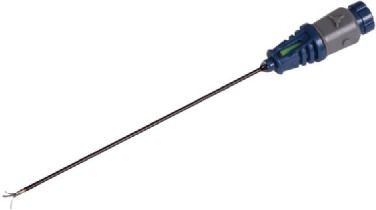
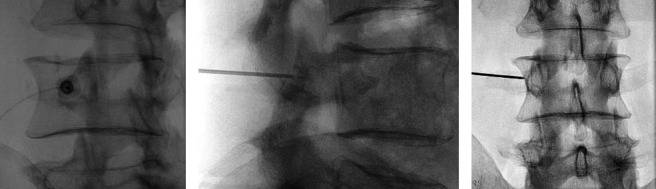
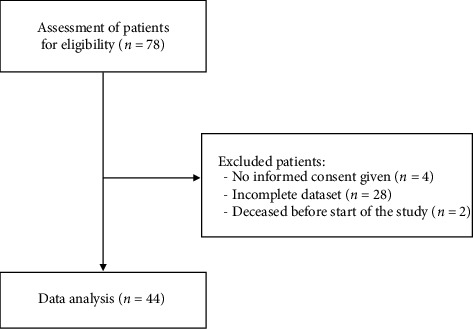
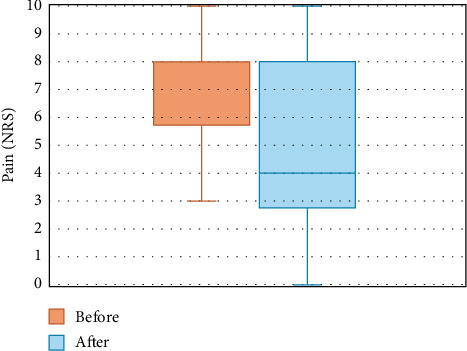
Lumbar facet joints are the source of pain in 15%-41% of individuals experiencing low back pain (LBP). Conventional lumbar facet radiofrequency ablation (RFA) has Level II evidence for improving pain and function. The best proven technique, the parallel technique, is technically challenging, time-consuming, and often uncomfortable for the patient. A novel RFA technique using a 3-tined cannula offers a potentially less complex and shorter procedure. To describe the novel lumbar facet joint RFA technique with the 3-tined cannula and to evaluate its efficacy in treating chronic lumbar facet joint pain. Eligible adult patients with chronic lumbar facet joint pain, confirmed by positive medial branch blocks (MBBs), refractory to conservative treatment, received the novel RFA treatment with the 3-tined cannula. The change in pain intensity at 2 months follow-up compared to baseline, percentage of patients reporting a ≥ 30% and ≥ 50% reduction of pain intensity, patient global impression of change (PGIC), need for pain medication, walking ability, sleep quality, and patient satisfaction were evaluated. A total of 44 patients were included. Patients experienced a clinically meaningful and significant pain relief at follow-up and 41% of the patients reported ≥ 50% reduction of pain. Forty-eight percent experienced at least a score of "much improved" on the PGIC. No severe side effects or complications were observed. Our observational study suggests that lumbar facet joint RFA using the novel technique achieves significant pain relief. The larger lesions decrease the likelihood of missing the target nerve while obviating the need to conduct numerous lesions. Limiting is the single-center set-up with a relatively short-term follow-up duration. Randomized controlled clinical trials are warranted to confirm the efficacy of the novel RFA technique to treat lumbar facet joint pain.
在经历腰痛(LBP)的个体中,15%-41%的疼痛源于腰椎小关节。传统的腰椎小关节射频消融术(RFA)改善疼痛和功能的证据等级为II级。经充分验证的最佳技术是平行技术,但该技术在操作上具有挑战性,耗时较长,且患者通常会感到不适。一种使用三齿套管的新型RFA技术可能提供一种复杂性较低且耗时较短的手术方式。描述使用三齿套管的新型腰椎小关节RFA技术,并评估其治疗慢性腰椎小关节疼痛的疗效。符合条件的成年慢性腰椎小关节疼痛患者,经内侧支阻滞(MBB)阳性确诊,且对保守治疗无效,接受了使用三齿套管的新型RFA治疗。评估了与基线相比2个月随访时疼痛强度的变化、报告疼痛强度降低≥30%和≥50%的患者百分比、患者总体变化印象(PGIC)、对止痛药物的需求、行走能力、睡眠质量和患者满意度。共纳入44例患者。患者在随访时经历了具有临床意义的显著疼痛缓解,41%的患者报告疼痛降低≥50%。48%的患者在PGIC上至少获得“明显改善”的评分。未观察到严重的副作用或并发症。我们的观察性研究表明,使用新技术的腰椎小关节RFA可实现显著的疼痛缓解。较大的损伤减少了错过目标神经的可能性,同时无需进行多次损伤。局限性在于单中心设置且随访时间相对较短。需要进行随机对照临床试验以证实新型RFA技术治疗腰椎小关节疼痛的疗效。